
Begin of page section:
Page sections:

  • Go to contents (Accesskey 1)
  • Go to position marker (Accesskey 2)
  • Go to main navigation (Accesskey 3)
  • Go to sub navigation (Accesskey 4)
  • Go to additional information (Accesskey 5)
  • Go to page settings (user/language) (Accesskey 8)
  • Go to search (Accesskey 9)

End of this page section. Go to overview of page sections

Begin of page section:
Page settings:

English en
Deutsch de
Search
Login

End of this page section. Go to overview of page sections

Begin of page section:
Search:

Search for details about Uni Graz
Close

End of this page section. Go to overview of page sections


Search

Begin of page section:
Main navigation:

Page navigation:

  • University

    University
    • About the University
    • Organisation
    • Faculties
    • Library
    • Working at University of Graz
    • Campus
    Developing solutions for the world of tomorrow - that is our mission. Our students and our researchers take on the great challenges of society and carry the knowledge out.
  • Research Profile

    Research Profile
    • Our Expertise
    • Research Questions
    • Research Portal
    • Promoting Research
    • Research Transfer
    • Ethics in Research
    Scientific excellence and the courage to break new ground. Research at the University of Graz creates the foundations for making the future worth living.
  • Studies

    Studies
    • Prospective Students
    • Students
    • Welcome Weeks for First Year Students
  • Community

    Community
    • International
    • Location
    • Research and Business
    • Alumni
    The University of Graz is a hub for international research and brings together scientists and business experts. Moreover, it fosters the exchange and cooperation in study and teaching.
  • Spotlight
Topics
  • Sustainable University
  • Researchers answer
  • Work for us
Close menu

End of this page section. Go to overview of page sections

Begin of page section:
You are here:

University of Graz News The dark side of life: new method developed to identify soil organisms

End of this page section. Go to overview of page sections

Tuesday, 20 January 2026

The dark side of life: new method developed to identify soil organisms

Hands of a person inspecting soil health

The quality of the soil depends on the organisms that inhabit it. Biologists at the University of Graz have developed a new method for identifying tiny creatures. Photo: Kannapat/Adobe Stock

A large number of soil animals are smaller than one millimetre and are therefore difficult to study scientifically. Biologists from the University of Graz have now developed a method to determine both the shape and the DNA of the organisms. The results have been published in the journal Geoderma.

What creeps under our feet plays a key role in agriculture, the ecosystem and the climate. The soil harbours more than half of the world's biodiversity, yet many of the little animals - the so-called dark taxa - have hardly been researched. These include mites and pauropods, for example, which are often much smaller than a millimetre. "Our ability to study them has been severely limited until now," explains Sylvia Schäffer from the Department of Biology at the University of Graz. Together with Stephan Koblmüller and her team, she has developed a procedure that allows researchers to obtain DNA samples in just a few steps. The bodies of the sensitive organisms are preserved for further analyses.

"Our method is a milestone for soil monitoring, which in turn will benefit many areas," says Schäffer. With their new procedure, the Graz biologists have already been able to obtain comprehensive DNA data for many previously unknown species, which is available in an international reference database. Based on this genetic information and the external shape of the animals, they can now be clearly identified and new species precisely described. The research results were published in the journal Geoderma.
Publication:
Sylvia Schäffer, Klaus Hasenhütl, Stephan Koblmüller: A window into dark taxa: morphology-compatible DNA extraction for tiny soil arthropods, Geoderma Volume 465.

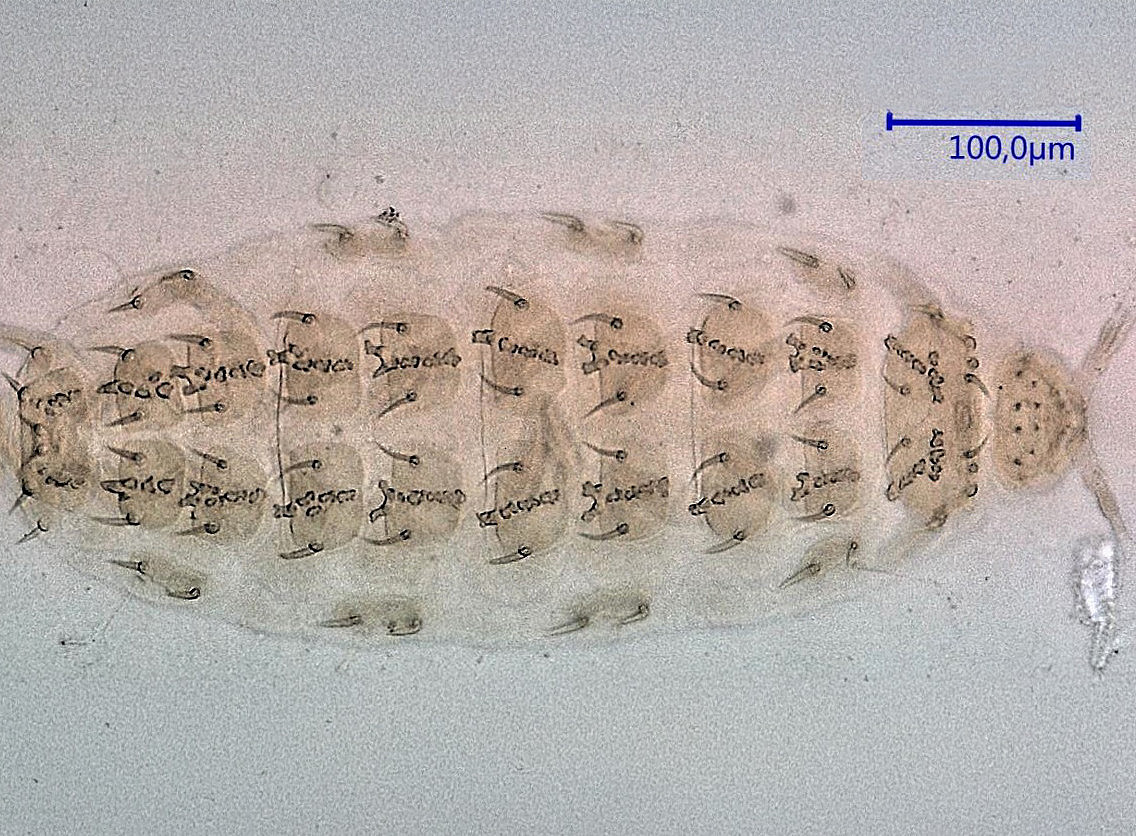
microscope image of the pauropod Brachypauropus hamige
Now identified: the pauropod Brachypauropus hamige; Photo: Uni Graz/Klaus Hasenhütl
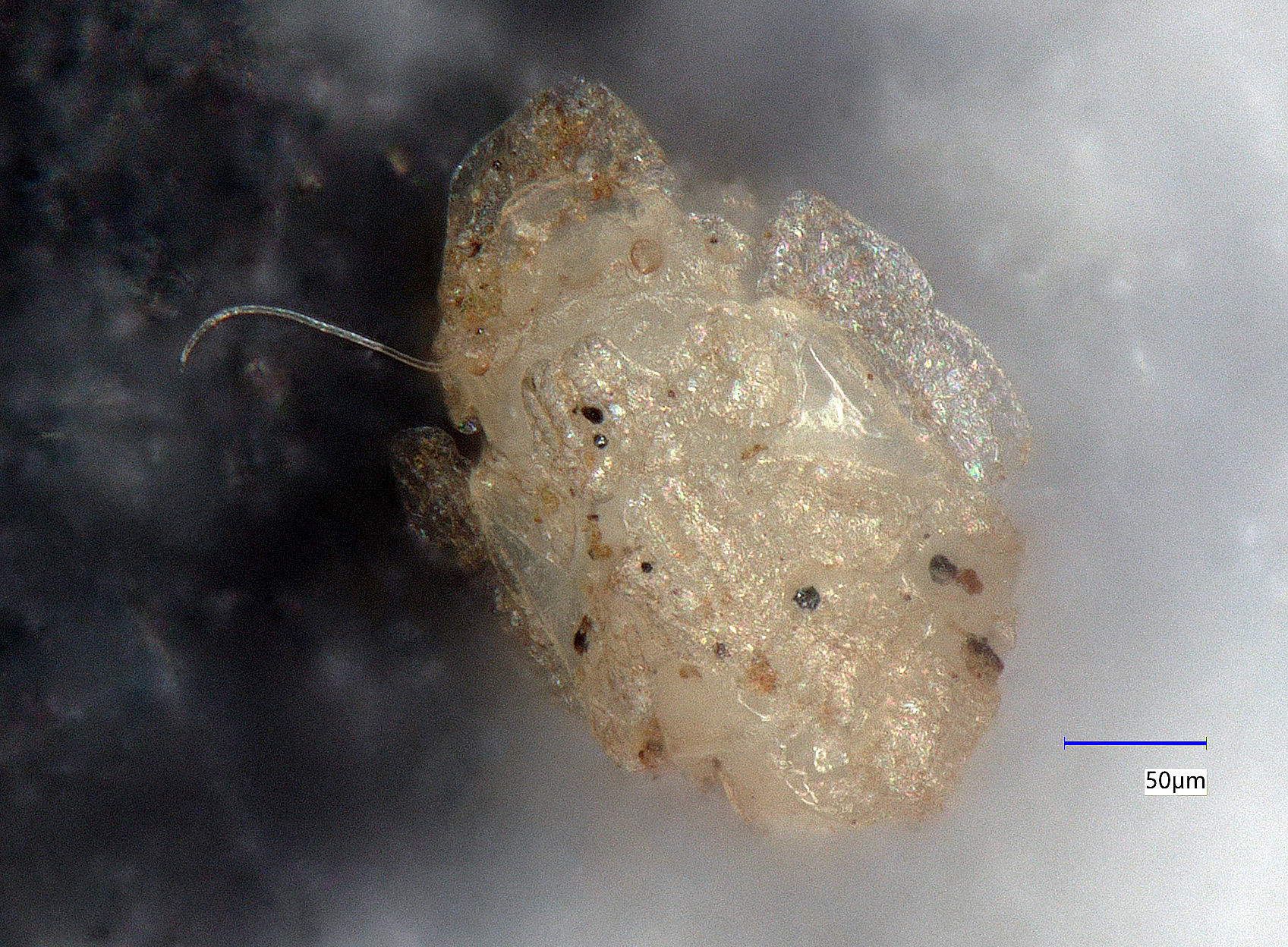
Microscope image of a horn mite
Also newly described: the horn mite Pterochthonius angelus; photo: University of Graz/Sylvia Schäffer
created by Dagmar Eklaude

Related news

How does peace succeed? Maximilian Lakitsch drives research forward

Donald Trump is rattling his proverbial sabre ever louder, unrest in the Middle East is escalating and the war in Ukraine continues to rage. Maximilian Lakitsch knows what political measures could contribute to reconciliation. He is the coordinator of an EU-wide initiative to strengthen peace research.

Simon Benal completes a voluntary environmental year at the University of Graz

Committing to the planet, getting to know exciting fields of activity and discovering possible paths for your own future – these are the opportunities offered by the Freiwilliges Umweltjahr (FUJ), a voluntary environmental year. One person who has chosen this option is Simon Benal. He has been working in the environmental management team at the University of Graz since September 2025.

From Iowa to Graz: US researcher puts “angry” algorithms to the test

Researcher Hussam Habib is investigating how social media platforms use algorithms to evoke emotions, capture attention, and disseminate content in a targeted manner. Born in Pakistan, he came to the University of Graz on an APART-USA scholarship from the Austrian Academy of Sciences. Thanks to new EU regulations, the scientist hopes to gain deeper insight into the mechanisms behind YouTube, Instagram, Reddit, and other platforms.

Lightbulb moments: How two young physicists are working for tomorrow

They shed light on unresolved questions – and use it in their work in physics. Diana Shakirova is using light to distinguish different chiral molecules, which can have both healing and toxic effects. Christoph Stockinger, on the other hand, uses light to develop high-precision sensors. But it is not only light that connects the two physicists. The doctoral students took part in the NanoGraz Careers & Ideas Days to prepare themselves in good time for the next steps in their careers as young scientists.

Begin of page section:
Additional information:

University of Graz
Universitaetsplatz 3
8010 Graz
Austria
  • Contact
  • Web Editors
  • Moodle
  • UNIGRAZonline
  • Imprint
  • Data Protection Declaration
  • Accessibility Declaration
Weatherstation
Uni Graz

End of this page section. Go to overview of page sections

End of this page section. Go to overview of page sections

Begin of page section:

End of this page section. Go to overview of page sections