Begin of page section:
Page sections:

  • Go to contents (Accesskey 1)
  • Go to position marker (Accesskey 2)
  • Go to main navigation (Accesskey 3)
  • Go to sub navigation (Accesskey 4)
  • Go to additional information (Accesskey 5)
  • Go to page settings (user/language) (Accesskey 8)
  • Go to search (Accesskey 9)

End of this page section. Go to overview of page sections

Begin of page section:
Page settings:

English en
Deutsch de
Search
Login

End of this page section. Go to overview of page sections

Begin of page section:
Search:

Search for details about Uni Graz
Close

End of this page section. Go to overview of page sections


Search

Begin of page section:
Main navigation:

Page navigation:

  • University

    University
    • About the University
    • Organisation
    • Faculties
    • Library
    • Working at University of Graz
    • Campus
    Developing solutions for the world of tomorrow - that is our mission. Our students and our researchers take on the great challenges of society and carry the knowledge out.
  • Research Profile

    Research Profile
    • Our Expertise
    • Research Questions
    • Research Portal
    • Promoting Research
    • Research Transfer
    • Ethics in Research
    Scientific excellence and the courage to break new ground. Research at the University of Graz creates the foundations for making the future worth living.
  • Studies

    Studies
    • Prospective Students
    • Students
  • Community

    Community
    • International
    • Location
    • Research and Business
    • Alumni
    The University of Graz is a hub for international research and brings together scientists and business experts. Moreover, it fosters the exchange and cooperation in study and teaching.
  • Spotlight
Topics
  • Sustainable University
  • Researchers answer
  • Work for us
Close menu

End of this page section. Go to overview of page sections

Begin of page section:
You are here:

University of Graz News Die Bibliothekarin ohne Bücher

End of this page section. Go to overview of page sections

Friday, 13 March 2015

Die Bibliothekarin ohne Bücher

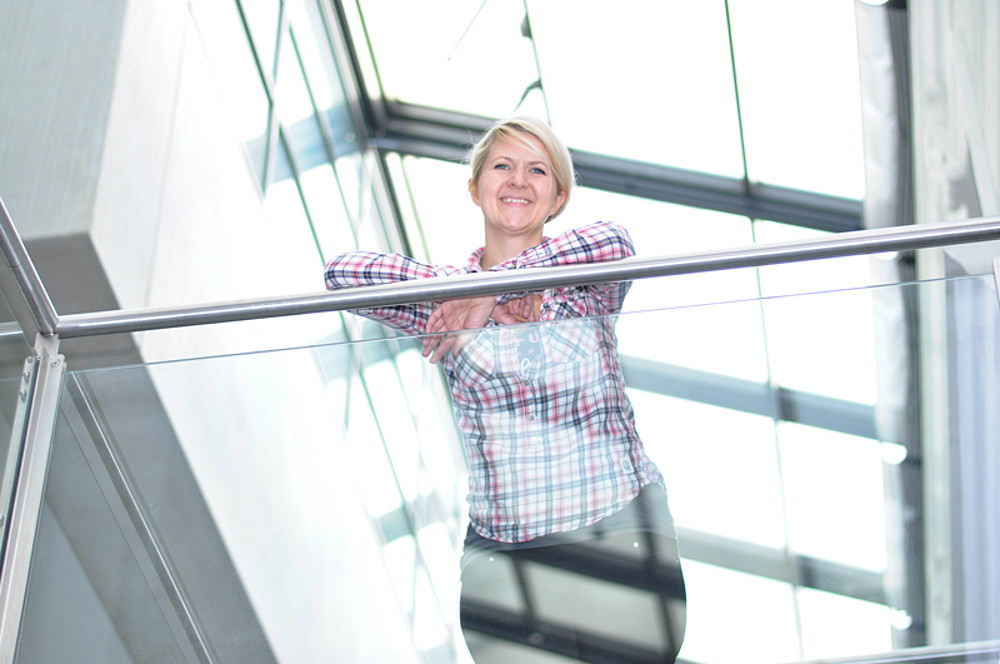
Lisa Schilhan gibt Open Access an der Uni Graz ein Gesicht

Wenn WissenschafterInnen eine von der Europäischen Union oder vom Wissenschaftsfonds FWF geförderte Publikation veröffentlichen möchten, müssen sie es vermehrt Open Access tun. Damit ist eine Methode gemeint, die wissenschaftliche Literatur kostenlos, uneingeschränkt und öffentlich zur Verfügung stellt. Jederzeit und allerorts. Auch an der Uni Graz wird immer mehr Open Access herausgegeben. Und dahinter steckt Lisa Schilhan. Die promovierte Kunsthistorikerin und Bibliothekarin ist an der Universitätsbibliothek für diese junge Publikationsform verantwortlich. Seit Herbst 2013 steht sie für Auskünfte rund um das Thema zur Verfügung, berät ForscherInnen über die Möglichkeiten, „grün“ – Zweitveröffentlichung – oder „gold“ – als Erstveröffentlichung – zu publizieren, und betreut die Plattform unipub. Unipub beherbergt mittlerweile sieben Zeitschriften, die an der Uni Graz entstehen und deren Inhalte für die Öffentlichkeit frei zugänglich sind. „Weltweit steigt die Zahl an offenem Uniwissen“, erklärt Lisa Schilhan. „Auch bei uns ist dieser Aufwärtstrend spürbar.“


Die Liebe zur Bücherei hat bei Lisa Schilhan mit einem Tutorinnenjob am Institut für Kunstgeschichte begonnen. „Ich habe dann den einjährigen Universitätslehrgang Library and Information Science absolviert“, führt sie aus. Gerade das Arbeiten mit neuen Technologien und Medien sowie das Interesse, vieles auszuprobieren, liebt Schilhan an ihrem Job. „Ich mag gerne neue Dinge.“ Und als sie von ihrem Vorgesetzten gefragt wurde, ob sie sich vorstellen könnte, Open Access an der Uni Graz zu etablieren, stieg ihre Begeisterung.


„Ich halte es für eine gute Sache, wissenschaftliche Literatur frei zur Verfügung zu stellen.“ Zu ihrem täglich Brot zählt neben der Betreuung der Plattform vor allem Werbung für die junge Initiative zu machen: „In vielen Disziplinen ist Open Access schon weit verbreitet, oft ist aber, wie zum Beispiel in den Rechtswissenschaften, der Begriff noch recht unbekannt.“ Stark vertreten sind die Mathematik, Chemie und Sozialwissenschaften. Schilhan steht aber auch im Hörsaal, an der Kunstgeschichte hält sie eine Vorlesung über Literatur-recherche. Dort versucht sie zu vermitteln, was oftmals übersehen wird: Nämlich dass „BibliothekarInnen heutzutage wesentlich moderner sind, als man glaubt“, und sie nicht immer etwas mit Büchern zu tun haben müssen.


created by Konstantinos Tzivanopoulos

Related news

Diversity buddies at the University of Graz: Support on equal terms

The University of Graz is strengthening its commitment to equal opportunities with its new Diversity Buddies. University members can find easily accessible contact persons here for questions relating to equality and diversity. All employees can get involved and take action.

When parents find it difficult to have a say

In her dissertation, translation scholar Marie Tschurtschenthaler examines how communication between compulsory schools and parents whose first language is not German works – and what role professional language mediation plays in this. Initial insights show that it is not just about language, but also about resources, responsibilities and the institutional framework.

AI in schools: Maria Bertel drafts legal guidelines for teachers

The legal expert and her team analysed the legal situation regarding the use of artificial intelligence in education as part of an EU project and answered open questions from practice.

Cosmetics in the environment: University of Graz proves danger to ants

Titanium dioxide, which is found in cosmetics, for example, is increasingly entering the environment in the form of nanoparticles. This could also put insects at risk. If ants ingest the substance in combination with the pesticide glyphosate, it disturbs the development of their offspring. Scientists at the University of Graz are drawing attention to the negative consequences of this toxic cocktail.

Begin of page section:
Additional information:

University of Graz
Universitaetsplatz 3
8010 Graz
Austria
  • Contact
  • Web Editors
  • Moodle
  • UNIGRAZonline
  • Imprint
  • Data Protection Declaration
  • Accessibility Declaration
Weatherstation
Uni Graz

End of this page section. Go to overview of page sections

End of this page section. Go to overview of page sections

Begin of page section:

End of this page section. Go to overview of page sections