Begin of page section:
Page sections:

  • Go to contents (Accesskey 1)
  • Go to position marker (Accesskey 2)
  • Go to main navigation (Accesskey 3)
  • Go to sub navigation (Accesskey 4)
  • Go to additional information (Accesskey 5)
  • Go to page settings (user/language) (Accesskey 8)
  • Go to search (Accesskey 9)

End of this page section. Go to overview of page sections

Begin of page section:
Page settings:

English en
Deutsch de
Search
Login

End of this page section. Go to overview of page sections

Begin of page section:
Search:

Search for details about Uni Graz
Close

End of this page section. Go to overview of page sections


Search

Begin of page section:
Main navigation:

Page navigation:

  • University

    University
    • About the University
    • Organisation
    • Faculties
    • Library
    • Working at University of Graz
    • Campus
    Developing solutions for the world of tomorrow - that is our mission. Our students and our researchers take on the great challenges of society and carry the knowledge out.
  • Research Profile

    Research Profile
    • Our Expertise
    • Research Questions
    • Research Portal
    • Promoting Research
    • Research Transfer
    • Ethics in Research
    • Commission for Scientific Integrity
    Scientific excellence and the courage to break new ground. Research at the University of Graz creates the foundations for making the future worth living.
  • Studies

    Studies
    • Prospective Students
    • Students
    • Welcome Weeks for First Year Students
  • Community

    Community
    • International
    • Location
    • Research and Business
    • Alumni
    The University of Graz is a hub for international research and brings together scientists and business experts. Moreover, it fosters the exchange and cooperation in study and teaching.
Topics
  • Sustainable University
  • Researchers answer
  • Work for us
Close menu

End of this page section. Go to overview of page sections

Begin of page section:
You are here:

University of Graz News Dickes Manko, schlanker Körper

End of this page section. Go to overview of page sections

Wednesday, 04 November 2015

Dickes Manko, schlanker Körper
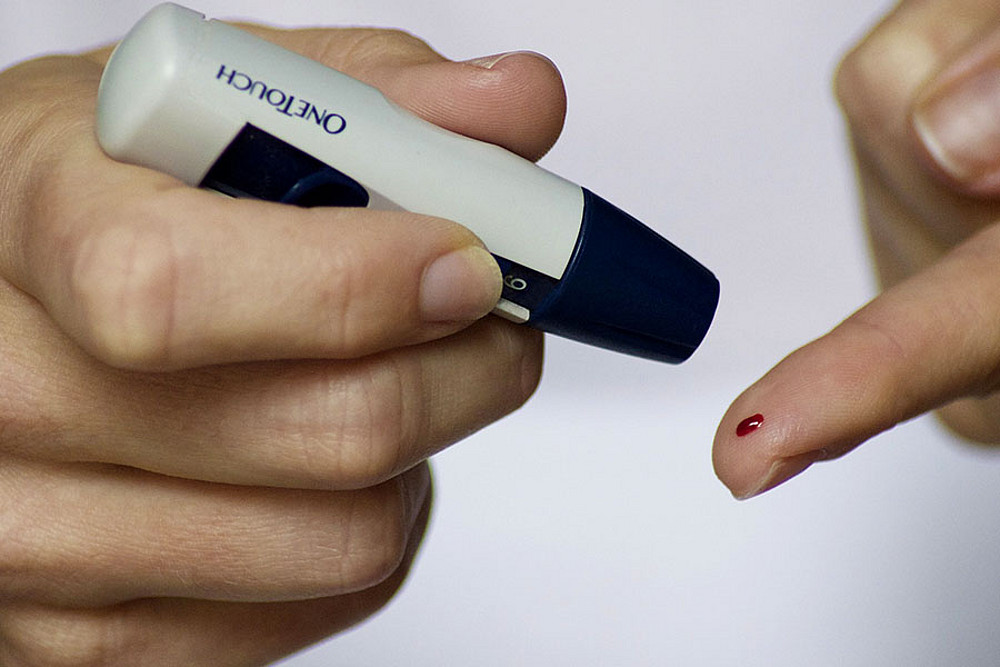
Eine brandneue Forschungsarbeit an der Uni Graz könnte einen Hinweis für einen möglichen Therapieansatz darstellen, um damit zum Beispiel Typ 2-Diabetes zu unterbinden. Foto: pixabay.com - TesaPhotography


Eine brandneue Forschungsarbeit an der Uni Graz könnte einen Hinweis für einen möglichen Therapieansatz darstellen, um damit zum Beispiel Typ 2-Diabetes zu unterbinden. Foto: pixabay.com - TesaPhotography
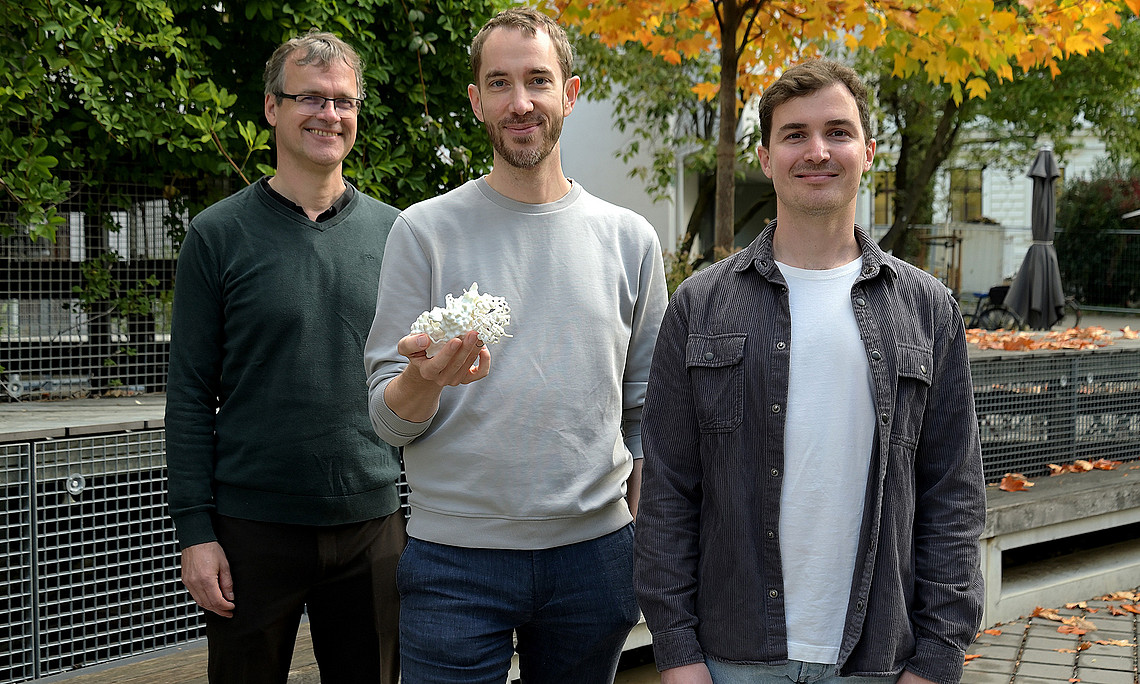
WissenschafterInnen der Uni Graz erforschen defekten Fettabbau mit fehlendem Enzym

Übergewicht und Fettleibigkeit zählen weltweit zu den größten Gesundheitsproblemen und sind häufig für Typ 2-Diabetes und Herz-Kreislauf-Erkrankungen verantwortlich. Dass Schlanksein mit einem fehlenden Enzym zusammenhängt, erforschen BiowissenschafterInnen der Uni Graz. In einer aktuellen Publikation der renommierten Fachzeitschrift „Proceedings of the National Acadamy of Sciences of the United States of America“ (PNAS) haben die ForscherInnen nachgewiesen: Ist der Abbau von Fetten gestört, wird auch die Speicherung von Fett reduziert und verhindert somit die Entstehung einer ausgeprägten Fettleibigkeit.

In höher entwickelten Organismen wird überschüssige Energie in Form von Fetten, den Triglyzeriden, im Fettgewebe gespeichert. Benötigt der Körper Energie, wird diese aus den Triglyzeriden in einem dreistufigen Prozess durch fettspaltende Enzyme – sogenannten Lipasen – freigesetzt. Die Speicherung von Fett und dessen Freisetzung sind zwei entgegengesetzte Prozesse, welche man bislang als zwei voneinander getrennte Stoffwechselwege betrachtet hat. Ein ForscherInnenteam rund um Univ.-Prof. Dr. Rudolf Zechner vom Institut für Molekulare Biowissenschaften der Karl-Franzens-Universität hat nun herausgefunden, dass diese beiden Vorgänge miteinander gekoppelt sind.

In der neuen Studie, die in der aktuellen Ausgabe der Zeitschrift PNAS veröffentlicht wurde, beschrieben die BiowissenschafterInnen was in der Zelle passiert, wenn das fettspaltende Enzym Adipose Triglyceride Lipase (ATGL) fehlt.
In Zusammenarbeit mit der Universität Cambridge (Großbritannien) konnten die WissenschafterInnen der Uni Graz im Tiermodell zeigen, dass zwar der Fettabbau aufgrund des fehlenden Enzyms beeinträchtigt wird, letztendlich aber auch die Fettspeicherung reduziert. Studienerstautorin Dr. Renate Schreiber erklärt warum: „ATGL aktiviert im Zellkern einen speziellen Sensor, der maßgeblich für die Bildung und Speicherung von Fett verantwortlich ist. Fehlt dieses Enzym, ist auch der Sensor weniger aktiv und daher wird weniger Fett gespeichert.“
Darüber hinaus stellten die WissenschafterInnen wider Erwarten fest, dass das fehlende Enzym in Folge auch den Stoffwechsel beeinflusste und den Appetit reduzierte. Welche molekularen Signale dafür verantwortlich sind und aus welchem Gewebe diese stammen, ist Aufgabe weiterer Forschungen.

Die bahnbrechende Arbeit liefert, so Schreiber, eine mögliche Erklärung für die fehlende Fettleibigkeit bei PatientInnen, die eine nicht-funktionsfähige ATGL besitzen. Zudem könnte die Studie einen Hinweis für einen möglichen Therapieansatz darstellen, um die ATGL im Fettgewebe zu hemmen und damit Typ 2-Diabetes sowie Fettleibigkeit zu unterbinden.

Publikation in PNAS (Early Edition vom 27. Oktober 2015)
Hypophagia and metabolic adaptations in mice with defective ATGL-mediated lipolysis cause resistance to HFD-induced obesity

created by Andreas Schweiger

Related news

Jurassic Sounds: Biologist reconstructs insect songs from 165 million years ago

It was apparently not just the roars of the dinosaurs that made up the soundscape of the animal world during the Jurassic period. Crickets and grasshoppers communicated through a variety of songs and high-pitched sounds, as Thorin Jonsson from the Institute of Biology at the University of Graz discovered together with colleagues from the universities of Lincoln, Bristol (UK), Beijing (China) and Tempe (USA). The findings on what are so far the oldest traces of sound on Earth have just been published in the journal PNAS.

EU funding boosts international exchange between universities

The University of Graz is further expanding its international study opportunities through the European university alliance Arqus and is taking the lead in two key projects. In future, students will benefit from even more joint degree programmes and from simplified recognition of academic achievements through the Joint European Degree Label.

Rescue and risks: Researchers have surveyed public perceptions of AI

The use of artificial intelligence has had to be made transparent since 2 August 2026. The EU’s AI Act, which has been in force since then, also sets out how risky an application is and which security measures apply as a result. However, the assessment of risks by the legislation differs in some cases significantly from the perceptions of the Austrian public. This is the finding of a representative study carried out by data scientist Stefan Thalmann from the University of Graz and his team.

The Healing Sea: Researchers discover new approaches to treating chronic inflammation in sponges

Chronic inflammation plays a key role in many diseases, ranging from metabolic disorders and cardiovascular diseases to tissue damage following injuries or infections. “Normally, the body is able to resolve inflammation on its own. If this process becomes unbalanced, immune cells remain permanently active and continue to drive negative changes in the tissue,” explains Andreas Koeberle, a pharmacist at the University of Graz.

Begin of page section:
Additional information:

University of Graz
Universitaetsplatz 3
8010 Graz
Austria
  • Contact
  • Web Editors
  • Moodle
  • UNIGRAZonline
  • Imprint
  • Data Protection Declaration
  • Accessibility Declaration
Weatherstation
Uni Graz

End of this page section. Go to overview of page sections

End of this page section. Go to overview of page sections

Begin of page section:

End of this page section. Go to overview of page sections