
Begin of page section:
Page sections:

  • Go to contents (Accesskey 1)
  • Go to position marker (Accesskey 2)
  • Go to main navigation (Accesskey 3)
  • Go to sub navigation (Accesskey 4)
  • Go to additional information (Accesskey 5)
  • Go to page settings (user/language) (Accesskey 8)
  • Go to search (Accesskey 9)

End of this page section. Go to overview of page sections

Begin of page section:
Page settings:

English en
Deutsch de
Search
Login

End of this page section. Go to overview of page sections

Begin of page section:
Search:

Search for details about Uni Graz
Close

End of this page section. Go to overview of page sections


Search

Begin of page section:
Main navigation:

Page navigation:

  • University

    University
    • About the University
    • Organisation
    • Faculties
    • Library
    • Working at University of Graz
    • Campus
    Developing solutions for the world of tomorrow - that is our mission. Our students and our researchers take on the great challenges of society and carry the knowledge out.
  • Research Profile

    Research Profile
    • Our Expertise
    • Research Questions
    • Research Portal
    • Promoting Research
    • Research Transfer
    • Ethics in Research
    • Commission for Scientific Integrity
    Scientific excellence and the courage to break new ground. Research at the University of Graz creates the foundations for making the future worth living.
  • Studies

    Studies
    • Prospective Students
    • Students
    • Registration for Study Programme (Winter semester 2026/27)
  • Community

    Community
    • International
    • Location
    • Research and Business
    • Alumni
    The University of Graz is a hub for international research and brings together scientists and business experts. Moreover, it fosters the exchange and cooperation in study and teaching.
Topics
  • Sustainable University
  • Researchers answer
  • Work for us
Close menu

End of this page section. Go to overview of page sections

Begin of page section:
You are here:

University of Graz News Der Jungzelleneffekt

End of this page section. Go to overview of page sections

Monday, 19 February 2018

Der Jungzelleneffekt

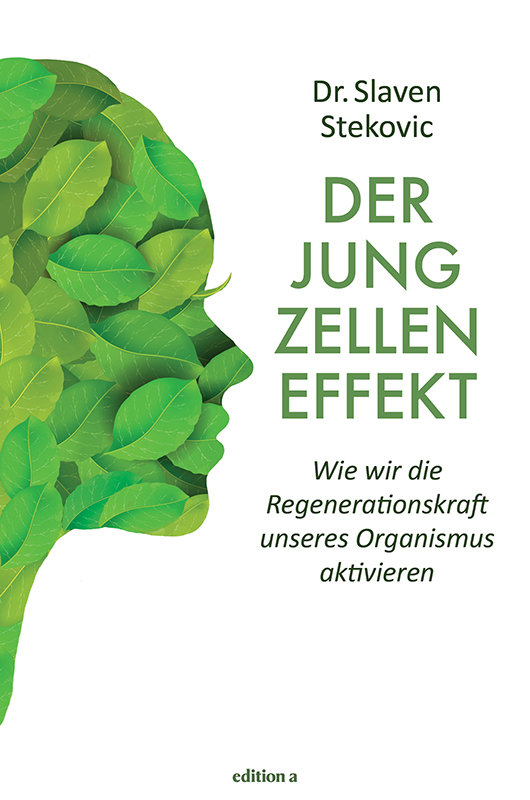
"Der Jungzelleneffekt" ist am vergangenen Wochenende erschienen. Foto: edition a.

"Der Jungzelleneffekt" ist am vergangenen Wochenende erschienen. Foto: edition a.

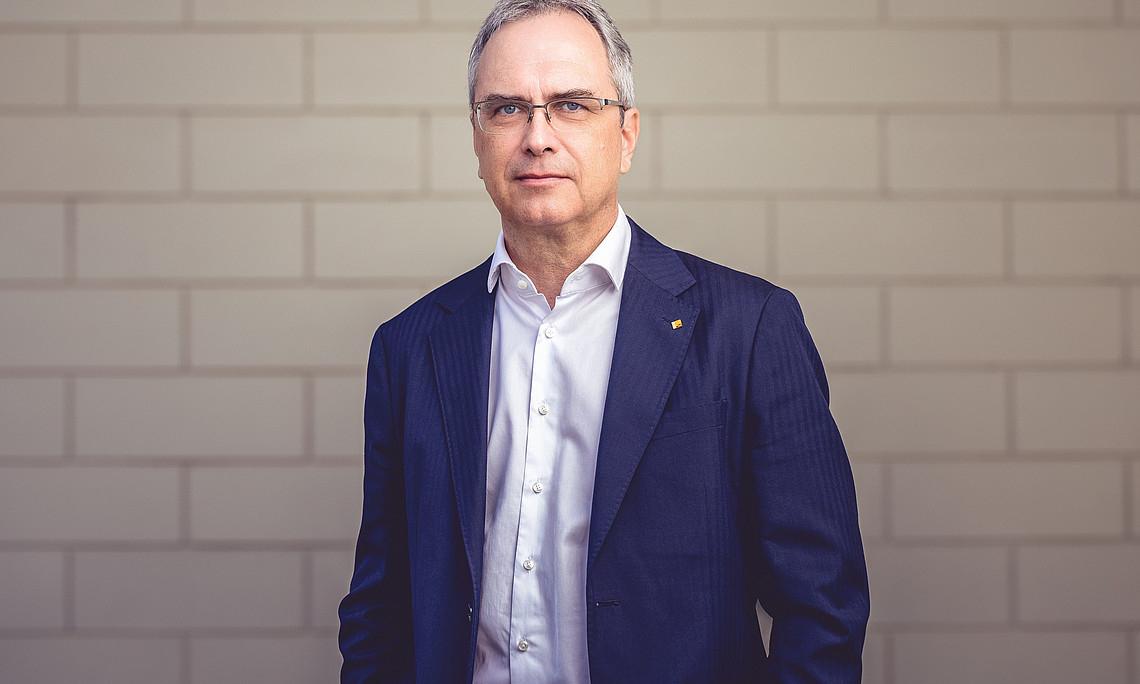
Slaven Stekovic - Forscher und nun auch Buchautor. Foto: TLL.

Slaven Stekovic - Forscher und nun auch Buchautor. Foto: TLL.

Molekularbiologe Slaven Stekovic veröffentlicht sein erstes Buch zu Fasten und gesundem Altern

Er zählte vergangenes Jahr zu den „30 unter 30“ im Forbes-Austria-Ranking und forscht seit drei Jahren an der Uni Graz zu den molekularbiologischen Mechanismen des Fastens. Nun veröffentlicht er nicht mehr nur Forschungspublikationen: Slaven Stekovics Erstlingswerk „Der Jungzelleneffekt“ ist vergangenen Samstag im edition a Verlag erschienen. In dem Buch geht es vor allem um die Frage, welchen Einfluss Nahrung – oder deren Fehlen – auf den menschlichen Organismus und dessen Gesundheit hat. Eingangs gibt es einen Überblick über den aktuellen Stand der Forschung. Danach widmet sich Stekovic so genannten „Fastenmimetikern“, also bestimmten Lebensmitteln, die – genauso wie das Fasten – einen zellulären Reinigungsprozess in Bewegung setzen. Das Resultat: Gesündere Zellen, die länger jung bleiben und damit auch den Körper in Schwung halten.

Aber: Fasten will gelernt sein! „Fasten bedeutet nicht zwingend, einfach gar nichts zu essen“, erklärt Stekovic. „Es kommt sehr darauf an, was man damit erreichen möchte. Sollen es nur ein paar Kilo weniger sein, die die Waage anzeigt? Oder möchte man den Körper entgiften und die eigene Lebens- und Ernährungsweise überdenken und vielleicht sogar nachhaltig verbessern?“ Auch genetische Parameter spielen eine Rolle bei der Frage, wie erfolgreiches Fasten funktioniert. Stekovic gibt auch Einblick in seinen persönlichen Hintergrund, sich mit dem Thema wissenschaftlich zu beschäftigen und schildert Selbstversuche. „Interessiert hat mich außerdem, in welchem kulturellen Kontext sich Fasten und Langlebigkeit bewegen, sowohl früher als auch heute“, erzählt der Forscher. „Der bewusste Verzicht in einer Gesellschaft des Überflusses liegt aktuell stark im Trend. Aber was passiert, wenn wir alle länger gesünder leben? Welche Veränderungen könnte diese Entwicklung mit sich bringen?“ Das Buch schließt mit einem „Länger leben Menü“, das einfache, aber wirkungsvolle Rezeptempfehlungen zum Nachkochen enthält.

„Der Jungzelleneffekt. Wie wir die Regenerationskraft unseres Organismus aktivieren“. edition a, 224 Seiten, 19,95 Euro, ISBN: 978-3990012642
created by Gerhild Leljak

Related news

When stress melts away in your mouth: nicotine pouches are widespread among Styrian students

Sociologists at the University of Graz, in collaboration with VIVID – the Centre for Addiction Prevention, have carried out a survey involving more than 600 participants. Around a quarter of them use these products. The ability to use them discreetly and flexibly is a key motivation.

Desert sand, microplastics, cancer cells: David Clases awarded ERC grant for analytical method

Nanoparticles trapped in polar ice can reveal a great deal about the climate 100,000 years ago. Chemist David Clases is developing unique methods to analyse them in detail. He will now adapt these methods for use with larger particles in order to glean even more information about Earth’s history. The method can be used for a wide range of other purposes – for example, in medical diagnostics or the investigation of environmental pollution. Clases has been awarded a Proof-of-Concept Grant by the European Research Council (ERC) for this work.

Staying fit during the holidays: summer sports on the University of Graz campus

The Kleeblattlauf is not the end of the fitness term. Following last year’s successful launch, the University of Graz is once again offering summer sports on campus this year. From 30 June to 16 July 2026, there will be a free exercise programme in the open air. On the shady Südwiese (between the main building and Universitätsplatz 2), anyone interested can get in shape in the afternoons with body workouts, fascia training and yoga.

Getting even hotter: Researchers predict global warming of 1.7 degrees by 2027

While Europe is currently sweltering in the heat, global temperatures are also rising towards concerning record levels. In 2026, Earth’s surface air temperature is expected to reach 1.62 degrees, and in 2027 even 1.71 degrees Celsius above pre-industrial levels. The long-term temperature rise – an average over a 20-year period – is predicted to exceed the 1.5-degree threshold of the Paris Agreement as of 2026 already. For the first time, researchers at the University of Graz have been able to make such a forecast so far in advance. The intensifying El Niño climate event favors forecast skill and thereby facilitates a reliable computation.

Begin of page section:
Additional information:

University of Graz
Universitaetsplatz 3
8010 Graz
Austria
  • Contact
  • Web Editors
  • Moodle
  • UNIGRAZonline
  • Imprint
  • Data Protection Declaration
  • Accessibility Declaration
Weatherstation
Uni Graz

End of this page section. Go to overview of page sections

End of this page section. Go to overview of page sections

Begin of page section:

End of this page section. Go to overview of page sections