Begin of page section:
Page sections:

  • Go to contents (Accesskey 1)
  • Go to position marker (Accesskey 2)
  • Go to main navigation (Accesskey 3)
  • Go to sub navigation (Accesskey 4)
  • Go to additional information (Accesskey 5)
  • Go to page settings (user/language) (Accesskey 8)
  • Go to search (Accesskey 9)

End of this page section. Go to overview of page sections

Begin of page section:
Page settings:

English en
Deutsch de
Search
Login

End of this page section. Go to overview of page sections

Begin of page section:
Search:

Search for details about Uni Graz
Close

End of this page section. Go to overview of page sections


Search

Begin of page section:
Main navigation:

Page navigation:

  • University

    University
    • About the University
    • Organisation
    • Faculties
    • Library
    • Working at University of Graz
    • Campus
    Developing solutions for the world of tomorrow - that is our mission. Our students and our researchers take on the great challenges of society and carry the knowledge out.
  • Research Profile

    Research Profile
    • Our Expertise
    • Research Questions
    • Research Portal
    • Promoting Research
    • Research Transfer
    • Ethics in Research
    Scientific excellence and the courage to break new ground. Research at the University of Graz creates the foundations for making the future worth living.
  • Studies

    Studies
    • Prospective Students
    • Students
  • Community

    Community
    • International
    • Location
    • Research and Business
    • Alumni
    The University of Graz is a hub for international research and brings together scientists and business experts. Moreover, it fosters the exchange and cooperation in study and teaching.
  • Spotlight
Topics
  • Our digital Advent calendar
  • Sustainable University
  • Researchers answer
  • Work for us
Close menu

End of this page section. Go to overview of page sections

Begin of page section:
You are here:

University of Graz News Der Jungzelleneffekt

End of this page section. Go to overview of page sections

Monday, 19 February 2018

Der Jungzelleneffekt

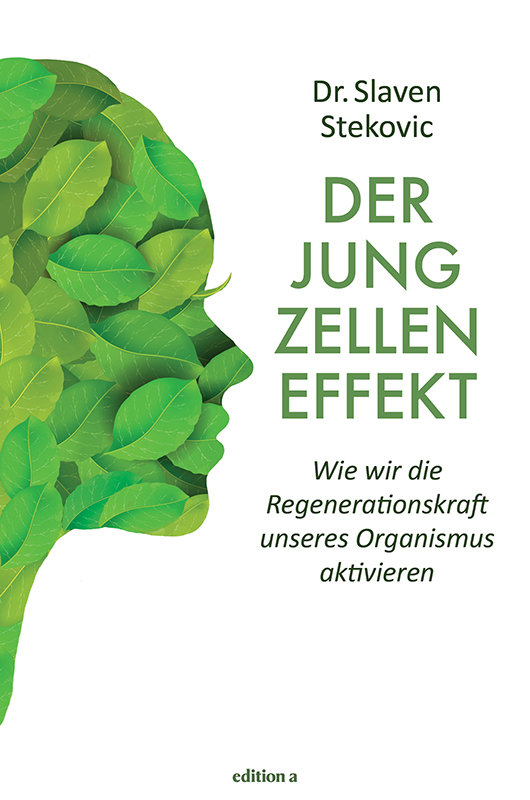
"Der Jungzelleneffekt" ist am vergangenen Wochenende erschienen. Foto: edition a.

"Der Jungzelleneffekt" ist am vergangenen Wochenende erschienen. Foto: edition a.

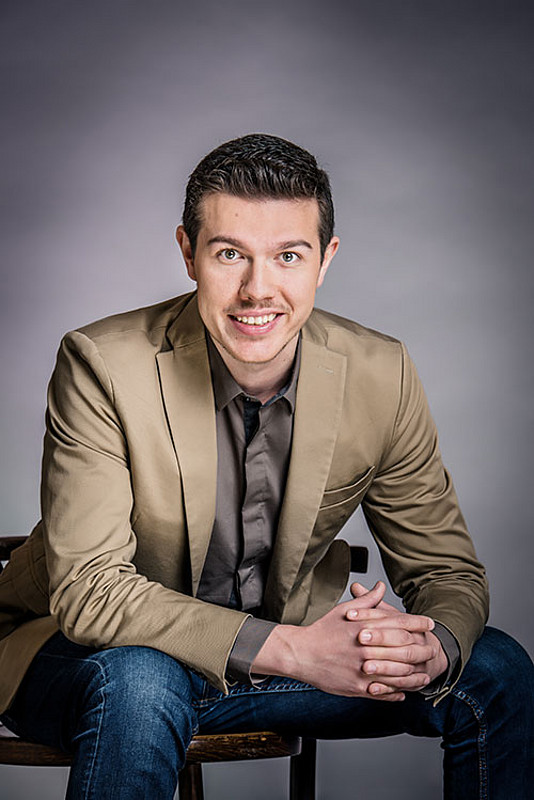
Slaven Stekovic - Forscher und nun auch Buchautor. Foto: TLL.

Slaven Stekovic - Forscher und nun auch Buchautor. Foto: TLL.

Molekularbiologe Slaven Stekovic veröffentlicht sein erstes Buch zu Fasten und gesundem Altern

Er zählte vergangenes Jahr zu den „30 unter 30“ im Forbes-Austria-Ranking und forscht seit drei Jahren an der Uni Graz zu den molekularbiologischen Mechanismen des Fastens. Nun veröffentlicht er nicht mehr nur Forschungspublikationen: Slaven Stekovics Erstlingswerk „Der Jungzelleneffekt“ ist vergangenen Samstag im edition a Verlag erschienen. In dem Buch geht es vor allem um die Frage, welchen Einfluss Nahrung – oder deren Fehlen – auf den menschlichen Organismus und dessen Gesundheit hat. Eingangs gibt es einen Überblick über den aktuellen Stand der Forschung. Danach widmet sich Stekovic so genannten „Fastenmimetikern“, also bestimmten Lebensmitteln, die – genauso wie das Fasten – einen zellulären Reinigungsprozess in Bewegung setzen. Das Resultat: Gesündere Zellen, die länger jung bleiben und damit auch den Körper in Schwung halten.

Aber: Fasten will gelernt sein! „Fasten bedeutet nicht zwingend, einfach gar nichts zu essen“, erklärt Stekovic. „Es kommt sehr darauf an, was man damit erreichen möchte. Sollen es nur ein paar Kilo weniger sein, die die Waage anzeigt? Oder möchte man den Körper entgiften und die eigene Lebens- und Ernährungsweise überdenken und vielleicht sogar nachhaltig verbessern?“ Auch genetische Parameter spielen eine Rolle bei der Frage, wie erfolgreiches Fasten funktioniert. Stekovic gibt auch Einblick in seinen persönlichen Hintergrund, sich mit dem Thema wissenschaftlich zu beschäftigen und schildert Selbstversuche. „Interessiert hat mich außerdem, in welchem kulturellen Kontext sich Fasten und Langlebigkeit bewegen, sowohl früher als auch heute“, erzählt der Forscher. „Der bewusste Verzicht in einer Gesellschaft des Überflusses liegt aktuell stark im Trend. Aber was passiert, wenn wir alle länger gesünder leben? Welche Veränderungen könnte diese Entwicklung mit sich bringen?“ Das Buch schließt mit einem „Länger leben Menü“, das einfache, aber wirkungsvolle Rezeptempfehlungen zum Nachkochen enthält.

„Der Jungzelleneffekt. Wie wir die Regenerationskraft unseres Organismus aktivieren“. edition a, 224 Seiten, 19,95 Euro, ISBN: 978-3990012642

created by Gerhild Leljak

Related news

Chemical Christmas show at the University of Graz: An explosive evening at the Schauspielh

At the beginning of December, the University of Graz transformed the theater into a laboratory: as part of “Chemical Life,” teacher training students staged a chemical Christmas show for Styrian school classes—complete with ethanol rockets, nitrogen snow, and glowing effects. An evening designed to inspire interest in studying chemistry.

Train by train: Koralm railway accelerates exchange between the Universities

Lectures at the University of Klagenfurt in the morning, seminars at the University of Graz in the afternoon: Austria's longest tunnel and a journey time of around 45 minutes make it easy. The Koralm railway increases the speed of networking between the two university locations. The collaboration builds on existing cooperation - for example in the areas of teacher training, Slavic studies and as employers, the universities are well coordinated.

On the trail of the Big Bang: University of Graz receives 1.5 million euros for doctoral programmes

The Austrian Science Fund FWF has selected the Doctoral Programme in Theoretical Particle Physics at the University of Graz for funding from the Doc.funds. Six young scientists will be funded for 3.5 years. They will gain fundamentally new insights into the origins of the world.

From trans women and knee prostheses: sports science prizes awarded

Walking better with a prosthesis, successfully getting rid of excess weight, training more effectively, more fairness for trans people in sport: these were the topics addressed by the students at the University of Graz who were awarded the sports science prizes for their Master's theses on 3 December 2025.

Begin of page section:
Additional information:

University of Graz
Universitaetsplatz 3
8010 Graz
Austria
  • Contact
  • Web Editors
  • Moodle
  • UNIGRAZonline
  • Imprint
  • Data Protection Declaration
  • Accessibility Declaration
Weatherstation
Uni Graz

End of this page section. Go to overview of page sections

End of this page section. Go to overview of page sections

Begin of page section:

End of this page section. Go to overview of page sections