Begin of page section:
Page sections:

  • Go to contents (Accesskey 1)
  • Go to position marker (Accesskey 2)
  • Go to main navigation (Accesskey 3)
  • Go to sub navigation (Accesskey 4)
  • Go to additional information (Accesskey 5)
  • Go to page settings (user/language) (Accesskey 8)
  • Go to search (Accesskey 9)

End of this page section. Go to overview of page sections

Begin of page section:
Page settings:

English en
Deutsch de
Search
Login

End of this page section. Go to overview of page sections

Begin of page section:
Search:

Search for details about Uni Graz
Close

End of this page section. Go to overview of page sections


Search

Begin of page section:
Main navigation:

Page navigation:

  • University

    University
    • About the University
    • Organisation
    • Faculties
    • Library
    • Working at University of Graz
    • Campus
    Developing solutions for the world of tomorrow - that is our mission. Our students and our researchers take on the great challenges of society and carry the knowledge out.
  • Research Profile

    Research Profile
    • Our Expertise
    • Research Questions
    • Research Portal
    • Promoting Research
    • Research Transfer
    • Ethics in Research
    • Commission for Scientific Integrity
    Scientific excellence and the courage to break new ground. Research at the University of Graz creates the foundations for making the future worth living.
  • Studies

    Studies
    • Prospective Students
    • Students
    • Post-registration Law
  • Community

    Community
    • International
    • Location
    • Research and Business
    • Alumni
    The University of Graz is a hub for international research and brings together scientists and business experts. Moreover, it fosters the exchange and cooperation in study and teaching.
Topics
  • Sustainable University
  • Researchers answer
  • Work for us
Close menu

End of this page section. Go to overview of page sections

Begin of page section:
You are here:

University of Graz News Der Große Krieg

End of this page section. Go to overview of page sections

Monday, 07 July 2014

Der Große Krieg

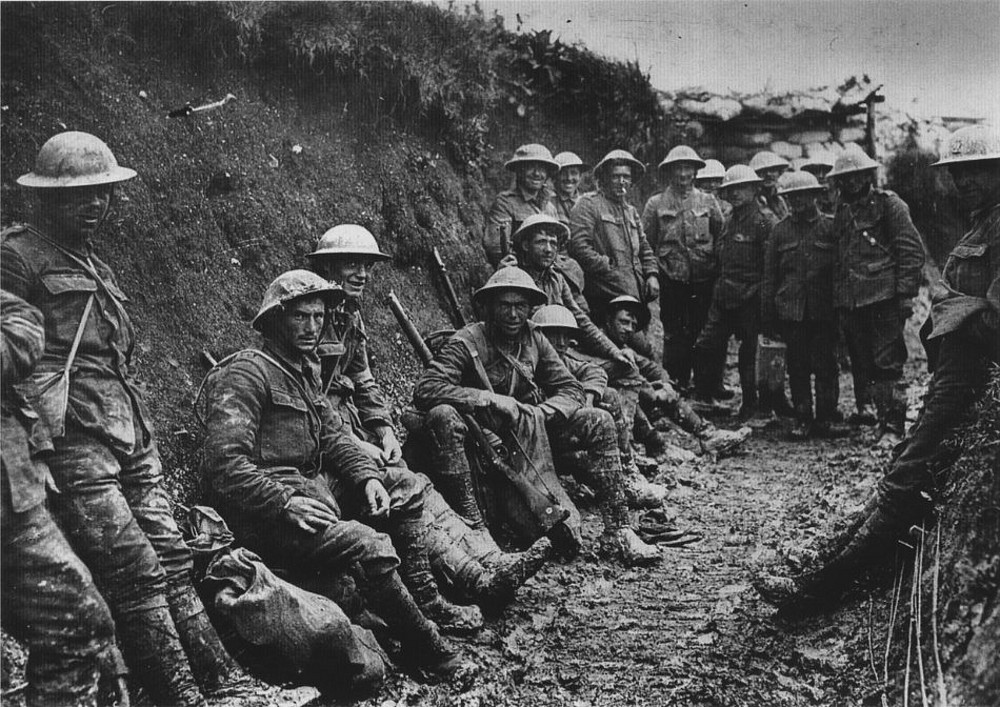
Soldaten der Ersten Battaillon der Royal Irish Rifles in der Somme-Schlacht 1916. 100 Jahre nach Ausbruch des Ersten Weltkriegs beschäftigt sich die Forschung mit dem Großen Krieg und seinen Auswirkungen. Foto: Wikimedia Commons /<a href="http://commons

Soldaten der Ersten Battaillon der Royal Irish Rifles in der Somme-Schlacht 1916. 100 Jahre nach Ausbruch des Ersten Weltkriegs beschäftigt sich die Forschung mit dem Großen Krieg und seinen Auswirkungen. Foto: Wikimedia Commons /<a href="http://commons.wikimedia.org/wiki/File:Royal_Irish_Rifles_ration_party_Somme_July_1916.jpg">Royal Engineers No 1 Printing Company</a>.

100 Jahre nach Ausbruch des Ersten Weltkriegs beschäftigt sich die Forschung mit der Urkatastrophe des 20. Jahrhunderts

Der Erste Weltkrieg veränderte nicht nur die politischen Machtverhältnisse in Europa, sondern auch die Gesellschaft grundlegend. WissenschafterInnen der Karl-Franzens-Universität beschäftigen sich mit der als "Urkatastrophe des 20. Jahrhunderts" bezeichneten Zäsur und seinen Auswirkungen aus historischen, soziologischen, theologischen oder kulturwissenschaftlichen Blickwinkeln. Anlässlich seines Ausbruchs vor genau 100 Jahren stehen der Juni und der Juli 2014 seitens der Pressestelle der Uni Graz ganz im Zeichen des "Großen Krieges".


>> Lesen und hören Sie hier mehr über die Grazer Forschungen zum Ersten Weltkrieg:

Ein heißes Pflaster: Dissertant untersucht die Stimmungen in Graz zu Kriegsbeginn 1914
Webradio-Beitrag: "Perspektivenwechsel" - Zwei Tagungen untersuchen bislang wenig beachtete Facetten des Ersten Weltkriegs

Soldaten des Hinterlandes: Rechtshistorikerin der Karl-Franzens-Universität untersucht Rolle der Grazer Frauen im Ersten Weltkrieg

Krieg am Papier: Historikerin der Uni Graz analysiert Rolle der Zeitungen während des Ersten Weltkrieges

Die Angst, der Feind und Wir: SoziologInnen der Uni Graz untersuchen die Rolle der Emotionen im Ersten Weltkrieg

Steiermark im Krieg: Historiker Martin Moll präsentiert das erste fundierte Gesamtpanorama des Kronlandes Steiermark zwischen 1914 und 1918

Sonderschau: Das Museum im Palais eröffnet am 27. Juni in Kooperation mit der Uni Graz die Ausstellung "Die Steiermark und der große Krieg"

Krankenschwestern im Ersten Weltkrieg: Historikerin der Uni Graz erforscht Widersprüche zwischen Frauenbild und Realität

Webradio-Beitrag: Der Historiker Helmut Konrad spricht über Graz im Ersten Weltkrieg und die Parallelen zwischen 1914 und 2014

Rassist, Menschenfreund, Siegertyp: Absolventin der Uni Graz erforscht die Kasperl-Figur vor der Kulisse des Ersten Weltkriegs

Kirche und Kaiser: Theologin der Uni Graz erforscht die Haltung der Bischöfe und des Klerus im Ersten Weltkrieg


Der Blick zurück: Historiker der Uni Graz erforscht die öffentliche Erinnerung an den Ersten Weltkrieg in Österreich

created by Gerhild Kastrun

Related news

The future of Styria as a knowledge region is at risk

It is reported that 500 million euros are to be cut from Styrian universities. University vice-chancellors fear that this will sacrifice the development and competitiveness of the region as a centre for science, culture and business in favour of short-term cost-cutting targets.

A good winter for honeybees: mortality rate in Austria below ten per cent

20 May is World Bee Day. Local beekeepers can celebrate it with confidence this year, as their colonies have come through the winter relatively well.

Whistles against division: Rivka Saltiel experienced both unrest and solidarity in the US

Rivka Saltiel, a geographer from the University of Graz, has been working as a visiting professor in Minneapolis for the past five months and has witnessed first-hand the state of emergency and the deadly raids carried out by the immigration agency ICE. She reports on the collective solidarity of the population, the resistance to the President’s attempts to divide the community, and the power of informal social networks that ensure day-to-day provision and safety. These practices of solidarity are also relevant for Europe.

Record of reported species: Styria wins the global City Nature Challenge

Observers in Styria recorded 5,158 different animals, plants and fungi as part of the international City Nature Challenge between 24 and 27 April 2026. This saw the region take first place in the "species" category. Ostrava in the Czech Republic made the most observations, with just under 140,000, whilst the San Francisco Bay Area had the highest number of participants, namely 3,019.

Begin of page section:
Additional information:

University of Graz
Universitaetsplatz 3
8010 Graz
Austria
  • Contact
  • Web Editors
  • Moodle
  • UNIGRAZonline
  • Imprint
  • Data Protection Declaration
  • Accessibility Declaration
Weatherstation
Uni Graz

End of this page section. Go to overview of page sections

End of this page section. Go to overview of page sections

Begin of page section:

End of this page section. Go to overview of page sections