Begin of page section:
Page sections:

  • Go to contents (Accesskey 1)
  • Go to position marker (Accesskey 2)
  • Go to main navigation (Accesskey 3)
  • Go to sub navigation (Accesskey 4)
  • Go to additional information (Accesskey 5)
  • Go to page settings (user/language) (Accesskey 8)
  • Go to search (Accesskey 9)

End of this page section. Go to overview of page sections

Begin of page section:
Page settings:

English en
Deutsch de
Search
Login

End of this page section. Go to overview of page sections

Begin of page section:
Search:

Search for details about Uni Graz
Close

End of this page section. Go to overview of page sections


Search

Begin of page section:
Main navigation:

Page navigation:

  • University

    University
    • About the University
    • Organisation
    • Faculties
    • Library
    • Working at University of Graz
    • Campus
    Developing solutions for the world of tomorrow - that is our mission. Our students and our researchers take on the great challenges of society and carry the knowledge out.
  • Research Profile

    Research Profile
    • Our Expertise
    • Research Questions
    • Research Portal
    • Promoting Research
    • Research Transfer
    • Ethics in Research
    Scientific excellence and the courage to break new ground. Research at the University of Graz creates the foundations for making the future worth living.
  • Studies

    Studies
    • Prospective Students
    • Students
  • Community

    Community
    • International
    • Location
    • Research and Business
    • Alumni
    The University of Graz is a hub for international research and brings together scientists and business experts. Moreover, it fosters the exchange and cooperation in study and teaching.
  • Spotlight
Topics
  • Our digital Advent calendar
  • Sustainable University
  • Researchers answer
  • Work for us
Close menu

End of this page section. Go to overview of page sections

Begin of page section:
You are here:

University of Graz News Demokratie in Gefahr

End of this page section. Go to overview of page sections

Wednesday, 23 September 2015

Demokratie in Gefahr

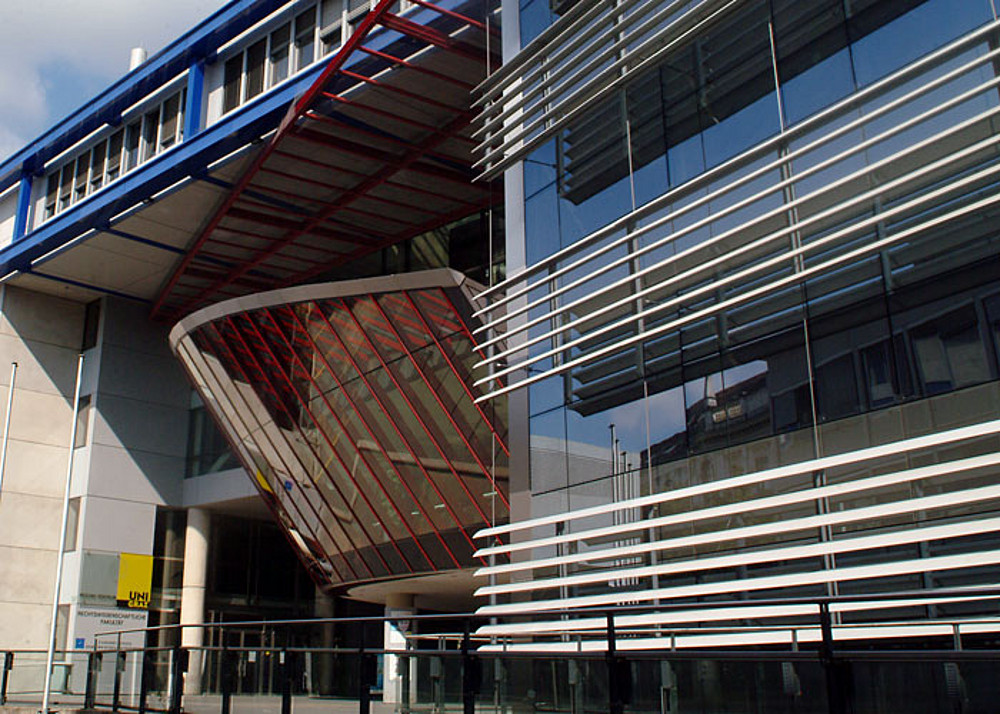
Das Zentrum für Südosteuropastudien lädt zu einem internationalen Symposium, das sich mit Bedrohungen für die Demokratie befasst. Der Schwerpunkt liegt auf der Türkei. Foto: Uni Graz

Das Zentrum für Südosteuropastudien lädt zu einem internationalen Symposium, das sich mit Bedrohungen für die Demokratie befasst. Der Schwerpunkt liegt auf der Türkei. Foto: Uni Graz

Uni Graz lädt zum internationalen Symposium über Bedrohungen durch Populismus und autoritäre Regime

Die liberale Demokratie ist in der Krise, nicht nur in Peripherien der demokratischen Welt, sondern auch in Westeuropa und den USA. Angesichts aktueller Entwicklungen lädt das Zentrum für Südosteuropastudien der Karl-Franzens-Universität Graz von 1. bis 3. Oktober 2015 zum internationalen Symposium „Populism, majoritarianism and crises of liberal democracy: Modes of illiberal governance in comparative perspective“. Im Zentrum der Betrachtung steht dabei die Türkei, die in den vergangenen Jahren einen überraschenden Ent-Demokratisierungsprozess durchlaufen hat. Es stellt sich nun die Frage, ob das Land vor einem Wechsel der politischen Regime steht: von einer instabilen, aber funktionierenden Demokratie zu einem undemokratischen Arrangement der politischen Kräfte. Darüber hinaus widmen sich zahlreiche Beiträge vergleichenden Fallstudien aus Südost- und Osteuropa sowie aus dem Nahen Osten und Lateinamerika.

Viele Politikbereiche, über die früher demokratisch entschieden wurde, sind ausgelagert worden. Globale Unternehmen und überstaatliche Institutionen wie die Europäische Union haben ein Maß an Entscheidungsmacht kumuliert, deren demokratische Kontrolle nicht mehr gewährleistet ist. Transnationale Migrationsbewegungen, Flüchtlingsströme und Terror sind ein zentraler Aspekt dieser „brave new world“. Demokratiemüdigkeit und Politikverdrossenheit breiten sich aus. Im Kontext dieser Krise befasst sich die Konferenz mit der Frage, welche Formen der Bedrohung von Populismus und Majoritarianismus ausgehen und wie post-demokratische Gesellschaften „funktionieren“. Neben PolitologInnen werden sich auch SoziologInnen, KulturwissenschafterInnen und ReligionswissenschafterInnen mit „illiberalen Regierungsformen“ auseinandersetzen.

Das Symposium ist das erste seiner Art und bildet den Auftakt für eine Reihe von Veranstaltungen, die im Rahmen des Konsortiums für Europäische Symposia zur Türkei in den nächsten Jahren an verschiedenen europäischen Universitäten stattfinden werden. Das Konsortium wurde im vergangenen Jahr in Graz zusammen mit VertreterInnen führender Zentren der Türkeiforschung in Europa gegründet und zählt unter anderen die Universitäten Oxford, Cambridge, Leiden und Paris zu seinen Mitgliedern.

Populism, majoritarianism and crises of liberal democracy: Modes of illiberal governance in comparative perspective
Wann: 1. bis 3. Oktober 2015
Wo: Karl-Franzens-Universität Graz

>> nähere Informationen zum Programm

Die Konferenzsprache ist Englisch.

created by Kerem Öktem und Gudrun Pichler

Related news

Chemical Christmas show at the University of Graz: An explosive evening at the Schauspielh

At the beginning of December, the University of Graz transformed the theater into a laboratory: as part of “Chemical Life,” teacher training students staged a chemical Christmas show for Styrian school classes—complete with ethanol rockets, nitrogen snow, and glowing effects. An evening designed to inspire interest in studying chemistry.

Train by train: Koralm railway accelerates exchange between the Universities

Lectures at the University of Klagenfurt in the morning, seminars at the University of Graz in the afternoon: Austria's longest tunnel and a journey time of around 45 minutes make it easy. The Koralm railway increases the speed of networking between the two university locations. The collaboration builds on existing cooperation - for example in the areas of teacher training, Slavic studies and as employers, the universities are well coordinated.

On the trail of the Big Bang: University of Graz receives 1.5 million euros for doctoral programmes

The Austrian Science Fund FWF has selected the Doctoral Programme in Theoretical Particle Physics at the University of Graz for funding from the Doc.funds. Six young scientists will be funded for 3.5 years. They will gain fundamentally new insights into the origins of the world.

From trans women and knee prostheses: sports science prizes awarded

Walking better with a prosthesis, successfully getting rid of excess weight, training more effectively, more fairness for trans people in sport: these were the topics addressed by the students at the University of Graz who were awarded the sports science prizes for their Master's theses on 3 December 2025.

Begin of page section:
Additional information:

University of Graz
Universitaetsplatz 3
8010 Graz
Austria
  • Contact
  • Web Editors
  • Moodle
  • UNIGRAZonline
  • Imprint
  • Data Protection Declaration
  • Accessibility Declaration
Weatherstation
Uni Graz

End of this page section. Go to overview of page sections

End of this page section. Go to overview of page sections

Begin of page section:

End of this page section. Go to overview of page sections