



Begin of page section:
Page sections:

  • Go to contents (Accesskey 1)
  • Go to position marker (Accesskey 2)
  • Go to main navigation (Accesskey 3)
  • Go to sub navigation (Accesskey 4)
  • Go to additional information (Accesskey 5)
  • Go to page settings (user/language) (Accesskey 8)
  • Go to search (Accesskey 9)

End of this page section. Go to overview of page sections

Begin of page section:
Page settings:

English en
Deutsch de
Search
Login

End of this page section. Go to overview of page sections

Begin of page section:
Search:

Search for details about Uni Graz
Close

End of this page section. Go to overview of page sections


Search

Begin of page section:
Main navigation:

Page navigation:

  • University

    University
    • About the University
    • Organisation
    • Faculties
    • Library
    • Working at University of Graz
    • Campus
    Developing solutions for the world of tomorrow - that is our mission. Our students and our researchers take on the great challenges of society and carry the knowledge out.
  • Research Profile

    Research Profile
    • Our Expertise
    • Research Questions
    • Research Portal
    • Promoting Research
    • Research Transfer
    • Ethics in Research
    • Commission for Scientific Integrity
    Scientific excellence and the courage to break new ground. Research at the University of Graz creates the foundations for making the future worth living.
  • Studies

    Studies
    • Prospective Students
    • Students
    • Registration for Study Programme (Winter semester 2026/27)
    • Study Days 22-26 June 2026
  • Community

    Community
    • International
    • Location
    • Research and Business
    • Alumni
    The University of Graz is a hub for international research and brings together scientists and business experts. Moreover, it fosters the exchange and cooperation in study and teaching.
Topics
  • Sustainable University
  • Researchers answer
  • Work for us
Close menu

End of this page section. Go to overview of page sections

Begin of page section:
You are here:

University of Graz News Coole Moleküle

End of this page section. Go to overview of page sections

Tuesday, 20 April 2021

Coole Moleküle

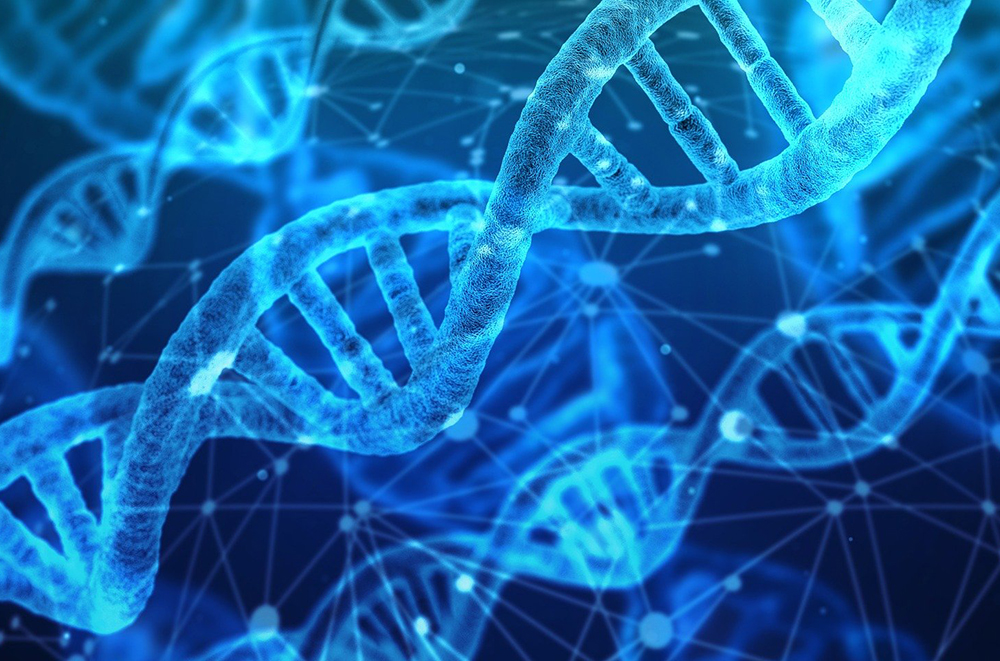
Ein neues Doktoratsprogramm blickt in biomolekulare Vorgänge. Foto: Gerd Altmann – Pixabay

Ein neues Doktoratsprogramm blickt in biomolekulare Vorgänge. Foto: Gerd Altmann – Pixabay

Grazer Universitäten machen fit für die Forschung: Neues internationales Doktoratsprogramm für Strukturbiologie

Im Forschungsverbund BioTechMed-Graz bieten die Universität Graz, die TU Graz und die Med Uni Graz gemeinsam ein neues Doktoratsprogramm an, welches die Strukturbiologie in den Vordergrund rückt. Unter Leitung der Med Uni Graz lernen die Studierenden im internationalen Ausbildungsprogramm Biomolecular Structures and Interactions (BioMolStruct) mehr über biomolekulare Strukturen und Wechselwirkungen, um künftig für die Beantwortung großer wissenschaftlicher Fragestellungen gut gerüstet zu sein.

Internationales Ausbildungsprogramm
Das Leben auf der Ebene biologischer Moleküle ist ein faszinierendes Zusammenspiel definierter 3D Strukturen und dynamischer Bewegungen, und fordert die heutigen WissenschafterInnen heraus. „Diese intrinsische Komplexität bietet einzigartige Möglichkeiten, die wir in unserem Ausbildungsprogramm ansprechen möchten“, sagt Tobias Madl, Sprecher des neuen PhD Programmes. Die Strukturbiologie spielt eine zentrale Rolle in der biomedizinischen Forschung. Sie hat geholfen, grundlegende makromolekulare Strukturen zu entschlüsseln, die (patho)physiologischen Prozessen zugrunde liegen. Die letzten Jahre haben zu einem Paradigmenwechsel auf diesem Gebiet geführt, weg von der Definition biologischer Funktionen nur aus statischen Strukturen, hin zur Notwendigkeit, die Molekulardynamik für ein umfassendes Verständnis der zugrundeliegenden Mechanismen einzubeziehen.

Drei Universitäten bündeln ihre Kompetenzen
„In BioMolStruct stellen wir eine einzigartige Gruppe von ForscherInnen der Universität Graz, der TU Graz und der Med Uni Graz zusammen. Unser Programm adressiert die wachsende Nachfrage nach WissenschafterInnen in der integrativen Strukturbiologie mit einem soliden experimentellen und theoretischen Hintergrund in Molekularbiologie, Biophysik und Strukturbiologie“, beschreibt Tobias Madl die Zielgruppe.
Alle drei teilnehmenden Universitäten unterstützen BioMolStruct, von hochmoderner Forschungsinfrastruktur bis zur Integration in die regulären Aktivitäten der Institutionen. Darüber hinaus stellen alle Universitäten zusätzliche Eigenmittel für den laufenden Betrieb, die institutionelle Verankerung des Programms sowie eine erhebliche direkte finanzielle Unterstützung bereit.

Zellstoffwechsel im Fokus
Die jungen ForscherInnen von BioMolStruct werden Biomoleküle und biomolekulare Komplexe untersuchen, die eine wesentliche Rolle bei der Signalübertragung und dem Stoffwechsel von Zellen spielen, wobei der Schwerpunkt auf Proteinen, Proteinkomplexen und Lipid / Protein-Wechselwirkungen liegt, die mit Alterung, Krebs, neurodegenerativen, metabolischen und kardiovaskulären Erkrankungen verbunden sind sowie genetischen Störungen. „Unser Forschungsprogramm zielt darauf ab, die Struktur, Konformationsdynamik und detaillierte Funktion dieser Systeme und ihre Modulation durch Wirkstoffe zu verstehen“, beschreibt Tobias Madl.
„Unser internationales Programm ist attraktiv für Studierende der biomedizinischen Wissenschaften, die eine anspruchsvolle DoktorandInnenausbildung anstreben, um eine Karriere in der Wissenschaft oder Industrie zu verfolgen. Wir werden unsere BioMolStruct-NachwuchsforscherInnen darauf vorbereiten, zukünftige Herausforderungen in den Bereichen der biomedizinischen Forschung mit fundiertem Wissen und innovativen Ansätzen zu meistern“, spricht Tobias Madl zukünftige KollegInnen an.
Interessierte können sich bis zum 12. Mai 2021 bewerben.

>> Mehr erfahren

created by Gerald Auer & Andreas Schweiger

Related news

Getting even hotter: Researchers predict global warming of 1.7 degrees by 2027

While Europe is currently sweltering in the heat, global temperatures are also rising towards concerning record levels. In 2026, Earth’s surface air temperature is expected to reach 1.62 degrees, and in 2027 even 1.71 degrees Celsius above pre-industrial levels. The long-term temperature rise – an average over a 20-year period – is predicted to exceed the 1.5-degree threshold of the Paris Agreement as of 2026 already. For the first time, researchers at the University of Graz have been able to make such a forecast so far in advance. The intensifying El Niño climate event favors forecast skill and thereby facilitates a reliable computation.

Forest fire at Rosenhain: Volunteer fire brigade carried out an evacuation drill at the Jesuit refectory

Thick smoke in the stairwell, flames at the edge of the forest, people missing in the Jesuit refectory at the University of Graz: at Rosenhain, the Graz Volunteer Fire Brigade carried out a drill simulating a scenario that is becoming increasingly realistic given the heat and drought

Full effort in the heat: the Sports Centre was in full swing at the Kleeblattlauf

On 19 June 2026, 2,000 runners and hundreds of supporters made their way to the Rosenhain for a sporting end-of-term event.

Save, invest or guarantee: What Austrians expect from the state

Austria needs to make savings. But where? And what should the Republic actually be spending its money on? The answers are provided by the initial findings of a major study involving the University of Graz. 99 per cent of those surveyed are in favour of the state ensuring healthcare provision. Almost three-quarters would like to see more public funding for education, whilst only around three per cent are in favour of cuts in this sector.

Begin of page section:
Additional information:

University of Graz
Universitaetsplatz 3
8010 Graz
Austria
  • Contact
  • Web Editors
  • Moodle
  • UNIGRAZonline
  • Imprint
  • Data Protection Declaration
  • Accessibility Declaration
Weatherstation
Uni Graz

End of this page section. Go to overview of page sections

End of this page section. Go to overview of page sections

Begin of page section:

End of this page section. Go to overview of page sections

