



We won’t even have Paris anymore. At least as far as concerning the climate targets agreed in the French capital in 2015. Instead of 1.5 degrees, our planet will heat up by 2.4 to 2.6 degrees by 2100. Solutions are needed at the current UN climate conference in Sharm El Sheikh.
Researchers at the University of Graz know how we can move forward without destroying the Earth. An A to Z of the most important findings of the Field of Excellence Climate Change Graz.
Cooling the atmosphere
The human influence on climate change can also be seen in the air: The layer close to the earth, the troposphere, is warming particularly strongly due to our CO2 emissions and is thus expanding into higher regions. The stratosphere above it is consequently compressed, because greenhouse gases and the diminishing ozone layer ensure greater cooling in the next "storey" of the atmosphere and lower it downwards. In the tropics, the air envelope warms even more than the earth's surface. This changes the usual circulations, with serious effects on the worldwide weather pattern. >> University of Graz experts: Physicists Ulrich Foelsche, Florian Ladstädter, Veronika Proschek und Andrea Steiner
Taming the bark beetle
In milder temperatures the pest feels very much at home, especially in the widespread spruce monocultures. If the forest dies, entire slopes can slide after heavy rainfall - with disastrous consequences for humans and the environment. A remedy would be more resistant trees as well as mixed forests and more forest maintenance, so that the bark beetle cannot spread so rapidly. >> University of Graz expert: economist Gabriel Bachner
Check CO2
Carbon dioxide is considered the greenhouse gas par excellence that is harmful to the climate. Researchers at carbManage.earth have compiled a guide on how and where private individuals, companies or municipalities can save CO2. This is already being implemented at the University of Graz: Heat and energy offer the greatest potential, followed by mobility. >> Uni Graz experts: Physicists Julia Danzer und Gottfried Kirchengast
Calculating extreme weather
Heat waves, droughts and heavy rainfall are becoming more frequent and more severe, according to the latest world climate report, on which authors from the University of Graz also worked. A rapid and drastic reduction of greenhouse gases is indispensable to contain the catastrophic consequences of climate change, show the forecast models, which are constantly being improved with the know-how of the Wegener Center. >> University of Graz expert: physicist Douglas Maraun
Fasting meat
It is not only the methane that cattle release, the production of animal feed also causes huge amounts of harmful emissions. This makes meat consumption - Austria ranks 15th worldwide with 5.9 tonnes in the lifetime of each person - a decisive factor for climate change. However, vegan food is not automatically better: soy, for which the rainforest is cleared, or almonds from monocultures are similarly problematic. >> University of Graz expert: sustainability researcher Ulrike Gelbmann
Glaciers in danger
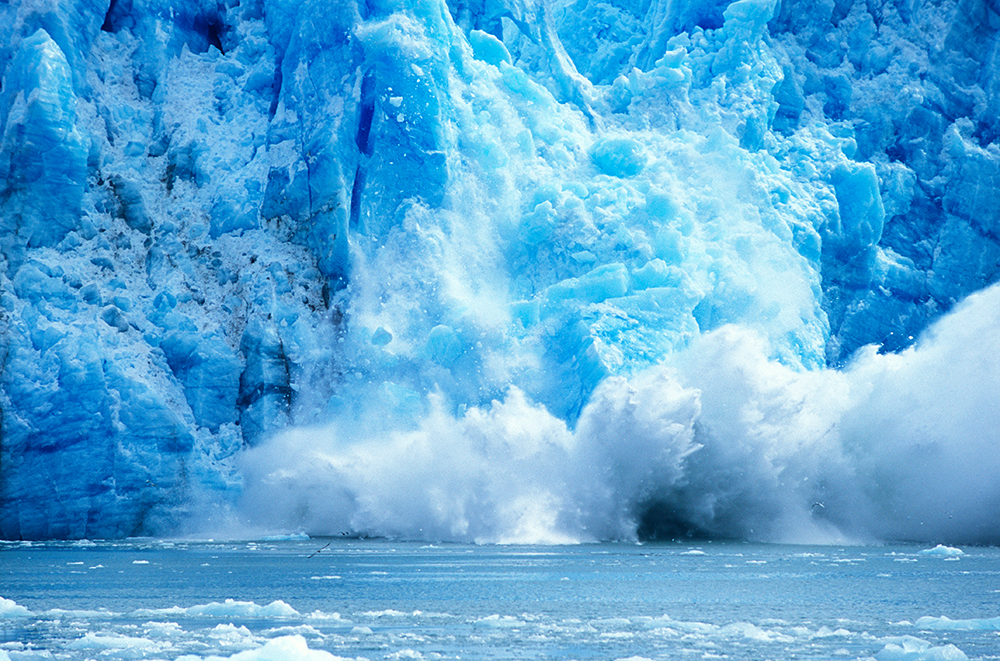
An unmistakable sign of climate change is the incessant retreat of glaciers in Austria. The Pasterze recently lost more than 50 metres in length within a year and sank by a good six metres. Most of the other glaciers are also slowly disintegrating, leaving lakes behind. >> University of Graz experts: Geographers Andreas Kellerer-Pirklbauer und Gerhard Lieb
Tangible indicators
Striking indicators documenting our environmental behaviour and global warming are summarised as "Graz Climate Change Indicators" on the website gcci.earth. There, anyone interested can get a picture of current and past emissions or compliance with climate targets in various regions of the globe. >> University of Graz expert: physicist Gottfried Kirchengast
Smart cycle
In order to reduce emissions and waste and to save resources, we need a transformation to a circular economy. This requires, for example, stricter regulations for reparability and recyclability. Central to this are product design, optimised processes of the companies involved as well as customers who offer what is no longer used and buy refurbished goods. >> University of Graz experts: business economists Rupert Baumgartner, Gernot Lechner und Marc Reimann
Mobilise people
Without broad acceptance among the population, drastic climate protection measures are difficult to implement. Social simulations - a combination of role play and computer simulation - can be used to assess how to bring about the necessary sustainable changes. The interests of the different groups affected are taken into account. >> University of Graz expert: sociologist Ilona Otto
Checking permafrost
Crumbling walls, impassable via ferratas, falling rocks on hiking trails: The warming of the permafrost in the Alps is turning many a mountaineering paradise into a danger zone. Climate change is softening the ice that holds the block glaciers made of rubble together like cement. Cameras and measuring devices from 80 climate stations in the Tauern region provide data on this every hour. >> University of Graz experts: geographers Andreas Kellerer-Pirklbauer und Gerhard Lieb
Space without tyres
Car traffic is the largest source of microplastics in the environment due to tyre wear. If individual journeys were reduced to a large extent, roads and car parks could be converted into green living space, which would protect the environment and health. The wallet also benefits: Calculated over a period of about 20 years, climate-friendly mobility is considerably cheaper than our current behaviour. >> University of Graz expert: sustainability researcher Alfred Posch
Taxes to tax
The CO2 tax makes goods that are associated with high emissions more expensive. This should encourage companies and consumers to switch to more sustainable alternatives. A redistribution of the revenue as a per capita climate bonus would primarily benefit poorer sections of the population, who tend to produce fewer emissions than richer ones. Border tax adjustments could ensure that less environmentally friendly imports do not undermine ecological standards in a country. >> University of Graz experts: economists Karl Steininger und Michael Finus
Swap fuel
Low-emission petrol alternatives are e-fuels, which can be obtained from biomass or industrial waste gases. Different fuel mixtures and their exhaust gases are currently being tested for small cars, two-wheelers, power saws and leaf blowers. >> University of Graz expert: chemist Sigurd Schober
Rebooking holidays
Travelling is essential for the exchange of cultures. Where possible, one should travel by train and bicycle. The choice of accommodation is also important: small private guesthouses are more sustainable than international hotel resorts and offer more insight into regional characteristics. Short-haul flights are completely taboo: one trip from Vienna to Berlin produces 130 kilograms of CO2 - about the same as eating 65 steaks. >> University of Graz expert: economist Karl Steininger
Avoid packaging
Everything that can be used more than once makes sense, whether glass, paper or plastic. Compared to disposable bottles, Tetrapak scores with its lower dead weight, which enables a more environmentally friendly transport, and easier recycling. >> University of Graz expert: sustainability researcher Ulrike Gelbmann
Transforming the economy
The effects of climate change, the clinging to fossil fuels and their promotion are a burden on Austria's economy, health and public budget to the tune of 15 billion euros a year. In a few years, this sum could rise to 20 billion annually. Thus, non-action on the part of politics causes enormous costs. >> University of Graz experts: economists Birgit Bednar-Friedl, Nina Knittel und Karl Steininger
Showing the future
How our economy and society can achieve the Paris climate goal and become almost emission-free in 2050 is shown in a concept by more than 70 Austrian scientists, which is to serve as a basis for the climate plan. Reducing greenhouse gases towards zero by the middle of the century is even possible while at the same time increasing the quality of life. >> University of Graz experts: economist Karl Steininger und physicist Gottfried Kirchengast



