



Begin of page section:
Page sections:

  • Go to contents (Accesskey 1)
  • Go to position marker (Accesskey 2)
  • Go to main navigation (Accesskey 3)
  • Go to sub navigation (Accesskey 4)
  • Go to additional information (Accesskey 5)
  • Go to page settings (user/language) (Accesskey 8)
  • Go to search (Accesskey 9)

End of this page section. Go to overview of page sections

Begin of page section:
Page settings:

English en
Deutsch de
Search
Login

End of this page section. Go to overview of page sections

Begin of page section:
Search:

Search for details about Uni Graz
Close

End of this page section. Go to overview of page sections


Search

Begin of page section:
Main navigation:

Page navigation:

  • University

    University
    • About the University
    • Organisation
    • Faculties
    • Library
    • Working at University of Graz
    • Campus
    Developing solutions for the world of tomorrow - that is our mission. Our students and our researchers take on the great challenges of society and carry the knowledge out.
  • Research Profile

    Research Profile
    • Our Expertise
    • Research Questions
    • Research Portal
    • Promoting Research
    • Research Transfer
    • Ethics in Research
    • Commission for Scientific Integrity
    Scientific excellence and the courage to break new ground. Research at the University of Graz creates the foundations for making the future worth living.
  • Studies

    Studies
    • Prospective Students
    • Students
  • Community

    Community
    • International
    • Location
    • Research and Business
    • Alumni
    The University of Graz is a hub for international research and brings together scientists and business experts. Moreover, it fosters the exchange and cooperation in study and teaching.
  • Spotlight
Topics
  • Sustainable University
  • Researchers answer
  • Work for us
Close menu

End of this page section. Go to overview of page sections

Begin of page section:
You are here:

University of Graz News Conspiracy?

End of this page section. Go to overview of page sections

Monday, 21 September 2020

Conspiracy?

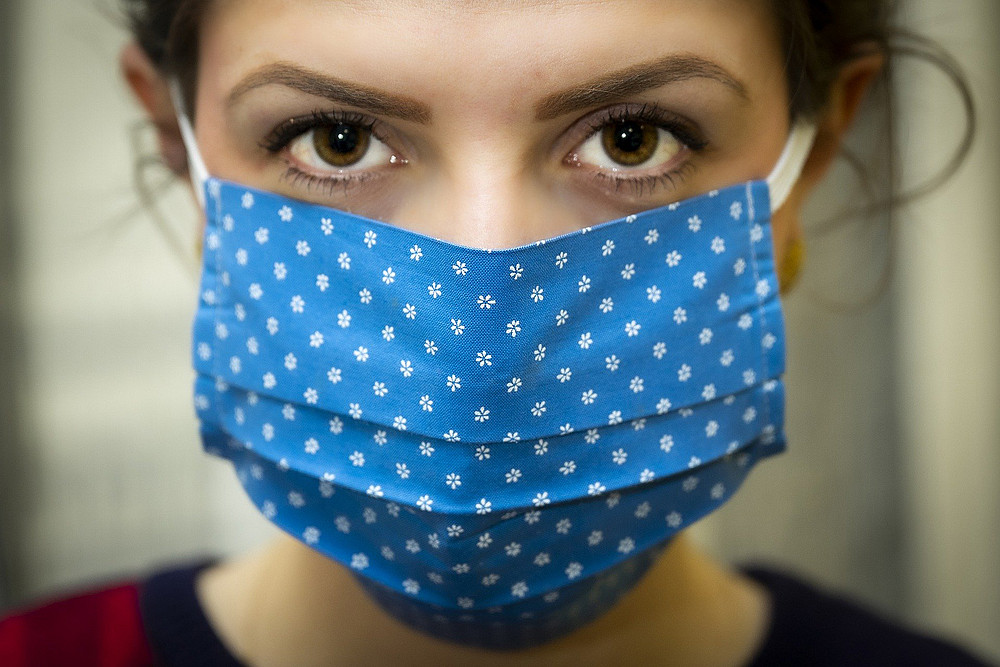
Is a mask a means of protection or restriction? Opinions often diverge on this question and others relating to the coronavirus pandemic. Photo: pixabay.

Is a mask a means of protection or restriction? Opinions often diverge on this question and others relating to the coronavirus pandemic. Photo: pixabay.

Research by the University of Graz and Graz University of Technology finds polarisation in public discussion of coronavirus

Was the novel coronavirus released to infect humans, or was it just bad luck? Are contact tracing, masks and mandatory vaccination reasonable, or are they coercive measures that jeopardise our basic rights – government instruments of control? Opinions are divided on these questions, according to a joint research project by the University of Graz and Graz University of Technology. A team of researchers in sociology and informatics present their initial findings on the polarisation of public opinion in discussion of coronavirus in the German-speaking countries.

The researchers surveyed a representative sample of internet users, consisting of over 2500 people in the German-speaking countries (Germany, Austria and Switzerland) and analysed the accounts of 119 Twitter users selected from this sample group. “The questions we investigated revealed a striking polarisation in the community,” says Markus Hadler, project leader at the University of Graz. “Slightly over half those surveyed believe the virus was naturally transmitted from animals to humans, while one third believe it was deliberately developed by humans in a laboratory,” says the sociologist, summarising one of their conclusions.

Looking at social media reveals that Facebook users are more likely to think that the virus was deliberately developed, while Twitter users tend to believe its origins were natural. Opinions differ with regard to compulsory safety precautions too. Facebook users are more likely to oppose mandatory vaccination and mask-wearing than people who do not use this channel. Twitter users, in contrast, support contact tracing and mandatory wearing of masks more frequently than other survey participants. The initial results of the survey were confirmed by analyses of associated Twitter accounts.

From 6 – 8 October 2020, these findings and other research are being presented and discussed at the 12th International Conference on Social Informatics, as a workshop event titled “Bridging the gap of polarization in public opinion on misinformed topics”.

>> The workshop programme is available here


“Polarization in public opinion: Combining social surveys and big data analyses of Twitter“

A research project of the “Route 63” collaboration between the University of Graz and Graz University of Technology

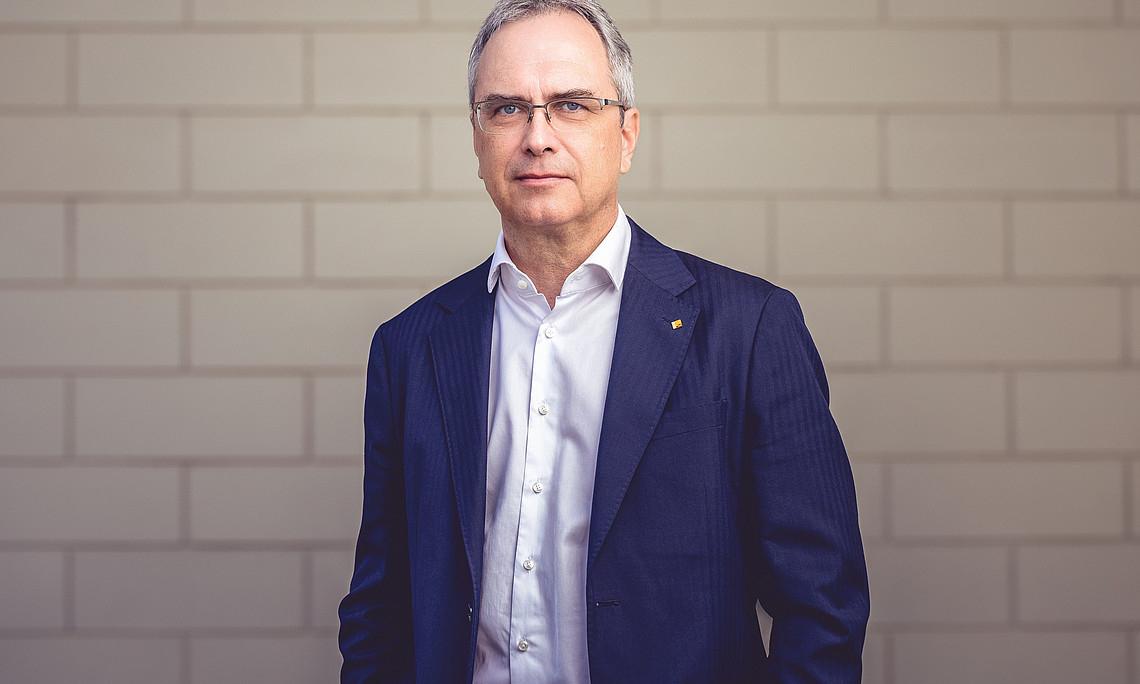
Project director: Univ.-Prof. Mag. Dr. Markus Hadler, Institute of Sociology, University of Graz, and Ass.Prof. Dipl.-Ing. Dr. Elisabeth Lex, Institute of Interactive Systems and Data Science, Graz University of Technology

 

>> For further details

created by Gudrun Pichler

Related news

Long Night of Research: How many languages are there in the world?

From a linguistic perspective, there are worlds of difference between Bern, Berlin and Vienna. A dialect impersonator will demonstrate live just how varied German can sound. How many languages are there in the world? What are their distinctive features? Which of these are spoken in Austria? These and other questions will be answered during the Long Night of Research at the University of Graz: on Friday, 24 April 2025, from 5 pm to 11 pm, in the University Library. Visitors can immerse themselves in the diversity of languages without travelling far by taking part in a quiz at the station.

Dual role: Researchers show that platelets can worsen disease

Platelets are best known as rapid responders in the event of injury. They stop bleeding and are indispensable for wound healing. “However, thrombocytes can also aggravate diseases, especially when inflammatory processes are involved,” explains Marion Mußbacher, a pharmacist at the University of Graz. She investigated the “dual role” of platelets in relation to fatty liver disease, a condition closely linked to obesity and type 2 diabetes.

Forscher:innen entdecken natürlichen Wirkstoff zum Schutz vor Lebererkrankungen

Die Leber leidet still. „Fetteinlagerungen, strukturelle Zerstörung des Gewebes oder mutierende Tumorzellen – all das fliegt eine Weile unter dem Radar. Begleitet werden diese Veränderungen oft von leichten, jedoch chronischen Entzündungen“, erklärt Andreas Koeberle, Pharmazeut an der Universität Graz. Er hat mit seinem Team und Kolleg:innen der Universität Innsbruck den Wirkstoff Mitrephoron B untersucht, der neue Behandlungsansätze ermöglicht. Die Ergebnisse der Studie wurden kürzlich in der Open-Access-Fachzeitschrift „Theranostics“ veröffentlicht.

Climate at the cliffs: Researchers unravel the evolution of the Greenland ice margin

Vertical ice walls, up to 40 metres high: in "Game of Thrones" they were dramatised as fortifications; during the Cold War, they were studied with great interest. How these imposing walls along Greenland’s 80,000-kilometre-long ice margin formed, how they are evolving, and what impact they have on the climate is not yet fully understood. Researchers from the Universities of Graz and Innsbruck have come one step closer to solving the mystery. The results of their latest study have been published in the journal The Cryosphere.

Begin of page section:
Additional information:

University of Graz
Universitaetsplatz 3
8010 Graz
Austria
  • Contact
  • Web Editors
  • Moodle
  • UNIGRAZonline
  • Imprint
  • Data Protection Declaration
  • Accessibility Declaration
Weatherstation
Uni Graz

End of this page section. Go to overview of page sections

End of this page section. Go to overview of page sections

Begin of page section:

End of this page section. Go to overview of page sections

