Begin of page section:
Page sections:

  • Go to contents (Accesskey 1)
  • Go to position marker (Accesskey 2)
  • Go to main navigation (Accesskey 3)
  • Go to sub navigation (Accesskey 4)
  • Go to additional information (Accesskey 5)
  • Go to page settings (user/language) (Accesskey 8)
  • Go to search (Accesskey 9)

End of this page section. Go to overview of page sections

Begin of page section:
Page settings:

English en
Deutsch de
Search
Login

End of this page section. Go to overview of page sections

Begin of page section:
Search:

Search for details about Uni Graz
Close

End of this page section. Go to overview of page sections


Search

Begin of page section:
Main navigation:

Page navigation:

  • University

    University
    • About the University
    • Organisation
    • Faculties
    • Library
    • Working at University of Graz
    • Campus
    Developing solutions for the world of tomorrow - that is our mission. Our students and our researchers take on the great challenges of society and carry the knowledge out.
  • Research Profile

    Research Profile
    • Our Expertise
    • Research Questions
    • Research Portal
    • Promoting Research
    • Research Transfer
    • Ethics in Research
    Scientific excellence and the courage to break new ground. Research at the University of Graz creates the foundations for making the future worth living.
  • Studies

    Studies
    • Prospective Students
    • Students
  • Community

    Community
    • International
    • Location
    • Research and Business
    • Alumni
    The University of Graz is a hub for international research and brings together scientists and business experts. Moreover, it fosters the exchange and cooperation in study and teaching.
  • Spotlight
Topics
  • Our digital Advent calendar
  • Sustainable University
  • Researchers answer
  • Work for us
Close menu

End of this page section. Go to overview of page sections

Begin of page section:
You are here:

University of Graz News Conspiracy?

End of this page section. Go to overview of page sections

Monday, 21 September 2020

Conspiracy?

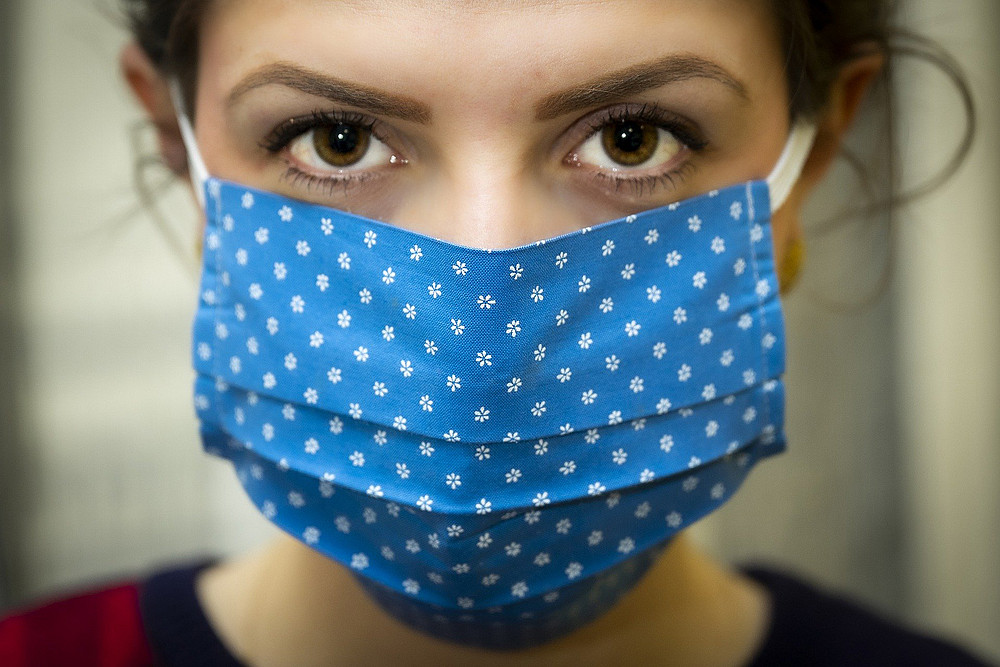
Is a mask a means of protection or restriction? Opinions often diverge on this question and others relating to the coronavirus pandemic. Photo: pixabay.

Is a mask a means of protection or restriction? Opinions often diverge on this question and others relating to the coronavirus pandemic. Photo: pixabay.

Research by the University of Graz and Graz University of Technology finds polarisation in public discussion of coronavirus

Was the novel coronavirus released to infect humans, or was it just bad luck? Are contact tracing, masks and mandatory vaccination reasonable, or are they coercive measures that jeopardise our basic rights – government instruments of control? Opinions are divided on these questions, according to a joint research project by the University of Graz and Graz University of Technology. A team of researchers in sociology and informatics present their initial findings on the polarisation of public opinion in discussion of coronavirus in the German-speaking countries.

The researchers surveyed a representative sample of internet users, consisting of over 2500 people in the German-speaking countries (Germany, Austria and Switzerland) and analysed the accounts of 119 Twitter users selected from this sample group. “The questions we investigated revealed a striking polarisation in the community,” says Markus Hadler, project leader at the University of Graz. “Slightly over half those surveyed believe the virus was naturally transmitted from animals to humans, while one third believe it was deliberately developed by humans in a laboratory,” says the sociologist, summarising one of their conclusions.

Looking at social media reveals that Facebook users are more likely to think that the virus was deliberately developed, while Twitter users tend to believe its origins were natural. Opinions differ with regard to compulsory safety precautions too. Facebook users are more likely to oppose mandatory vaccination and mask-wearing than people who do not use this channel. Twitter users, in contrast, support contact tracing and mandatory wearing of masks more frequently than other survey participants. The initial results of the survey were confirmed by analyses of associated Twitter accounts.

From 6 – 8 October 2020, these findings and other research are being presented and discussed at the 12th International Conference on Social Informatics, as a workshop event titled “Bridging the gap of polarization in public opinion on misinformed topics”.

>> The workshop programme is available here


“Polarization in public opinion: Combining social surveys and big data analyses of Twitter“

A research project of the “Route 63” collaboration between the University of Graz and Graz University of Technology

Project director: Univ.-Prof. Mag. Dr. Markus Hadler, Institute of Sociology, University of Graz, and Ass.Prof. Dipl.-Ing. Dr. Elisabeth Lex, Institute of Interactive Systems and Data Science, Graz University of Technology


>> For further details

created by Gudrun Pichler

Related news

Semester abroad without barriers: University of Graz wins award for promoting inclusion

The University of Graz has been awarded the Internationalization Award for its new inclusion initiative. Students with fewer opportunities now also receive financial support for their semester abroad outside Europe.

Fair distribution: Researchers determine just greenhouse gas budgets for all EU regions

Ten years ago, on 12 December 2015, the Paris Climate Agreement was signed at the UN Climate Conference. In order to limit global warming to well below two degrees, only a certain amount of CO2 may be emitted worldwide. While the focus was originally on national emission targets, more than 200 subnational regions and almost 300 cities have now adopted their own targets. But how many emissions are they fairly entitled to? Researchers at the University of Graz have now developed transparent criteria for fair distribution at the subnational level for the first time and determined corresponding greenhouse gas budgets for all European regions. The paper was published today in the scientific journal Nature Communications.

Chemical Christmas show at the University of Graz: An explosive evening at the Schauspielh

At the beginning of December, the University of Graz transformed the theater into a laboratory: as part of “Chemical Life,” teacher training students staged a chemical Christmas show for Styrian school classes—complete with ethanol rockets, nitrogen snow, and glowing effects. An evening designed to inspire interest in studying chemistry.

Train by train: Koralm railway accelerates exchange between the Universities

Lectures at the University of Klagenfurt in the morning, seminars at the University of Graz in the afternoon: Austria's longest tunnel and a journey time of around 45 minutes make it easy. The Koralm railway increases the speed of networking between the two university locations. The collaboration builds on existing cooperation - for example in the areas of teacher training, Slavic studies and as employers, the universities are well coordinated.

Begin of page section:
Additional information:

University of Graz
Universitaetsplatz 3
8010 Graz
Austria
  • Contact
  • Web Editors
  • Moodle
  • UNIGRAZonline
  • Imprint
  • Data Protection Declaration
  • Accessibility Declaration
Weatherstation
Uni Graz

End of this page section. Go to overview of page sections

End of this page section. Go to overview of page sections

Begin of page section:

End of this page section. Go to overview of page sections