



Begin of page section:
Page sections:

  • Go to contents (Accesskey 1)
  • Go to position marker (Accesskey 2)
  • Go to main navigation (Accesskey 3)
  • Go to sub navigation (Accesskey 4)
  • Go to additional information (Accesskey 5)
  • Go to page settings (user/language) (Accesskey 8)
  • Go to search (Accesskey 9)

End of this page section. Go to overview of page sections

Begin of page section:
Page settings:

English en
Deutsch de
Search
Login

End of this page section. Go to overview of page sections

Begin of page section:
Search:

Search for details about Uni Graz
Close

End of this page section. Go to overview of page sections


Search

Begin of page section:
Main navigation:

Page navigation:

  • University

    University
    • About the University
    • Organisation
    • Faculties
    • Library
    • Working at University of Graz
    • Campus
    Developing solutions for the world of tomorrow - that is our mission. Our students and our researchers take on the great challenges of society and carry the knowledge out.
  • Research Profile

    Research Profile
    • Our Expertise
    • Research Questions
    • Research Portal
    • Promoting Research
    • Research Transfer
    • Ethics in Research
    • Commission for Scientific Integrity
    Scientific excellence and the courage to break new ground. Research at the University of Graz creates the foundations for making the future worth living.
  • Studies

    Studies
    • Prospective Students
    • Students
  • Community

    Community
    • International
    • Location
    • Research and Business
    • Alumni
    The University of Graz is a hub for international research and brings together scientists and business experts. Moreover, it fosters the exchange and cooperation in study and teaching.
Topics
  • Sustainable University
  • Researchers answer
  • Work for us
Close menu

End of this page section. Go to overview of page sections

Begin of page section:
You are here:

University of Graz News Conclave: rituals, questions of power and cinematic interpretations

End of this page section. Go to overview of page sections

Tuesday, 06 May 2025

Conclave: rituals, questions of power and cinematic interpretations

Eine Kirche innen fotografiert

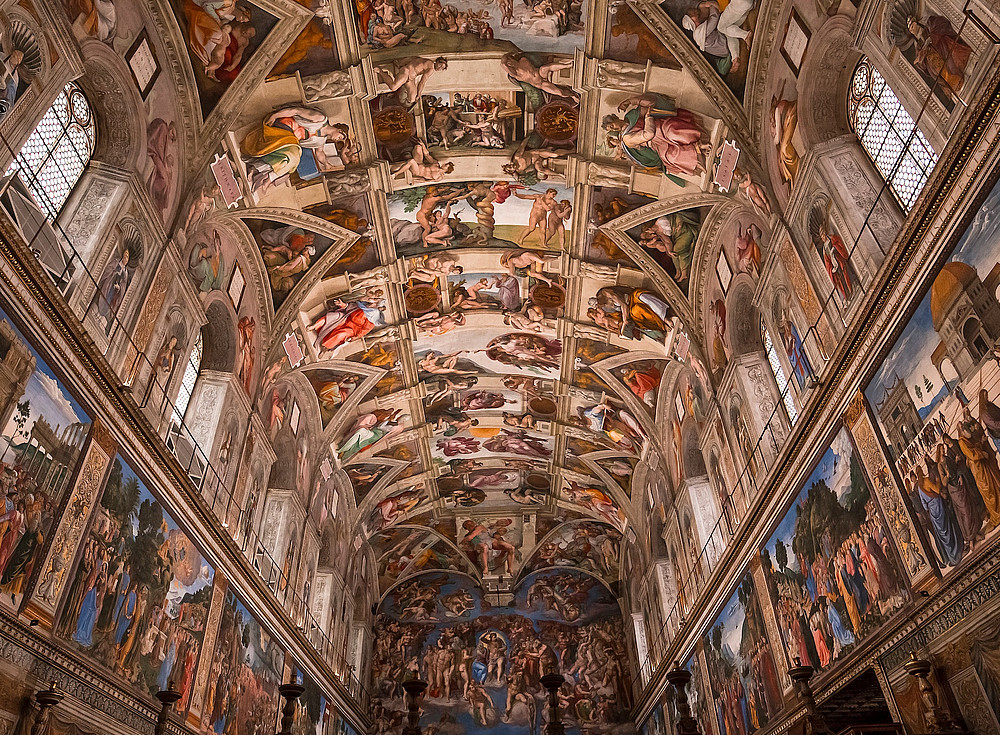
The Sistine Chapel is where the Pope is elected. Starting on 7 May, 133 cardinals will gather to elect the new head of the Catholic Church. Photo: photogolfer - stock.adobe.com

With the start of the conclave on 7 May 2025, the eyes of the world will once again be on the Sistine Chapel in the Vatican. However, the office of Peter's successor and the head of around 1.4 billion Catholic Christians worldwide requires a great deal of sensitivity, diplomacy and openness to change. Church historian Michaela Sohn-Kronthaler and fundamental theologian Christian Wessely talk about the background to the ritual.

When 133 cardinals enter the Sistine Chapel on 7 May, a rite will begin that has been the same for centuries – and yet raises new questions every time. The 2025 conclave is characterised by profound ecclesial and global challenges: from loss of trust to geopolitical tensions and expectations for a sustainable church. In the run-up to the papal election, the deliberations in the Vatican are already in their decisive phase. The cardinal electors under the age of 80 are currently discussing the requirements profile for the new head of the church with their older counterparts.

However, these tendencies can hardly be categorised as "conservative" or "progressive". In fact, the cardinals are faced with three key decisions: Should the Church have a second Francis - a pope of mercy who brings the margins to the centre? Or does it need a clear teacher of the faith who emphasises dogmatics more strongly again? Should the charism once again take a back seat to institution and law? And: How much synodality is theologically and canonically acceptable?

"The public attention on the conclave is historically justified - it is an old, fascinating ritual," explains Graz-based church historian Michaela Sohn-Kronthaler. "The term 'conclave' comes from the Latin cum clave - 'with the key'. It stands for secrecy, concentration and seriousness." The election is highly focussed on spirituality. "It is ritualised and characterised by secrecy," adds theologian Christian Wessely.

Long tradition meets modernity

The origins of the conclave date back to the 13th century: "Back then, after an agonisingly long vacancy of 1005 days, the cardinals literally had to be forced to conclude - they reduced the food and covered the roof. Only then did they agree on a compromise candidate," says Sohn-Kronthaler. The resulting constitution Ubi periculum from 1274 is considered one of the foundations for the election process. The history of the papal election is also a history of emancipation from secular influence: "With the decree In nomine Domini of 1059, the right to vote was transferred to the cardinals. Prior to this, the emperor, the people and the clergy in Rome had a say. The papal election process adapted to the respective requirements," says Sohn-Kronthaler.


Between progress and continuation: which church chooses itself?

Pope Francis, who died on 21 April, initiated structural reforms in recent years - including the appointment of women to leadership positions, such as Raffaella Petrini as head of government of the Vatican State, and the strengthening of synodal processes. "He showed that reforms are possible. He opened doors," says Sohn-Kronthaler.

Rome is now discussing whether this approach should be continued. "There is much to be said in favour of continuing the course started by Francis - not least through the targeted appointment of numerous cardinals from crisis regions, with an ecumenical or social profile," says Wessely. A candidate with both charisma and canonical clarity is being sought. Some cardinals are already being discussed.


Filmic resonance chamber: what "Conclave" makes visible - and what it doesn't

The 2024 feature film Conclave, based on Robert Harris' novel, combines political tension with ecclesiastical rituals. The film impresses with its imagery, music and dramaturgy. "The oath-taking, the casting of votes, the secrecy - it's very realistically realised," praises Wessely. The theologian, who specialises in media, adds that the direction and camera work are also incredibly good. In terms of content, however, critical comments remain. Sohn-Kronthaler: "The film is not a historical documentary - but a dramatisation that entertains, but can also irritate." The characterisation is "clichéd, but dramaturgically effective", says Wessely. Nevertheless, Conclave is suitable as a cultural resonance chamber. "The film is an impetus to deal with questions that also play a role in the real Vatican: Spheres of influence, transparency, distribution of power," says Sohn-Kronthaler.


A moment of decision - between heaven and earth

The 2025 conclave is more than just a sacred ritual - it is a global focal point for issues of our time. "The Church is faced with the task of mediating between tradition and transformation," says Wessely. And Sohn-Kronthaler summarises: "The election of a new pope must focus on the challenges facing the Catholic Church and society today, as well as the peacemaking role of religions."

created by Konstantin Tzivanopoulos

Related news

The digital world of tomorrow: University of Graz works with people to shape the future

Digitalisation is supposed to make everything better: artificial intelligence that even organises travel. The car that drives itself. Robots that care for us in our old age. But what kind of future do people actually want? What role should technology play in this? The University of Graz is exploring these questions through a new research facility. At the Graz Sociodigital and Participatory Futures Studio – or GraSP Futures Studio for short – young and old work together with researchers to design visions of the future that also critically examine technical innovations.

Eurovision: Why the Song Contest is always political

The 2026 Eurovision Song Contest sits at the intersection of music, geopolitics and culture. Josef Mühlbauer from the University of Graz explains why the ESC has always been a reflection of European politics, and how this major event highlights cultural affinities and social change.

Superti-Furga will becomefounding director of the CORI Institute in Graz

The Austrian Academy of Sciences (ÖAW) is establishing a new flagship centre for research into metabolic diseases in collaboration with the three universities in Graz. This innovative research approach combines mathematics and experimental biology with artificial intelligence

A match for life

Stem cell donations save lives. However, the only way to determine who is ultimately compatible with whom is through a testing process. Pharmacist Marion Mußbacher explains the mechanisms behind this. On 6 May 2026, the ÖH and the charity “Geben für Leben” are calling for people to come forward for typing at the University of Graz.

Begin of page section:
Additional information:

University of Graz
Universitaetsplatz 3
8010 Graz
Austria
  • Contact
  • Web Editors
  • Moodle
  • UNIGRAZonline
  • Imprint
  • Data Protection Declaration
  • Accessibility Declaration
Weatherstation
Uni Graz

End of this page section. Go to overview of page sections

End of this page section. Go to overview of page sections

Begin of page section:

End of this page section. Go to overview of page sections