Begin of page section:
Page sections:

  • Go to contents (Accesskey 1)
  • Go to position marker (Accesskey 2)
  • Go to main navigation (Accesskey 3)
  • Go to sub navigation (Accesskey 4)
  • Go to additional information (Accesskey 5)
  • Go to page settings (user/language) (Accesskey 8)
  • Go to search (Accesskey 9)

End of this page section. Go to overview of page sections

Begin of page section:
Page settings:

English en
Deutsch de
Search
Login

End of this page section. Go to overview of page sections

Begin of page section:
Search:

Search for details about Uni Graz
Close

End of this page section. Go to overview of page sections


Search

Begin of page section:
Main navigation:

Page navigation:

  • University

    University
    • About the University
    • Organisation
    • Faculties
    • Library
    • Working at University of Graz
    • Campus
    Developing solutions for the world of tomorrow - that is our mission. Our students and our researchers take on the great challenges of society and carry the knowledge out.
  • Research Profile

    Research Profile
    • Our Expertise
    • Research Questions
    • Research Portal
    • Promoting Research
    • Research Transfer
    • Ethics in Research
    Scientific excellence and the courage to break new ground. Research at the University of Graz creates the foundations for making the future worth living.
  • Studies

    Studies
    • Prospective Students
    • Students
  • Community

    Community
    • International
    • Location
    • Research and Business
    • Alumni
    The University of Graz is a hub for international research and brings together scientists and business experts. Moreover, it fosters the exchange and cooperation in study and teaching.
  • Spotlight
Topics
  • Our digital Advent calendar
  • Sustainable University
  • Researchers answer
  • Work for us
Close menu

End of this page section. Go to overview of page sections

Begin of page section:
You are here:

University of Graz News Buch der Bücher

End of this page section. Go to overview of page sections

Tuesday, 02 May 2017

Buch der Bücher

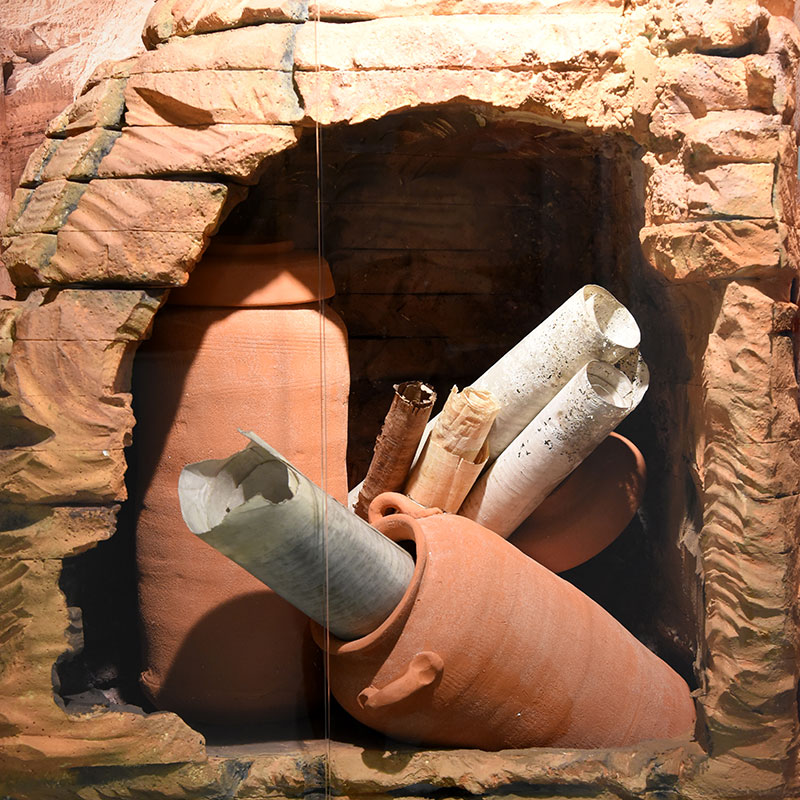
Nachbildung der Schriftrollen von Qumran: Zwischen 1947 und 1956 wurden in Felshöhlen nahe der Ruinenstätte im Westjordanland die bislang ältesten bekannten Bibelhandschriften entdeckt. Fotos: Uni Graz/Pichler

Nachbildung der Schriftrollen von Qumran: Zwischen 1947 und 1956 wurden in Felshöhlen nahe der Ruinenstätte im Westjordanland die bislang ältesten bekannten Bibelhandschriften entdeckt. Fotos: Uni Graz/Pichler

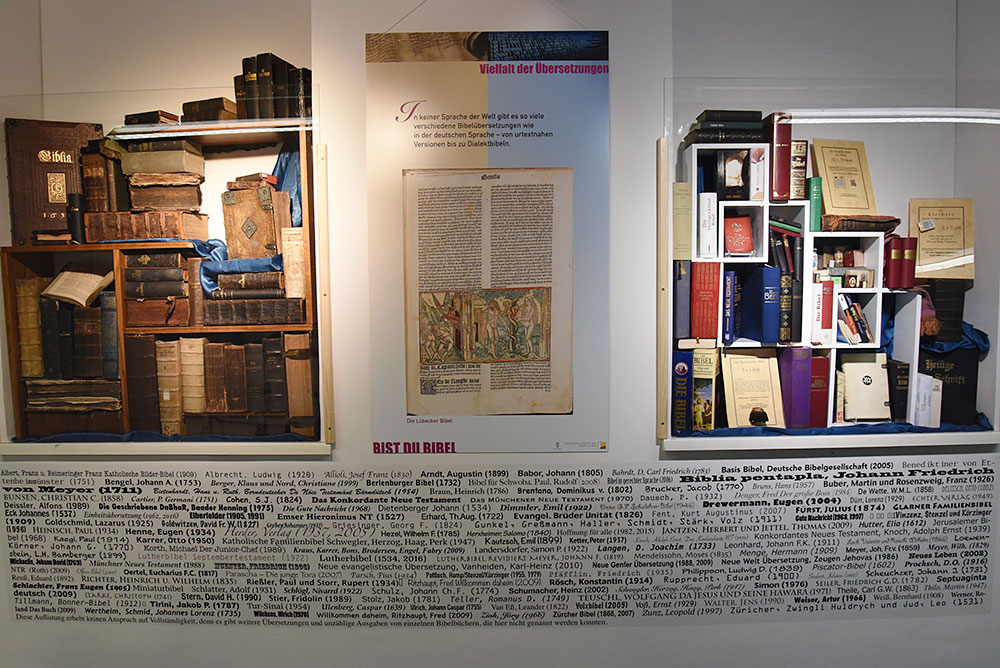
Deutsche Bibeln: In keiner anderen Sprache der Welt gibt es so viele verschiedene Übersetzungen des Buches der Bücher.

Deutsche Bibeln: In keiner anderen Sprache der Welt gibt es so viele verschiedene Übersetzungen des Buches der Bücher.

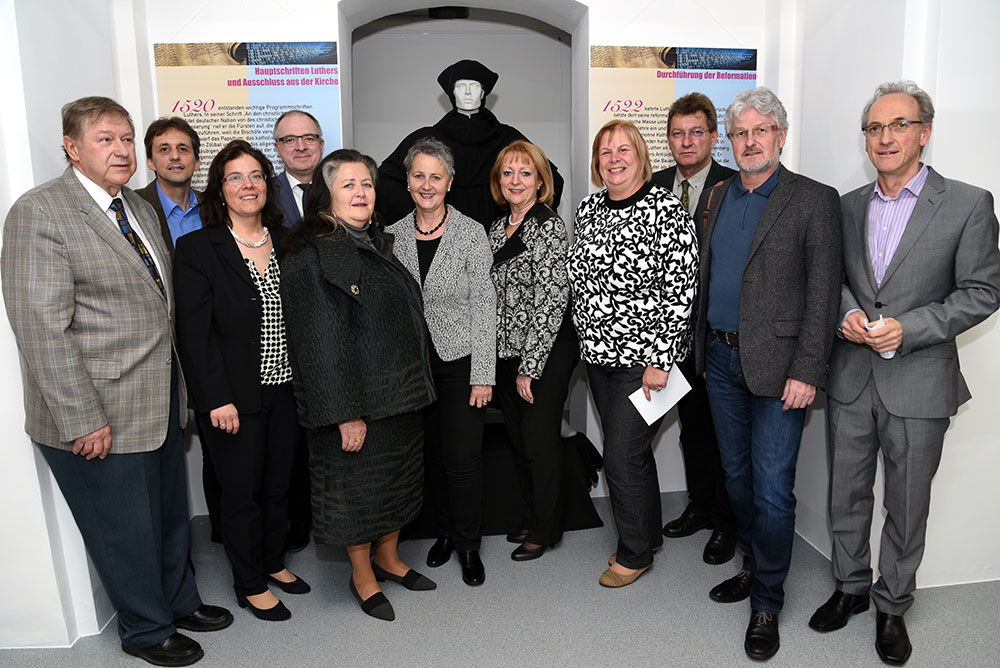
Karl Hubmann, Reinhold Esterbauer, Michaela Sohn-Kronthaler, Christoph Heil, Irmtraud Fischer, Helga Hensle-Wlasak, Irene Hubmann, Ute Bergner, Vizerektor Peter Scherrer, Nikolaus Reisinger und Franz Stangl (v.l.)

Bibel-ExpertInnen und Verantwortliche für die Ausstellung (v.l.): Karl Hubmann, Reinhold Esterbauer, Michaela Sohn-Kronthaler, Christoph Heil, Irmtraud Fischer, Helga Hensle-Wlasak, Irene Hubmann, Ute Bergner, Vizerektor Peter Scherrer, Nikolaus Reisinger und Franz Stangl

Neue Sonderausstellung im UniGraz@Museum widmet sich der bewegten Geschichte der Bibel von ihren Ursprüngen bis heute

Sie ist das am häufigsten übersetzte, am meisten zitierte und am weitesten verbreitete Buch der Welt: Die Bibel hat im Laufe der Jahrhunderte immer wieder die Gemüter der Menschen bewegt und zahlreiche Kontroversen ausgelöst. Ihre wechselvolle Geschichte steht im Mittelpunkt der diesjährigen und insgesamt 20. Sonderausstellung im UniGraz@Museum, die am 27. April 2017 eröffnet wurde.

Die Schau spannt den Bogen von den Wurzeln des Alten und der Entstehung des Neuen Testaments über prachtvolle Bibeln des Mittelalters und deutsche Ausgaben aus der Zeit der Reformation bis hin zu modernen Übersetzungen. Ausgestellt sind mehr als hundert Bibeln, darunter beeindruckende Exponate aus den Sondersammlungen der Karl-Franzens-Universität, Leihgaben des ADEVA-Verlags sowie aus Grazer Privatsammlungen.

„Die Bibel spielt nicht nur in religiöser Hinsicht eine wichtige Rolle, sie ist auch Gegenstand unserer Forschungen – von den antiken Wissenschaften über die Sondersammlungen der Universitätsbibliothek bin hin zur aktuellen Theologie“, verwies Vizerektor Peter Scherrer bei der Ausstellungseröffnung auf die vielfältige Bedeutung des Buches der Bücher.
Wissenschaftlich fundiert und gleichzeitig allgemein verständlich lädt die Ausstellung unter dem Titel „Bist du bibel…?“ ein, die Geschichte jener Schriftensammlung, die die Welt geprägt hat, aus verschiedenen Blickwinkeln kennenzulernen. Dabei können sich die BesucherInnen auch mit ihrem eigenen Verhältnis zur Bibel auseinandersetzen und sich fragen, ob sie etwa bibelfest, -kritisch oder -gläubig sind.

Sonderausstellung „Bist du bibel… ?“
Ort: UniGraz@Museum, Karl-Franzens-Universität Graz, Universitätsplatz 3/Untergeschoß, 8010 Graz
Dauer: 28. April 2017 bis 2. Februar 2018
>> Öffnungszeiten

created by Gudrun Pichler

Related news

Chemical Christmas show at the University of Graz: An explosive evening at the Schauspielh

At the beginning of December, the University of Graz transformed the theater into a laboratory: as part of “Chemical Life,” teacher training students staged a chemical Christmas show for Styrian school classes—complete with ethanol rockets, nitrogen snow, and glowing effects. An evening designed to inspire interest in studying chemistry.

Train by train: Koralm railway accelerates exchange between the Universities

Lectures at the University of Klagenfurt in the morning, seminars at the University of Graz in the afternoon: Austria's longest tunnel and a journey time of around 45 minutes make it easy. The Koralm railway increases the speed of networking between the two university locations. The collaboration builds on existing cooperation - for example in the areas of teacher training, Slavic studies and as employers, the universities are well coordinated.

On the trail of the Big Bang: University of Graz receives 1.5 million euros for doctoral programmes

The Austrian Science Fund FWF has selected the Doctoral Programme in Theoretical Particle Physics at the University of Graz for funding from the Doc.funds. Six young scientists will be funded for 3.5 years. They will gain fundamentally new insights into the origins of the world.

From trans women and knee prostheses: sports science prizes awarded

Walking better with a prosthesis, successfully getting rid of excess weight, training more effectively, more fairness for trans people in sport: these were the topics addressed by the students at the University of Graz who were awarded the sports science prizes for their Master's theses on 3 December 2025.

Begin of page section:
Additional information:

University of Graz
Universitaetsplatz 3
8010 Graz
Austria
  • Contact
  • Web Editors
  • Moodle
  • UNIGRAZonline
  • Imprint
  • Data Protection Declaration
  • Accessibility Declaration
Weatherstation
Uni Graz

End of this page section. Go to overview of page sections

End of this page section. Go to overview of page sections

Begin of page section:

End of this page section. Go to overview of page sections