Begin of page section:
Page sections:

  • Go to contents (Accesskey 1)
  • Go to position marker (Accesskey 2)
  • Go to main navigation (Accesskey 3)
  • Go to sub navigation (Accesskey 4)
  • Go to additional information (Accesskey 5)
  • Go to page settings (user/language) (Accesskey 8)
  • Go to search (Accesskey 9)

End of this page section. Go to overview of page sections

Begin of page section:
Page settings:

English en
Deutsch de
Search
Login

End of this page section. Go to overview of page sections

Begin of page section:
Search:

Search for details about Uni Graz
Close

End of this page section. Go to overview of page sections


Search

Begin of page section:
Main navigation:

Page navigation:

  • University

    University
    • About the University
    • Organisation
    • Faculties
    • Library
    • Working at University of Graz
    • Campus
    Developing solutions for the world of tomorrow - that is our mission. Our students and our researchers take on the great challenges of society and carry the knowledge out.
  • Research Profile

    Research Profile
    • Our Expertise
    • Research Questions
    • Research Portal
    • Promoting Research
    • Research Transfer
    • Ethics in Research
    • Commission for Scientific Integrity
    Scientific excellence and the courage to break new ground. Research at the University of Graz creates the foundations for making the future worth living.
  • Studies

    Studies
    • Prospective Students
    • Students
  • Community

    Community
    • International
    • Location
    • Research and Business
    • Alumni
    The University of Graz is a hub for international research and brings together scientists and business experts. Moreover, it fosters the exchange and cooperation in study and teaching.
  • Spotlight
Topics
  • Sustainable University
  • Researchers answer
  • Work for us
Close menu

End of this page section. Go to overview of page sections

Begin of page section:
You are here:

University of Graz News Brücke zwischen Universität und Beruf

End of this page section. Go to overview of page sections

Monday, 29 October 2018

Brücke zwischen Universität und Beruf

Strategien für die Wirtschaft der Zukunft: Diskussion an der Universität Graz mit hochkarätigen Gästen Foto: istock/XtockImages ©This content is subject to copyright.

Strategien für die Wirtschaft der Zukunft: Diskussion an der Universität Graz mit hochkarätigen Gästen Foto: istock/XtockImages
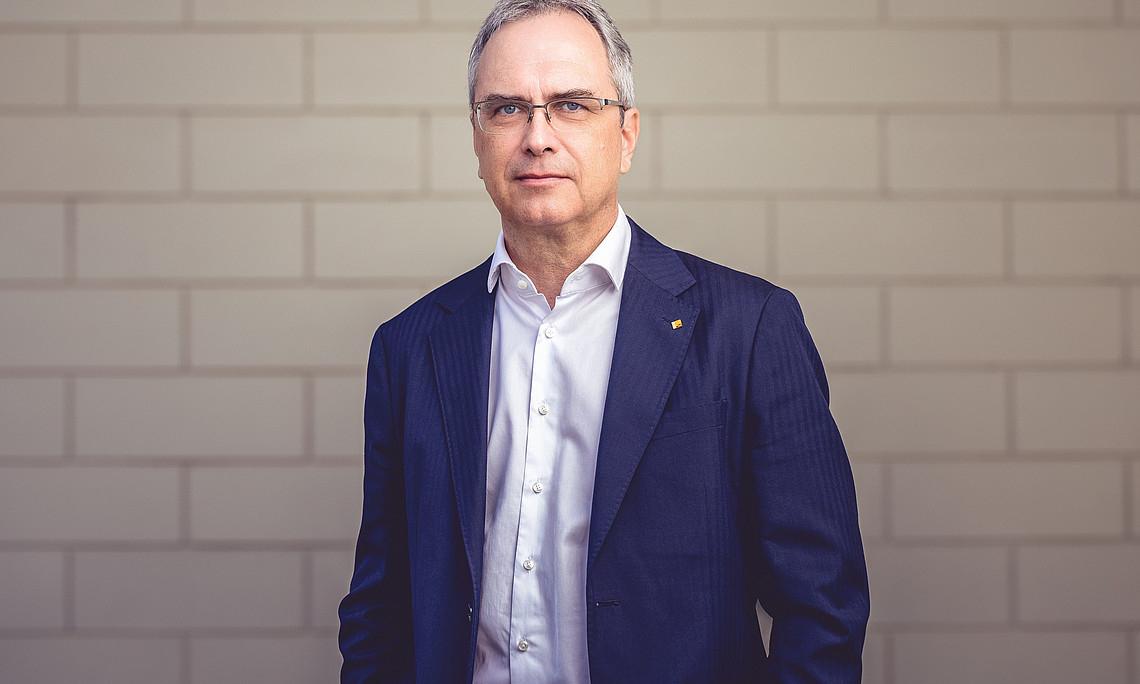
Styrian Strategy Summit – Auftakt für die kompetenzorientierte Plattform KLUG

Mit „KLUG – Kompetenzen lernen Uni Graz“ fördert die Universität Graz die Persönlichkeitsentwicklung der Studierenden. Zum Auftakt findet ein erstes Leitevent am 22. November 2018 statt. Hochkarätige Gäste, darunter Medien-Manager Horst Pirker, Post-Vorstand Georg Pölzl, Energie-Experte Karl Rose und Google-Managerin Stefanie Teichmann, geben Einblicke in die Welt von morgen. Und beantworten Fragen wie: Wie entwickelt sich die Zukunft? Wie reagieren wir auf die Entwicklungen von morgen?

Styrian Strategy Summit – Strategien für die Wirtschaft der Zukunft
WANN: 22. November 2018, ab 15:30 Uhr
WO: Aula, Universität Graz

Diskutiert über die Strategien der Zukunft gemeinsam mit hochkarätigen Gästen aus den Bereichen Ressource & Globalisierung, Mobilität & Logistik und Politik & Kommunikation:
Peter Filzmaier, Politikwissenschafter, Professor an der Donau-Universität Krems und der Universität Graz
Horst Pirker, CEO VGN, News, Styria Media Group, lehrt an der Uni Graz
Georg Pölzl, CEO Österreichische Post, Deutsche Telekom, lehrt an der Universität Graz
Karl Rose, Group Chief Strategist of Abu Dhabi National Oil Company, OMV, Shell, lehrt an der Universität Graz
Walter Slupetzky, CEO Quintessenz, Mobilitätsexperte
Stefanie Teichmann, Director at Google EMEA, Coca Cola, lehrt an der Universität Graz
Patrizia Valentini, E-Mobility Renault Österreich

>> Mehr zum Programm und zur Anmeldung

created by Andreas Schweiger

Related news

Long Night of Research: How many languages are there in the world?

From a linguistic perspective, there are worlds of difference between Bern, Berlin and Vienna. A dialect impersonator will demonstrate live just how varied German can sound. How many languages are there in the world? What are their distinctive features? Which of these are spoken in Austria? These and other questions will be answered during the Long Night of Research at the University of Graz: on Friday, 24 April 2025, from 5 pm to 11 pm, in the University Library. Visitors can immerse themselves in the diversity of languages without travelling far by taking part in a quiz at the station.

Dual role: Researchers show that platelets can worsen disease

Platelets are best known as rapid responders in the event of injury. They stop bleeding and are indispensable for wound healing. “However, thrombocytes can also aggravate diseases, especially when inflammatory processes are involved,” explains Marion Mußbacher, a pharmacist at the University of Graz. She investigated the “dual role” of platelets in relation to fatty liver disease, a condition closely linked to obesity and type 2 diabetes.

Forscher:innen entdecken natürlichen Wirkstoff zum Schutz vor Lebererkrankungen

Die Leber leidet still. „Fetteinlagerungen, strukturelle Zerstörung des Gewebes oder mutierende Tumorzellen – all das fliegt eine Weile unter dem Radar. Begleitet werden diese Veränderungen oft von leichten, jedoch chronischen Entzündungen“, erklärt Andreas Koeberle, Pharmazeut an der Universität Graz. Er hat mit seinem Team und Kolleg:innen der Universität Innsbruck den Wirkstoff Mitrephoron B untersucht, der neue Behandlungsansätze ermöglicht. Die Ergebnisse der Studie wurden kürzlich in der Open-Access-Fachzeitschrift „Theranostics“ veröffentlicht.

Climate at the cliffs: Researchers unravel the evolution of the Greenland ice margin

Vertical ice walls, up to 40 metres high: in "Game of Thrones" they were dramatised as fortifications; during the Cold War, they were studied with great interest. How these imposing walls along Greenland’s 80,000-kilometre-long ice margin formed, how they are evolving, and what impact they have on the climate is not yet fully understood. Researchers from the Universities of Graz and Innsbruck have come one step closer to solving the mystery. The results of their latest study have been published in the journal The Cryosphere.

Begin of page section:
Additional information:

University of Graz
Universitaetsplatz 3
8010 Graz
Austria
  • Contact
  • Web Editors
  • Moodle
  • UNIGRAZonline
  • Imprint
  • Data Protection Declaration
  • Accessibility Declaration
Weatherstation
Uni Graz

End of this page section. Go to overview of page sections

End of this page section. Go to overview of page sections

Begin of page section:

End of this page section. Go to overview of page sections