Begin of page section:
Page sections:

  • Go to contents (Accesskey 1)
  • Go to position marker (Accesskey 2)
  • Go to main navigation (Accesskey 3)
  • Go to sub navigation (Accesskey 4)
  • Go to additional information (Accesskey 5)
  • Go to page settings (user/language) (Accesskey 8)
  • Go to search (Accesskey 9)

End of this page section. Go to overview of page sections

Begin of page section:
Page settings:

English en
Deutsch de
Search
Login

End of this page section. Go to overview of page sections

Begin of page section:
Search:

Search for details about Uni Graz
Close

End of this page section. Go to overview of page sections


Search

Begin of page section:
Main navigation:

Page navigation:

  • University

    University
    • About the University
    • Organisation
    • Faculties
    • Library
    • Working at University of Graz
    • Campus
    Developing solutions for the world of tomorrow - that is our mission. Our students and our researchers take on the great challenges of society and carry the knowledge out.
  • Research Profile

    Research Profile
    • Our Expertise
    • Research Questions
    • Research Portal
    • Promoting Research
    • Research Transfer
    • Ethics in Research
    Scientific excellence and the courage to break new ground. Research at the University of Graz creates the foundations for making the future worth living.
  • Studies

    Studies
    • Prospective Students
    • Students
  • Community

    Community
    • International
    • Location
    • Research and Business
    • Alumni
    The University of Graz is a hub for international research and brings together scientists and business experts. Moreover, it fosters the exchange and cooperation in study and teaching.
  • Spotlight
Topics
  • Sustainable University
  • Researchers answer
  • Work for us
Close menu

End of this page section. Go to overview of page sections

Begin of page section:
You are here:

University of Graz News Brennpunkt

End of this page section. Go to overview of page sections

Friday, 01 July 2022

Brennpunkt

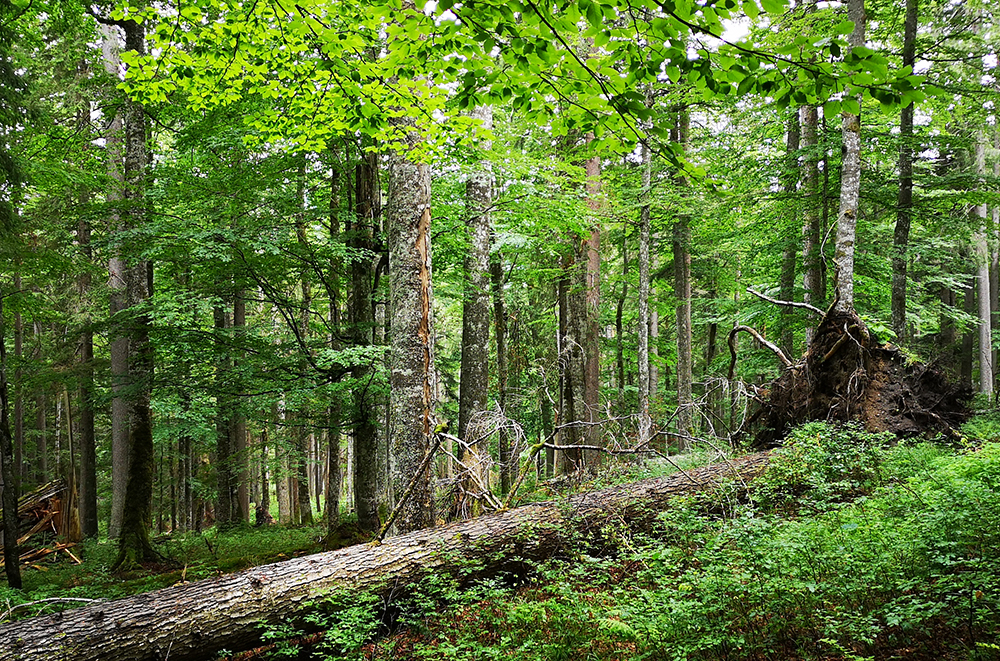
Schützt vor Bränden: Klimafitter Mischwald mit humusreichem, dunklen Waldboden. Foto: Uni Graz/Dagmar Henner

Wald in Flammen: Forscherin der Uni Graz warnt vor hohem Risiko mit schweren Folgen

Dem grünen Herzen droht ein Infarkt. Insgesamt werden mit den extremen Trockenperioden Waldbrände in den Alpenregionen deutlich zunehmen. Die Flammen zerstören nicht nur wichtigen Baumbestand und CO2-Schlucker, sondern gefährden Häuser, Wirtschaft und Ökosysteme, warnt Dagmar Henner vom Wegener Center für Klima und Globalen Wandel der Universität Graz.

„Häufigere Waldbrände sind ein deutliches Anzeichen des Klimawandels“, betont Henner. Und das Risiko steigt rasant und nachweislich, warnt die Doktorandin. Sie hat – gemeinsam mit Klimaforscher Gottfried Kirchengast – festgestellt, dass die Feuergefahr in vielen Teilen der österreichischen Alpen und des Alpenvorlandes sehr hoch ist. >> Studie im Detail

Die Ereignisse der vergangenen Wochen geben der Wissenschafterin Recht. Insbesondere in Ostösterreich war die Situation im Februar und März brandgefährlich. Buchstäblich.
Der geringe Niederschlag allein setzt den Bäumen schon zu. So werden diese zur leichten Beute für den Borkenkäfer, der sich dank des üppigen Nahrungsangebots kräftig vermehrt und in Folge die Pflanzenriesen umbringt. Diese brennen dann wie Zunder.
Feuchtere Phasen wie Anfang Juni können den Wasserhaushalt der Wälder etwas ausgleichen, die angespannte Lage aber auch verschlimmern. Insbesondere Starkregen schwemmt die wertvolle Humusschicht weg. Wurde diese zuvor schon durch einen Brand in Mitleidenschaft gezogen, rinnt dann auch noch der letzte Rest davon, skizziert Henner. Die Konsequenz: Hänge rutschen ab. Der Schutz vor Lawinen geht verloren. Überschwemmungen nehmen zu.
Ein Teufelskreis? Vielmehr ein Systemkollaps. „Wir sehen am Beispiel Wald, wie sehr alles zusammenhängt, wie eng das Leben von Mensch und Natur miteinander verknüpft ist.“

Die Zerstörung schafft zugleich die Chance für Aufforstung. Klimafittere Bäume ersetzen Monokulturen aus Fichten und bilden einen gesünderen Mischwald. Henner: „Damit lassen sich die Humusschicht und die Konzentration von Kohlenstoff, der die Struktur im Boden beeinflusst, verbessern. Dadurch kann mehr Wasser aufgenommen und gespeichert werden.“ Der Haken: Das Ergebnis, ein optimiertes System Wald, wird frühestens in 20 Jahren sichtbar und wirksam.
Henner appelliert daher an alle Verantwortlichen: „Noch können wir den Wald stärken. Wir müssen aber jetzt handeln!“

created by Andreas Schweiger

Related news

Cosmetics in the environment: University of Graz proves danger to ants

Titanium dioxide, which is found in cosmetics, for example, is increasingly entering the environment in the form of nanoparticles. This could also put insects at risk. If ants ingest the substance in combination with the pesticide glyphosate, it disturbs the development of their offspring. Scientists at the University of Graz are drawing attention to the negative consequences of this toxic cocktail.

How are tech companies changing democracy? Uni Graz designs exhibition for schools

Filtered information, conspiracy theories, fake news – certain groups and corporations are using social media and algorithms to try to influence public opinion in their favour. Their goal: to weaken fundamental rights and diversity of opinion and seize power. In a new exhibition, researchers at the University of Graz are working with pupils to explore the impact of social media and AI on democracy. In accompanying workshops, the scientists want to encourage young people to develop their own ideas for a socially and ecologically viable future and to actively help shape it. The exhibition, designed as a travelling exhibition for schools, will open on 9 March 2026 at the Dreihackengasse Gymnasium in Graz.

Step by step: What motivates Mireille van Poppel as a scientist and vice-rector

Improving people's health and eliminating inequalities: Mireille van Poppel pursues these goals both as a public health researcher and as vice-rector for Internationalisation and Equality. In both roles, she pays particular attention to individual needs.

Master's degree in psychotherapy in Graz: registration opens in March

Graz is becoming a hotspot for psychotherapy: from 2026, the University of Graz and the Medical University of Graz will jointly offer the new master's programme. Registration for the admission procedure for the 140 study places will start in March.

Begin of page section:
Additional information:

University of Graz
Universitaetsplatz 3
8010 Graz
Austria
  • Contact
  • Web Editors
  • Moodle
  • UNIGRAZonline
  • Imprint
  • Data Protection Declaration
  • Accessibility Declaration
Weatherstation
Uni Graz

End of this page section. Go to overview of page sections

End of this page section. Go to overview of page sections

Begin of page section:

End of this page section. Go to overview of page sections