Begin of page section:
Page sections:

  • Go to contents (Accesskey 1)
  • Go to position marker (Accesskey 2)
  • Go to main navigation (Accesskey 3)
  • Go to sub navigation (Accesskey 4)
  • Go to additional information (Accesskey 5)
  • Go to page settings (user/language) (Accesskey 8)
  • Go to search (Accesskey 9)

End of this page section. Go to overview of page sections

Begin of page section:
Page settings:

English en
Deutsch de
Search
Login

End of this page section. Go to overview of page sections

Begin of page section:
Search:

Search for details about Uni Graz
Close

End of this page section. Go to overview of page sections


Search

Begin of page section:
Main navigation:

Page navigation:

  • University

    University
    • About the University
    • Organisation
    • Faculties
    • Library
    • Working at University of Graz
    • Campus
    Developing solutions for the world of tomorrow - that is our mission. Our students and our researchers take on the great challenges of society and carry the knowledge out.
  • Research Profile

    Research Profile
    • Our Expertise
    • Research Questions
    • Research Portal
    • Promoting Research
    • Research Transfer
    • Ethics in Research
    Scientific excellence and the courage to break new ground. Research at the University of Graz creates the foundations for making the future worth living.
  • Studies

    Studies
    • Prospective Students
    • Students
  • Community

    Community
    • International
    • Location
    • Research and Business
    • Alumni
    The University of Graz is a hub for international research and brings together scientists and business experts. Moreover, it fosters the exchange and cooperation in study and teaching.
  • Spotlight
Topics
  • Our digital Advent calendar
  • Sustainable University
  • Researchers answer
  • Work for us
Close menu

End of this page section. Go to overview of page sections

Begin of page section:
You are here:

University of Graz News Dust catchers

End of this page section. Go to overview of page sections

Monday, 16 May 2022

Dust catchers

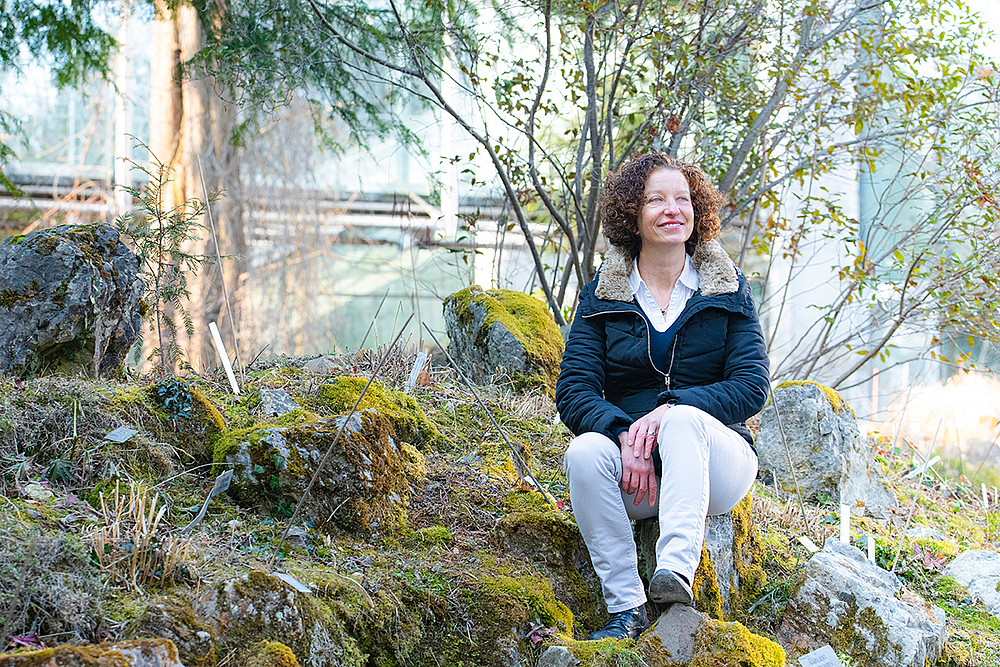
Bettina Weber and her colleagues provide, for the first time, comprehensive facts and figures on the importance of biological soil crusts for the regional and global dust cycle. Photo: Uni Graz/Tzivanopoulos ©Uni Graz/Tzivanopoulos

Bettina Weber and her colleagues provide, for the first time, comprehensive facts and figures on the importance of biological soil crusts for the regional and global dust cycle. Photo: Uni Graz/Tzivanopoulos

Biological crusts strengthen the soil in dry areas and play an important role for the climate

When bacteria, fungi, mosses, lichens and algae combine on dry land, they form so-called biological soil crusts. These cover about twelve percent of the total global land surface, and up to one third of the surface in dry areas. Biological soil crusts play an important role in consolidating soils, making them more stable and less likely to be stirred up by the wind. Since dust particles in the atmosphere have an impact on the climate, soil crusts fulfil an important function in several respects. In a paper published in Nature Geoscience, biologist Bettina Weber of the University of Graz and her colleagues provide, for the first time, comprehensive facts and figures on the importance of biological soil crusts for the regional and global dust cycle, both under current and future conditions.

The largest areas with biological crusts are in Africa, the Middle East and Asia, Australia and the Midwest of the USA. However, they can be found worldwide wherever temperature, rainfall and soil conditions are suitable. Describing her results, Weber says, "We estimate that biological soil crusts reduce global atmospheric dust emissions by about 60 percent." However, by 2070, the authors expect biocrust cover to decrease due to climate change and intensification of land use, with declines of 25 to 40 percent depending on the scenario. As a result, more dust will enter the atmosphere – with various effects.

"On the one hand, dust has climatic effects, as water condenses or ice crystals form on the dust particles, which influences precipitation patterns," Weber explains. Dust also has a cooling effect in the lower atmosphere by reducing solar radiation. "According to our calculations, this corresponds to about half of the cooling effect of aerosols released by humans – for example, through the burning of fossil fuels and biomass," adds the researcher.

On the other hand, dust transports nutrients that, if blown away, are lost from the local site, and can have a fertilising effect in the target area. In barren areas in particular, the nutrient input can cause damage that ultimately displaces the original vegetation. Sand also carries microorganisms that colonise newly formed and existing habitats. "In the process, pathogens can spread and harm plants, animals or humans," Weber explains as another connection. Thus, the loss of soil crusts poses a potential risk to climate, environment and health.

The researchers obtained their results by combining measurement data on biological soil crusts with a global climate model. In this way, they calculated the current importance of biocrusts and simulated various future scenarios. This clearly showed the essential function of biological soil crusts. Therefore, these effects should be taken into account in future modelling of global change, in measures to mitigate climate change and in the design of adaptation strategies, the scientists recommend.

Publication:
Global cycling and climate effects of aeolian dust controlled by biological soil crusts
Emilio Rodriguez-Caballero, Tanja Stanelle, Sabine Egerer, Yafang Cheng, Hang Su, Yolanda Canton, Jayne Belnap, Meinrat O. Andreae, Ina Tegen, Christian Reick, Ulrich Pöschl, Bettina Weber
Nature Geoscience, DOI 10.1038/s41561-022-00942-1
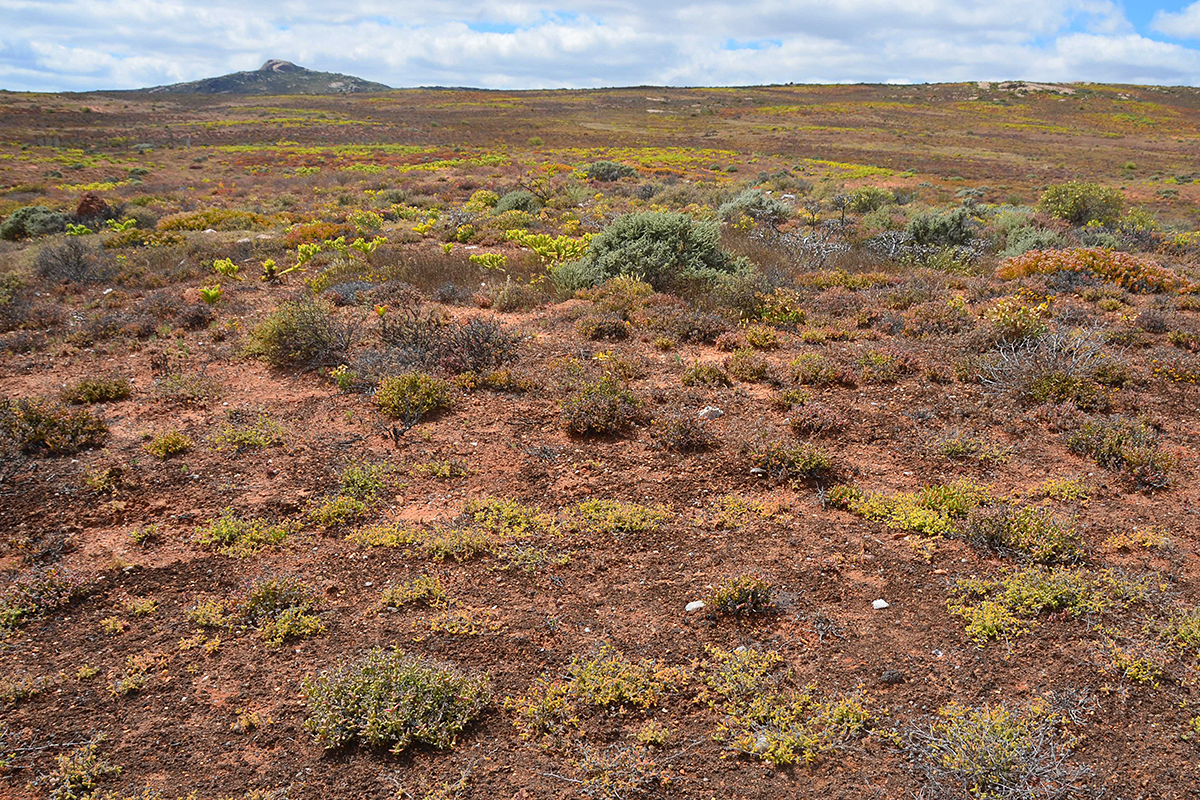
Worldwide, around twelve percent of the land surface is covered with biological soil crusts. Photo: Uni Graz/Weber
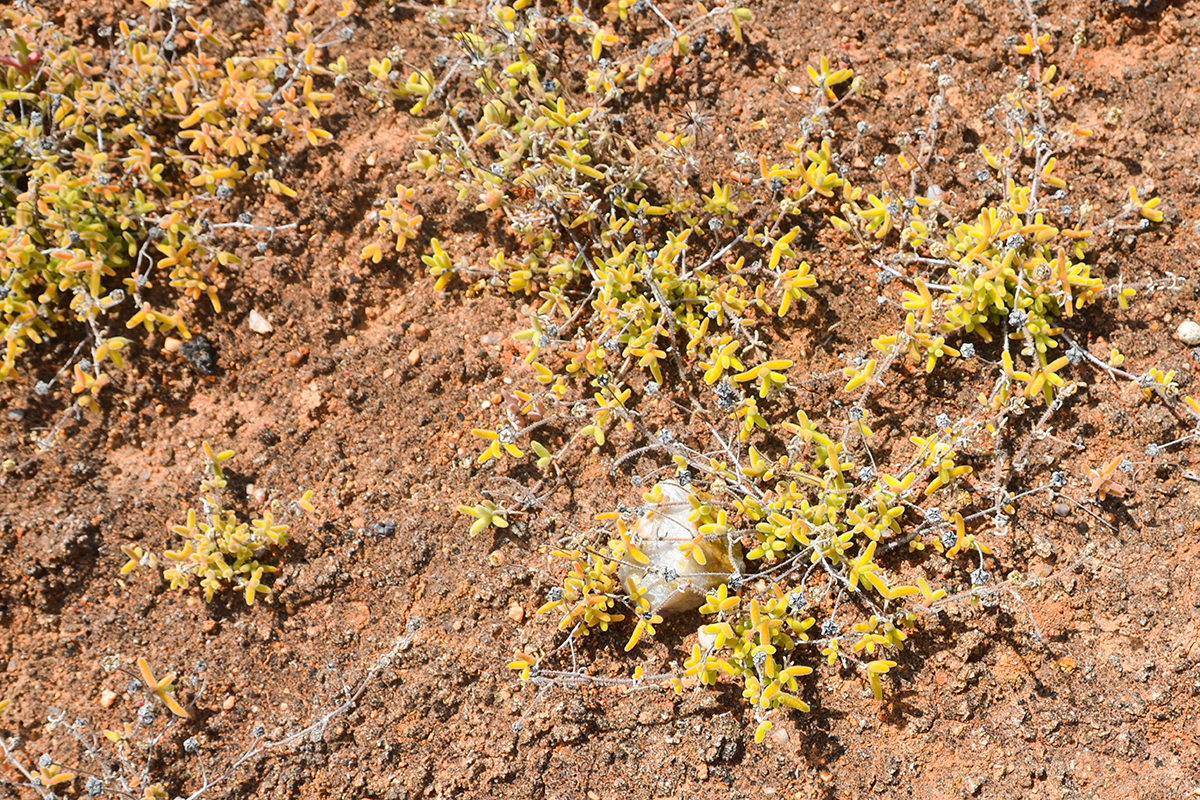
These compounds of bacteria, fungi, mosses, lichens and algae reduce dust emissions. Photo: Uni Graz/Weber ©Uni Graz/Tzivanopoulos
©Uni Graz/Tzivanopoulos
These compounds of bacteria, fungi, mosses, lichens and algae reduce dust emissions. Photo: Uni Graz/Weber
created by Gudrun Pichler

Related news

Semester abroad without barriers: University of Graz wins award for promoting inclusion

The University of Graz has been awarded the Internationalization Award for its new inclusion initiative. Students with fewer opportunities now also receive financial support for their semester abroad outside Europe.

Fair distribution: Researchers determine just greenhouse gas budgets for all EU regions

Ten years ago, on 12 December 2015, the Paris Climate Agreement was signed at the UN Climate Conference. In order to limit global warming to well below two degrees, only a certain amount of CO2 may be emitted worldwide. While the focus was originally on national emission targets, more than 200 subnational regions and almost 300 cities have now adopted their own targets. But how many emissions are they fairly entitled to? Researchers at the University of Graz have now developed transparent criteria for fair distribution at the subnational level for the first time and determined corresponding greenhouse gas budgets for all European regions. The paper was published today in the scientific journal Nature Communications.

Chemical Christmas show at the University of Graz: An explosive evening at the Schauspielh

At the beginning of December, the University of Graz transformed the theater into a laboratory: as part of “Chemical Life,” teacher training students staged a chemical Christmas show for Styrian school classes—complete with ethanol rockets, nitrogen snow, and glowing effects. An evening designed to inspire interest in studying chemistry.

Train by train: Koralm railway accelerates exchange between the Universities

Lectures at the University of Klagenfurt in the morning, seminars at the University of Graz in the afternoon: Austria's longest tunnel and a journey time of around 45 minutes make it easy. The Koralm railway increases the speed of networking between the two university locations. The collaboration builds on existing cooperation - for example in the areas of teacher training, Slavic studies and as employers, the universities are well coordinated.

Begin of page section:
Additional information:

University of Graz
Universitaetsplatz 3
8010 Graz
Austria
  • Contact
  • Web Editors
  • Moodle
  • UNIGRAZonline
  • Imprint
  • Data Protection Declaration
  • Accessibility Declaration
Weatherstation
Uni Graz

End of this page section. Go to overview of page sections

End of this page section. Go to overview of page sections

Begin of page section:

End of this page section. Go to overview of page sections