Begin of page section:
Page sections:

  • Go to contents (Accesskey 1)
  • Go to position marker (Accesskey 2)
  • Go to main navigation (Accesskey 3)
  • Go to sub navigation (Accesskey 4)
  • Go to additional information (Accesskey 5)
  • Go to page settings (user/language) (Accesskey 8)
  • Go to search (Accesskey 9)

End of this page section. Go to overview of page sections

Begin of page section:
Page settings:

English en
Deutsch de
Search
Login

End of this page section. Go to overview of page sections

Begin of page section:
Search:

Search for details about Uni Graz
Close

End of this page section. Go to overview of page sections


Search

Begin of page section:
Main navigation:

Page navigation:

  • University

    University
    • About the University
    • Organisation
    • Faculties
    • Library
    • Working at University of Graz
    • Campus
    Developing solutions for the world of tomorrow - that is our mission. Our students and our researchers take on the great challenges of society and carry the knowledge out.
  • Research Profile

    Research Profile
    • Our Expertise
    • Research Questions
    • Research Portal
    • Promoting Research
    • Research Transfer
    • Ethics in Research
    • Commission for Scientific Integrity
    Scientific excellence and the courage to break new ground. Research at the University of Graz creates the foundations for making the future worth living.
  • Studies

    Studies
    • Prospective Students
    • Students
    • Registration for Study Programme (Winter semester 2026/27)
    • Welcome Weeks for First Year Students
  • Community

    Community
    • International
    • Location
    • Research and Business
    • Alumni
    The University of Graz is a hub for international research and brings together scientists and business experts. Moreover, it fosters the exchange and cooperation in study and teaching.
Topics
  • Sustainable University
  • Researchers answer
  • Work for us
Close menu

End of this page section. Go to overview of page sections

Begin of page section:
You are here:

University of Graz News Blick ins Hirn

End of this page section. Go to overview of page sections

Monday, 07 March 2022

Blick ins Hirn

Josefine Meyer erforscht im Rahmen eines Stipendiums für Bachelor-Studierende neuronale Netzwerke im Fadenwurm "c elegans". Die 20-Jährige ist damit schon jetzt auf Kurs in Richtung Wissenschaftskarriere. Foto: Raffael Reithofer.

Josefine Meyer erforscht im Rahmen eines Stipendiums für Bachelor-Studierende neuronale Netzwerke im Fadenwurm "c elegans". Die 20-Jährige ist damit schon jetzt auf Kurs in Richtung Wissenschaftskarriere. Foto: Raffael Reithofer.

Josefine Meyer ist erst 20 und schon auf Kurs Richtung Wissenschaftskarriere: Sie erforscht als Stipendiatin neuronale Netzwerke in einem Fadenwurm

Die Podcast-Plattform der Grazer Universtitäten, der AirCampus, präsentiert jeden Montag Wissens-Podcasts. Diese Woche sind diese Themen - anlässlich des Weltfrauentags am 8. März - im Programm:


1) Was im Wurm steckt: Der Fadenwurm "c elegans" ist ein ideales Modell für die Hirnforschung, weil er nur 302 Neuronen hat. Zwei davon untersucht Josefine Meyer im Rahmen eines Stipendiums für Bachelor-Studierende. Die 20-Jährige ist schon auf Kurs in Richtung Wissenschaftskarriere und wird die Ergebnisse ihres Teams im April in New York auf einer Tagung des Global Brain-Projekts  präsentieren.  

2) Who runs the world? Girls! Mit der Gründung des WomenUniverse hat die TU Graz eine Plattform für alumni-Frauen geschaffen, die Möglichkeit zur Vernetzung bietet. Denn dass Frauen die Zukunft gestalten, ist sicher – die Initiative unterstützt am Weg dort hin. 

3) Gendermedizin im Fokus: In der Medizin herrschte lange Zeit ein männerdominierendes Bild. Doch Gendermedizin wird immer bedeutsamer. Susanne Scheipl, Oberärztin für Orthopädie an der Universitätsklinik für Orthopädie und Traumatologie der Med Uni Graz, setzt dieses Gebiet in den Fokus.

4) Taktvoll: Zum Weltfrauentag blicken wir auf den Beruf Dirigentin. Wie es ist, sich in einer Männerdomäne zu behaupten, erzählt Sarah Fournier. Die 17-jährige Schülerin belegt derzeit – als einzige Frau – den Vorbereitungslehrgang „Dirigieren“ an der Kunstuniversität Graz.


Was ist der AirCampus?
Das Podcast-Projekt der vier Grazer Universitäten versorgt MitarbeiterInnen, Studierende sowie alle Interessierten das ganze Studienjahr über mit wissenswerten Infos aus der Welt der Forschung, aus dem Bildungsbereich und dem Campusleben der Universität Graz, Technischen Universität Graz, Medizinischen Universität Graz und Kunstuniversität Graz.

Früher als "Webradio" bekannt, gibt es auf der Website http://www.aircampus-graz.at auch alle Podcasts, die vor dem 2. Oktober 2017 publiziert wurden, im Archiv zum Nachhören. Uns gibt es übrigens auch auf Spotify und Apple Podcasts! Die Initiative erhielt 2012 den Inge-Morath-Preis des Landes Steiermark, 2017 den PR-Panther in der Kategorie "Wissenschaft" und 2018 den Green Panther in der Kategorie Online Kommunikation.
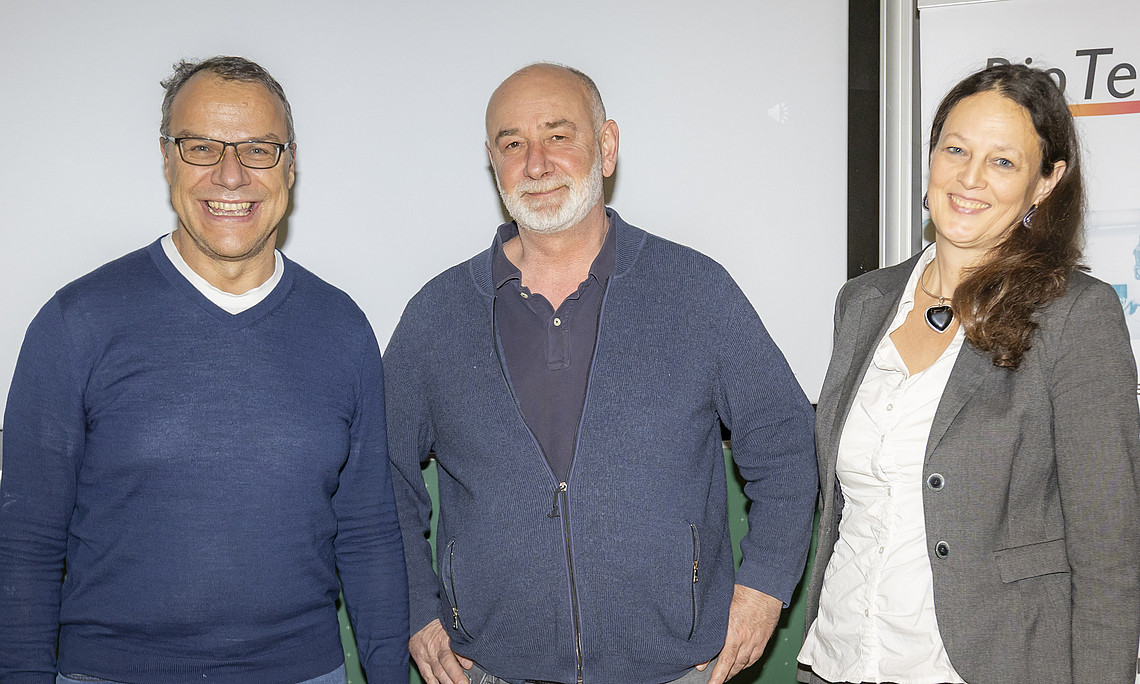

created by Gerhild Leljak

Related news

Courtly Love and Aubergines: What Medieval Literature Has in Common with Emojis

Plants and fruits were already used as symbols of love in the Middle Ages. German studies scholar Isabella Managò, together with her colleagues Brigitte Spreitzer-Fleck and Julia Zimmermann, explains how this came about and why this figurative language remains familiar to us to this day.

New technology from the University of Graz reveals the hidden properties of tumour cells

It sounds like science fiction, but it could advance cancer research in the future: a team at the University of Graz, led by physicist Jan Enenkel, is developing a new laboratory device using laser technology that can be used to examine individual tumour cells. The idea is reminiscent of the medical tricorder from the Star Trek film series – albeit as a high-precision measurement platform. A spin-off fellowship from the Austrian Research Promotion Agency (FFG) is supporting the development of the technology at the University of Graz with around 500,000 euros.

Four introduced species of leafhoppers newly discovered in the Botanical Garden Graz

They have travelled to Europe as stowaways via international trade and are now rapidly taking over large parts of the continent: more and more insects from other parts of the world are becoming established here. Biologist Gernot Kunz recently discovered four species for the first time at the University of Graz Botanical Garden: the American grapevine leafhopper (Scaphoideus titanus), the wounded leafhopper from North America (Erasmoneura vulnerata) and the Japanese grape leafhopper (Arboridia kakogawana) – all three specialising in vines – as well as the Indian leafhopper Pediopsoides sharmai, which is associated with walnut trees.

Researchers at the University of Graz impress with their AI expertise

A total of 170 entries were submitted to the Austrian Academy of Sciences’ essay competition on the topic of artificial intelligence and science. Both first and second place went to researchers from the University of Graz.

Begin of page section:
Additional information:

University of Graz
Universitaetsplatz 3
8010 Graz
Austria
  • Contact
  • Web Editors
  • Moodle
  • UNIGRAZonline
  • Imprint
  • Data Protection Declaration
  • Accessibility Declaration
Weatherstation
Uni Graz

End of this page section. Go to overview of page sections

End of this page section. Go to overview of page sections

Begin of page section:

End of this page section. Go to overview of page sections