



Begin of page section:
Page sections:

  • Go to contents (Accesskey 1)
  • Go to position marker (Accesskey 2)
  • Go to main navigation (Accesskey 3)
  • Go to sub navigation (Accesskey 4)
  • Go to additional information (Accesskey 5)
  • Go to page settings (user/language) (Accesskey 8)
  • Go to search (Accesskey 9)

End of this page section. Go to overview of page sections

Begin of page section:
Page settings:

English en
Deutsch de
Search
Login

End of this page section. Go to overview of page sections

Begin of page section:
Search:

Search for details about Uni Graz
Close

End of this page section. Go to overview of page sections


Search

Begin of page section:
Main navigation:

Page navigation:

  • University

    University
    • About the University
    • Organisation
    • Faculties
    • Library
    • Working at University of Graz
    • Campus
    Developing solutions for the world of tomorrow - that is our mission. Our students and our researchers take on the great challenges of society and carry the knowledge out.
  • Research Profile

    Research Profile
    • Our Expertise
    • Research Questions
    • Research Portal
    • Promoting Research
    • Research Transfer
    • Ethics in Research
    • Commission for Scientific Integrity
    Scientific excellence and the courage to break new ground. Research at the University of Graz creates the foundations for making the future worth living.
  • Studies

    Studies
    • Prospective Students
    • Students
    • Registration for Study Programme (Winter semester 2026/27)
  • Community

    Community
    • International
    • Location
    • Research and Business
    • Alumni
    The University of Graz is a hub for international research and brings together scientists and business experts. Moreover, it fosters the exchange and cooperation in study and teaching.
Topics
  • Sustainable University
  • Researchers answer
  • Work for us
Close menu

End of this page section. Go to overview of page sections

Begin of page section:
You are here:

University of Graz News Blick in die Zukunft

End of this page section. Go to overview of page sections

Friday, 25 January 2019

Blick in die Zukunft

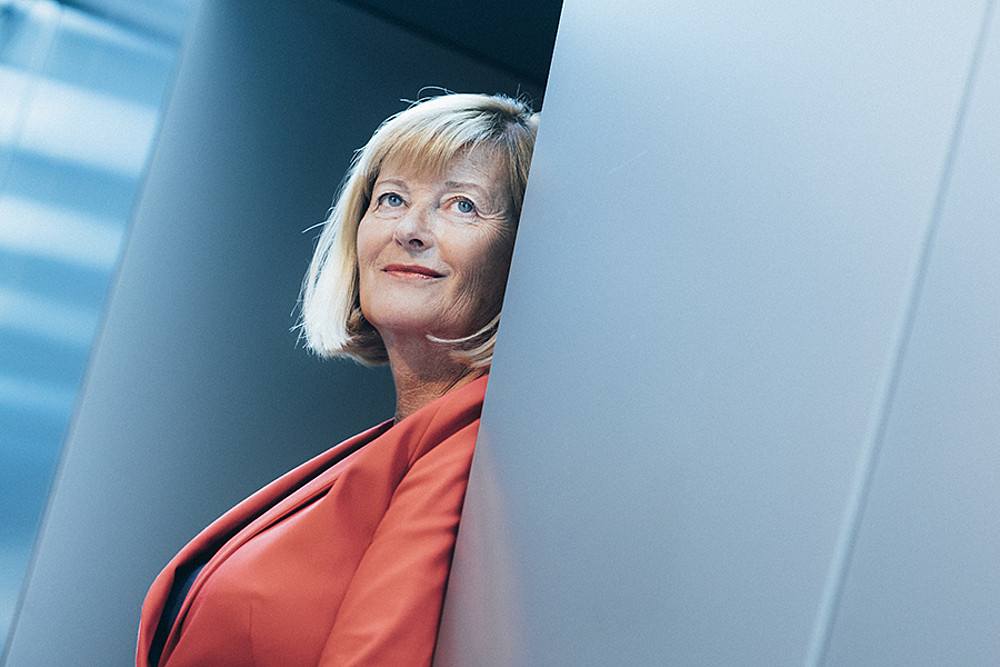
Rektorin Christa Neuper, Foto: Uni Graz/Kanizaj ©Kanizaj | 2018

Rektorin Christa Neuper, Foto: Uni Graz/Kanizaj

Rektorin Christa Neuper über Wahrnehmungen und Fakten  

ForscherInnen unserer Universität setzen sich mit dem Klimawandel auseinander, entwickeln Strategien für das Miteinander in Europa und geben Antworten auf Fragen des Alterns und damit verbundener Krankheiten. In diesen und in vielen anderen Fällen handelt es sich nachweislich um international beachtete Wissenschaft. Studierende, die mit Neugier und Tatendrang die Gesellschaft mitgestalten wollen, finden wir in großer Zahl in unseren Hörsälen. Wir bauen auf eine große Vergangenheit auf, haben aber stets den Blick in die Zukunft gerichtet. All das und noch viel mehr macht unsere erfolgreiche Universität aus! Es gibt leider auch andere Wahrnehmungen und jüngst mediale Darstellungen der Universität Graz, die massive Irritationen hervorrufen und denen wir faktenbasiert, selbstbewusst und entschieden entgegentreten müssen. 

Feststeht, dass sowohl WissenschafterInnen als auch Studierende aller Disziplinen an der Universität Graz selbstverständlich den Anspruch haben, hochmotiviert, leistungsorientiert und mit Leidenschaft tätig zu sein. Dazu nur einige Beispiele: Zu den Fakten gehört, dass zwei ForscherInnen der Universität Graz als AutorInnen für den Weltklimabericht ausgewählt wurden. Ihre Expertise trägt dazu bei, Grundlagen für klimapolitische Entscheidungen zu schaffen. An der Universität Graz wirken ForscherInnen, die in den Bereichen der in der Altersforschung sowie Mikrowellen- und Flow-Chemie zu den meistzitierten WissenschafterInnen zählen. Publikationen sowie deren Zitierungen sind für das anerkannte Ranking der niederländischen Universität Leiden ausschlaggebend. Hier belegt die Universität Graz regelmäßig gute Platzierungen, unter den Top 200 gereiht, stellt sie sich dem weltweiten Wettbewerb. In Österreich liegt sie in dieser Reihung seit einigen Jahren an der Spitze. 

Die hervorragende internationale Vernetzung belegen nicht nur Kooperationen mit rund 500 Universitäten. Aktuell hat die Universität Graz gemeinsam mit fünf renommierten Universitäten die Hochschulallianz ARQUS ins Leben gerufen. Das Vorhaben will einen europäischen Campus schaffen, der die schrankenlose Mobilität und den Austausch von Studierenden und WissenschafterInnen zwischen allen Partnerinstitutionen ermöglicht.
Dass die Qualität insgesamt auf einem hohen Niveau liegt, das bezeugt das renommierte FINHEEC-Gütesiegel, das die Universität Graz seit mehr als fünf Jahren führt. Die finnische Agentur nahm alle Bereiche – von der Forschung über das Studium bis hin zur gesellschaftlichen Entwicklung – unter die Lupe und stellte unserer Universität ein ausgezeichnetes Zeugnis aus. 
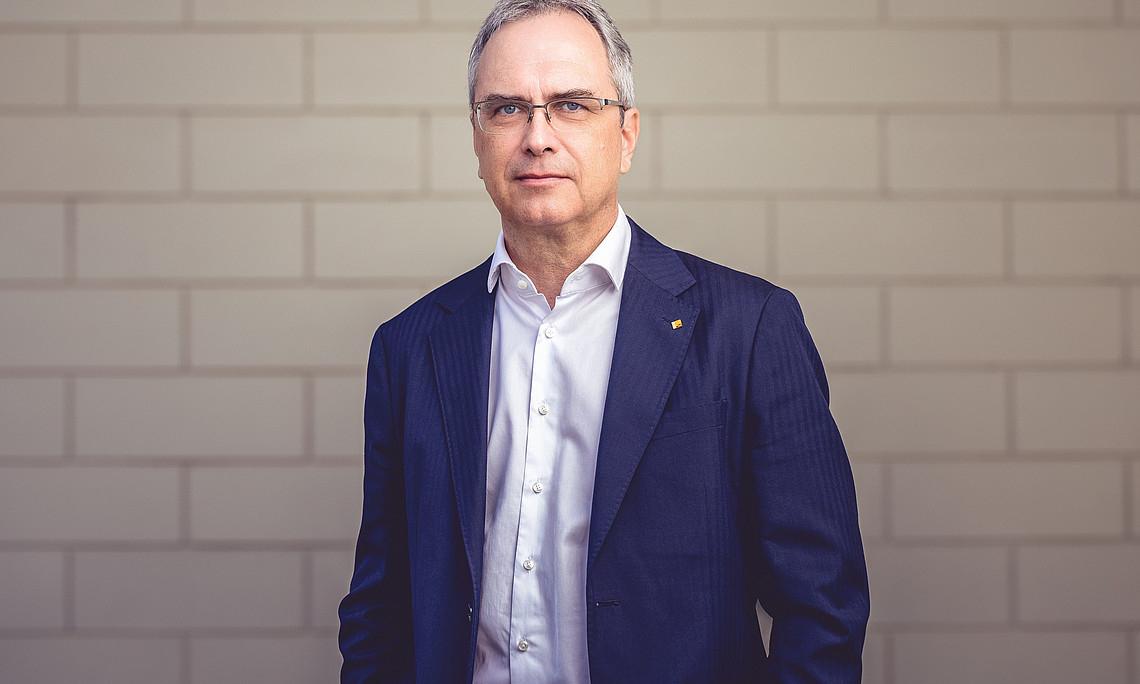
created by Christa Neuper

Related news

Complying with the norm: Why Do Standards Shape Our Lives, Elisabeth Staudegger?

Standards determine whether a sheet of paper fits in a printer or whether a charging plug can power multiple devices. These standards shape our everyday lives. But who actually sets these standards? Where are the weaknesses, and how could science help to improve them? Elisabeth Staudegger, Head of the ‘Law and IT’ Department at the Institute for Legal Foundations at the University of Graz, host the Academic Standards Day on 16 June. Here she relays how sciences can contribute to the topic of standardisation and reveals her personal favourite standard.

More body awareness than a culture war

In Italy, sex education lessons will in future only be permitted with parental consent, and will be banned entirely in nurseries and primary schools. At the same time, Pride Month highlights why knowledge about the body, relationships, boundaries and diversity is important for young people. A study by the University of Graz shows how important knowledge about the body, contraception, relationship skills and protection against violence is

Will Austria win the World Cup? Mathematician reveals calculation method

Michael Fischer uses the football tournament as a practical example for highschool lessons.

Survival strategies: How plants respond to drought

According to Geosphere Austria, this spring was the driest in Austria since records began around 170 years ago. The low rainfall put particular pressure on the agricultural sector. And climate change is set to make the situation even worse in the coming decades. We asked Johannes Liesche, a professor at the Department of Biology at the University of Graz, how plants react to water shortages and how they survive periods of drought.

Begin of page section:
Additional information:

University of Graz
Universitaetsplatz 3
8010 Graz
Austria
  • Contact
  • Web Editors
  • Moodle
  • UNIGRAZonline
  • Imprint
  • Data Protection Declaration
  • Accessibility Declaration
Weatherstation
Uni Graz

End of this page section. Go to overview of page sections

End of this page section. Go to overview of page sections

Begin of page section:

End of this page section. Go to overview of page sections


