



Begin of page section:
Page sections:

  • Go to contents (Accesskey 1)
  • Go to position marker (Accesskey 2)
  • Go to main navigation (Accesskey 3)
  • Go to sub navigation (Accesskey 4)
  • Go to additional information (Accesskey 5)
  • Go to page settings (user/language) (Accesskey 8)
  • Go to search (Accesskey 9)

End of this page section. Go to overview of page sections

Begin of page section:
Page settings:

English en
Deutsch de
Search
Login

End of this page section. Go to overview of page sections

Begin of page section:
Search:

Search for details about Uni Graz
Close

End of this page section. Go to overview of page sections


Search

Begin of page section:
Main navigation:

Page navigation:

  • University

    University
    • About the University
    • Organisation
    • Faculties
    • Library
    • Working at University of Graz
    • Campus
    Developing solutions for the world of tomorrow - that is our mission. Our students and our researchers take on the great challenges of society and carry the knowledge out.
  • Research Profile

    Research Profile
    • Our Expertise
    • Research Questions
    • Research Portal
    • Promoting Research
    • Research Transfer
    • Ethics in Research
    • Commission for Scientific Integrity
    Scientific excellence and the courage to break new ground. Research at the University of Graz creates the foundations for making the future worth living.
  • Studies

    Studies
    • Prospective Students
    • Students
    • Registration for Study Programme (Winter semester 2026/27)
  • Community

    Community
    • International
    • Location
    • Research and Business
    • Alumni
    The University of Graz is a hub for international research and brings together scientists and business experts. Moreover, it fosters the exchange and cooperation in study and teaching.
Topics
  • Sustainable University
  • Researchers answer
  • Work for us
Close menu

End of this page section. Go to overview of page sections

Begin of page section:
You are here:

University of Graz News Bio-Monitore für den Klimawandel

End of this page section. Go to overview of page sections

Tuesday, 13 March 2018

Bio-Monitore für den Klimawandel

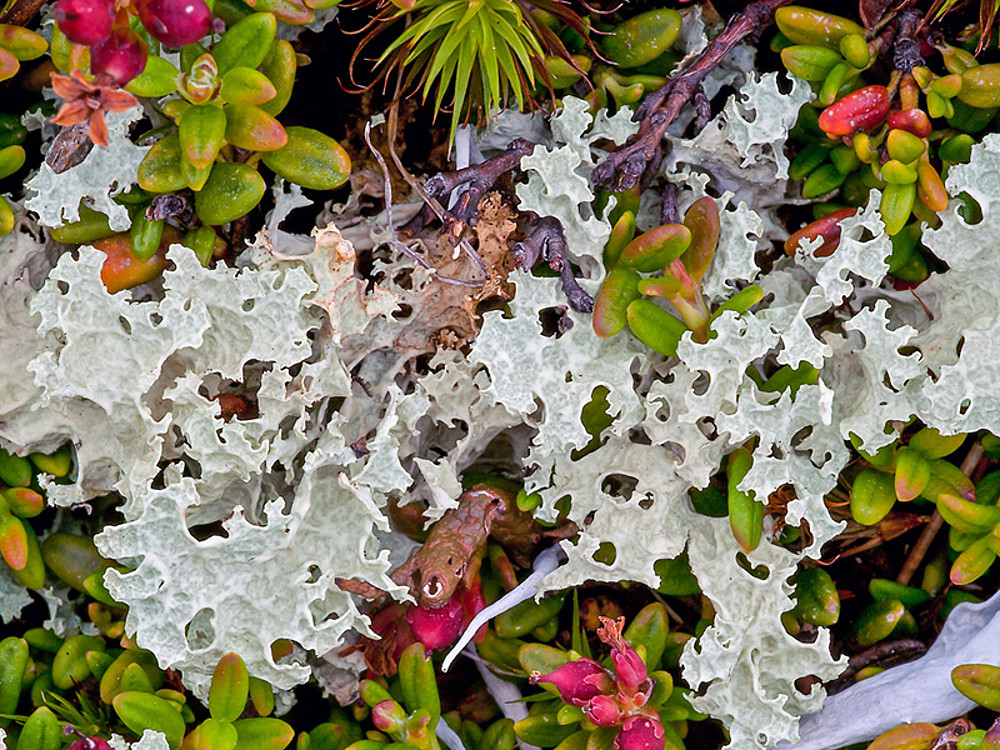
Die Schneeflechte, eine häufige Vertreterin ihrer Art: ForscherInnen haben nun mehr als 3000 Flechten in den Alpen dokumentiert. Foto: Uni Graz/Bilovitz ©Dr. Peter Bilovitz
©Dr. Peter Bilovitz

Die Schneeflechte, eine häufige Vertreterin ihrer Art: ForscherInnen haben nun mehr als 3000 Flechten in den Alpen dokumentiert. Foto: Uni Graz/Bilovitz

ForscherInnen der Uni Graz dokumentieren erstmals alle 3 000 Flechtenarten der Alpen

Sie sind sensibel für die Luftqualität und die Waldgesundheit und liefern der Forschung wichtige Auskünfte über den Klimawandel: Flechten kommen in großer Vielfalt vor und dominieren über der Waldgrenze ganze Felslandschaften. In einem internationalen Team haben BotanikerInnen der Uni Graz nun erstmals alle 3 138 Arten in den Alpen dokumentiert. Das mehr als 600 Seiten umfassende Ergebnis wurde soeben in der Open-Access-Zeitschrift MycoKeys veröffentlicht.

Als eine der größten zusammenhängenden Naturlandschaften Europas bieten die Alpen unterschiedlichste Lebensräume und beherbergen damit eine besonders große Artenvielfalt, auch an Flechten. Die Symbiosen von Pilzen und Algen gedeihen auf einer breiten Palette an Untergründen, von Bäumen über Erdböden bis hin zu Felsflächen diverser geologischer Zusammensetzung. Die WissenschafterInnen erstellten eine kommentierte Liste aller Arten samt Informationen zur Systematik, Verbreitung und Ökologie.
„Dieses Projekt beschäftigt uns seit bereits 15 Jahren. Jetzt haben wir eine bedeutende Grundlage für weitere Forschungen zur Evolution und Diversität, aber auch zum Klimawandel“, schildert Ao.Univ.-Prof. Dr. Helmut Mayrhofer vom Institut für Biologie der Uni Graz. Durch ihre hohen ökologischen Ansprüche sind die Organismen wichtige biologische Monitore für alle Arten von Umweltveränderungen. Die neue Checkliste ist außerdem ein wertvolles Werkzeug für den Vergleich der Alpen mit anderen Gebirgssystemen.
Das Projekt wurde vom Österreichischen Wissenschaftsfonds FWF unterstützt und ist ein wesentlicher Teil der Forschungen zu Klimawandel und Diversität an der Uni Graz.

Publikation:
Pier Luigi Nimis, Josef Hafellner, Claude Roux, Philippe Clerc, Helmut Mayrhofer, Stefano Martellos, Peter O. Bilovitz, The lichens of the Alps - an annotated checklist. MycoKeys 31: 1–634.
DOI: 10.3897/mycokeys.31.23658

created by Dagmar Eklaude

Related news

When stress melts away in your mouth: nicotine pouches are widespread among Styrian students

Sociologists at the University of Graz, in collaboration with VIVID – the Centre for Addiction Prevention, have carried out a survey involving more than 600 participants. Around a quarter of them use these products. The ability to use them discreetly and flexibly is a key motivation.

Desert sand, microplastics, cancer cells: David Clases awarded ERC grant for analytical method

Nanoparticles trapped in polar ice can reveal a great deal about the climate 100,000 years ago. Chemist David Clases is developing unique methods to analyse them in detail. He will now adapt these methods for use with larger particles in order to glean even more information about Earth’s history. The method can be used for a wide range of other purposes – for example, in medical diagnostics or the investigation of environmental pollution. Clases has been awarded a Proof-of-Concept Grant by the European Research Council (ERC) for this work.

Staying fit during the holidays: summer sports on the University of Graz campus

The Kleeblattlauf is not the end of the fitness term. Following last year’s successful launch, the University of Graz is once again offering summer sports on campus this year. From 30 June to 16 July 2026, there will be a free exercise programme in the open air. On the shady Südwiese (between the main building and Universitätsplatz 2), anyone interested can get in shape in the afternoons with body workouts, fascia training and yoga.

Getting even hotter: Researchers predict global warming of 1.7 degrees by 2027

While Europe is currently sweltering in the heat, global temperatures are also rising towards concerning record levels. In 2026, Earth’s surface air temperature is expected to reach 1.62 degrees, and in 2027 even 1.71 degrees Celsius above pre-industrial levels. The long-term temperature rise – an average over a 20-year period – is predicted to exceed the 1.5-degree threshold of the Paris Agreement as of 2026 already. For the first time, researchers at the University of Graz have been able to make such a forecast so far in advance. The intensifying El Niño climate event favors forecast skill and thereby facilitates a reliable computation.

Begin of page section:
Additional information:

University of Graz
Universitaetsplatz 3
8010 Graz
Austria
  • Contact
  • Web Editors
  • Moodle
  • UNIGRAZonline
  • Imprint
  • Data Protection Declaration
  • Accessibility Declaration
Weatherstation
Uni Graz

End of this page section. Go to overview of page sections

End of this page section. Go to overview of page sections

Begin of page section:

End of this page section. Go to overview of page sections


