Begin of page section:
Page sections:

  • Go to contents (Accesskey 1)
  • Go to position marker (Accesskey 2)
  • Go to main navigation (Accesskey 3)
  • Go to sub navigation (Accesskey 4)
  • Go to additional information (Accesskey 5)
  • Go to page settings (user/language) (Accesskey 8)
  • Go to search (Accesskey 9)

End of this page section. Go to overview of page sections

Begin of page section:
Page settings:

English en
Deutsch de
Search
Login

End of this page section. Go to overview of page sections

Begin of page section:
Search:

Search for details about Uni Graz
Close

End of this page section. Go to overview of page sections


Search

Begin of page section:
Main navigation:

Page navigation:

  • University

    University
    • About the University
    • Organisation
    • Faculties
    • Library
    • Working at University of Graz
    • Campus
    Developing solutions for the world of tomorrow - that is our mission. Our students and our researchers take on the great challenges of society and carry the knowledge out.
  • Research Profile

    Research Profile
    • Our Expertise
    • Research Questions
    • Research Portal
    • Promoting Research
    • Research Transfer
    • Ethics in Research
    Scientific excellence and the courage to break new ground. Research at the University of Graz creates the foundations for making the future worth living.
  • Studies

    Studies
    • Prospective Students
    • Students
  • Community

    Community
    • International
    • Location
    • Research and Business
    • Alumni
    The University of Graz is a hub for international research and brings together scientists and business experts. Moreover, it fosters the exchange and cooperation in study and teaching.
  • Spotlight
Topics
  • Sustainable University
  • Researchers answer
  • Work for us
Close menu

End of this page section. Go to overview of page sections

Begin of page section:
You are here:

University of Graz News Bio-Monitore für den Klimawandel

End of this page section. Go to overview of page sections

Tuesday, 13 March 2018

Bio-Monitore für den Klimawandel
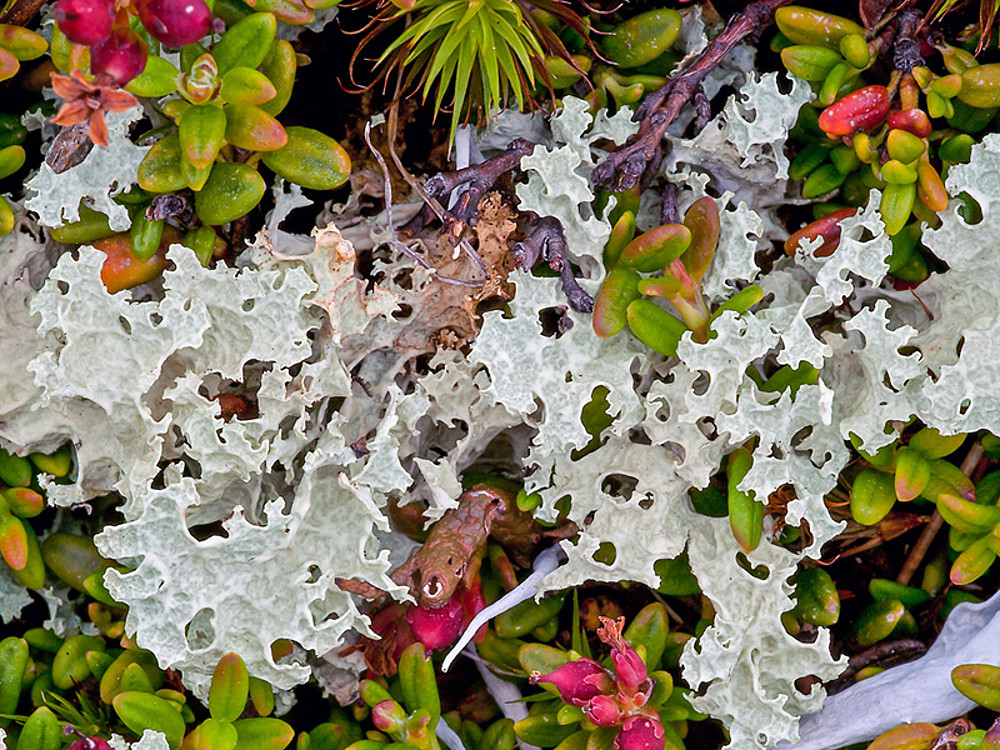
Die Schneeflechte, eine häufige Vertreterin ihrer Art: ForscherInnen haben nun mehr als 3000 Flechten in den Alpen dokumentiert. Foto: Uni Graz/Bilovitz ©Dr. Peter Bilovitz

Die Schneeflechte, eine häufige Vertreterin ihrer Art: ForscherInnen haben nun mehr als 3000 Flechten in den Alpen dokumentiert. Foto: Uni Graz/Bilovitz

ForscherInnen der Uni Graz dokumentieren erstmals alle 3 000 Flechtenarten der Alpen

Sie sind sensibel für die Luftqualität und die Waldgesundheit und liefern der Forschung wichtige Auskünfte über den Klimawandel: Flechten kommen in großer Vielfalt vor und dominieren über der Waldgrenze ganze Felslandschaften. In einem internationalen Team haben BotanikerInnen der Uni Graz nun erstmals alle 3 138 Arten in den Alpen dokumentiert. Das mehr als 600 Seiten umfassende Ergebnis wurde soeben in der Open-Access-Zeitschrift MycoKeys veröffentlicht.

Als eine der größten zusammenhängenden Naturlandschaften Europas bieten die Alpen unterschiedlichste Lebensräume und beherbergen damit eine besonders große Artenvielfalt, auch an Flechten. Die Symbiosen von Pilzen und Algen gedeihen auf einer breiten Palette an Untergründen, von Bäumen über Erdböden bis hin zu Felsflächen diverser geologischer Zusammensetzung. Die WissenschafterInnen erstellten eine kommentierte Liste aller Arten samt Informationen zur Systematik, Verbreitung und Ökologie.
„Dieses Projekt beschäftigt uns seit bereits 15 Jahren. Jetzt haben wir eine bedeutende Grundlage für weitere Forschungen zur Evolution und Diversität, aber auch zum Klimawandel“, schildert Ao.Univ.-Prof. Dr. Helmut Mayrhofer vom Institut für Biologie der Uni Graz. Durch ihre hohen ökologischen Ansprüche sind die Organismen wichtige biologische Monitore für alle Arten von Umweltveränderungen. Die neue Checkliste ist außerdem ein wertvolles Werkzeug für den Vergleich der Alpen mit anderen Gebirgssystemen.
Das Projekt wurde vom Österreichischen Wissenschaftsfonds FWF unterstützt und ist ein wesentlicher Teil der Forschungen zu Klimawandel und Diversität an der Uni Graz.

Publikation:
Pier Luigi Nimis, Josef Hafellner, Claude Roux, Philippe Clerc, Helmut Mayrhofer, Stefano Martellos, Peter O. Bilovitz, The lichens of the Alps - an annotated checklist. MycoKeys 31: 1–634.
DOI: 10.3897/mycokeys.31.23658

created by Dagmar Eklaude

Related news

AI in schools: Maria Bertel drafts legal guidelines for teachers

The legal expert and her team analysed the legal situation regarding the use of artificial intelligence in education as part of an EU project and answered open questions from practice.

Cosmetics in the environment: University of Graz proves danger to ants

Titanium dioxide, which is found in cosmetics, for example, is increasingly entering the environment in the form of nanoparticles. This could also put insects at risk. If ants ingest the substance in combination with the pesticide glyphosate, it disturbs the development of their offspring. Scientists at the University of Graz are drawing attention to the negative consequences of this toxic cocktail.

Varied and healthy: studies move

Exercise is the ideal way to balance out everyday stress, prevent illness and keep fit. Why this is the case, how to do it properly and what role human bodily functions and psychology play can be studied at the University of Graz.

Religious scholar Theresia Heimerl: Fasting as a spiritual boost

Fasting is not just a strategy for losing weight – it is a ritual dating back thousands of years with spiritual and evolutionary roots that has positive effects on the body. At the University of Graz, religious scholar Theresia Heimerl is investigating why fasting is a "spiritual boost".

Begin of page section:
Additional information:

University of Graz
Universitaetsplatz 3
8010 Graz
Austria
  • Contact
  • Web Editors
  • Moodle
  • UNIGRAZonline
  • Imprint
  • Data Protection Declaration
  • Accessibility Declaration
Weatherstation
Uni Graz

End of this page section. Go to overview of page sections

End of this page section. Go to overview of page sections

Begin of page section:

End of this page section. Go to overview of page sections