



Begin of page section:
Page sections:

  • Go to contents (Accesskey 1)
  • Go to position marker (Accesskey 2)
  • Go to main navigation (Accesskey 3)
  • Go to sub navigation (Accesskey 4)
  • Go to additional information (Accesskey 5)
  • Go to page settings (user/language) (Accesskey 8)
  • Go to search (Accesskey 9)

End of this page section. Go to overview of page sections

Begin of page section:
Page settings:

English en
Deutsch de
Search
Login

End of this page section. Go to overview of page sections

Begin of page section:
Search:

Search for details about Uni Graz
Close

End of this page section. Go to overview of page sections


Search

Begin of page section:
Main navigation:

Page navigation:

  • University

    University
    • About the University
    • Organisation
    • Faculties
    • Library
    • Working at University of Graz
    • Campus
    Developing solutions for the world of tomorrow - that is our mission. Our students and our researchers take on the great challenges of society and carry the knowledge out.
  • Research Profile

    Research Profile
    • Our Expertise
    • Research Questions
    • Research Portal
    • Promoting Research
    • Research Transfer
    • Ethics in Research
    • Commission for Scientific Integrity
    Scientific excellence and the courage to break new ground. Research at the University of Graz creates the foundations for making the future worth living.
  • Studies

    Studies
    • Prospective Students
    • Students
    • Registration for Study Programme (Winter semester 2026/27)
    • Study Days 22-26 June 2026
  • Community

    Community
    • International
    • Location
    • Research and Business
    • Alumni
    The University of Graz is a hub for international research and brings together scientists and business experts. Moreover, it fosters the exchange and cooperation in study and teaching.
Topics
  • Sustainable University
  • Researchers answer
  • Work for us
Close menu

End of this page section. Go to overview of page sections

Begin of page section:
You are here:

University of Graz News Beyond the rainbow

End of this page section. Go to overview of page sections

Monday, 13 June 2022

Beyond the rainbow

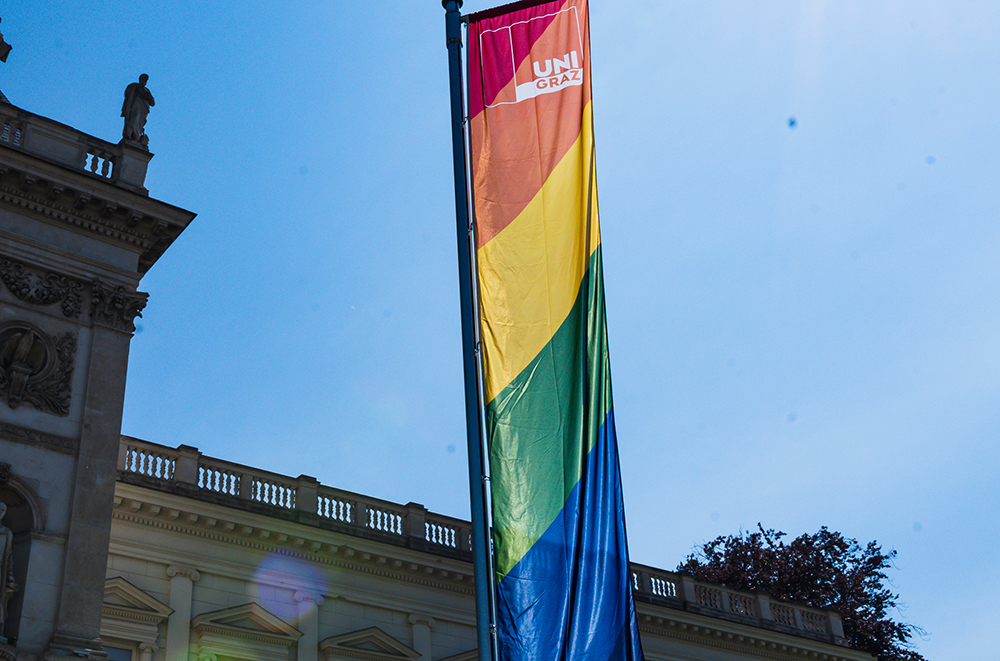
Regenboggenflagge vor dem Hauptgebäude der Uni Graz.

Juni ist Pride Monat, der im Zeichen der LGBTQ+-Gleichberechtigung steht. Foto: Uni Graz/Angele

Barbara Grabher blickt hinter die Regenbogenflagge

Sie leuchtet von T-Shirts. Sie weht von der Straßenbahn. Und sie blinkt auf Webseiten – auch an der Universität Graz. Die Regenbogenflagge ist unübersehbar. Weil es ist Pride-Monat Juni, der im Zeichen der LGBTQ+-Gleichberechtigung steht. Doch was steckt dahinter, wenn sich viele den Regenbogen buchstäblich auf ihre Fahnen heften? Barbara Grabher, Wissenschafterin an der Uni Graz, hinterfragt die zunehmende Kommerzialisierung und Instrumentalisierung eines Symbols.

Pink Washing
In den späten 1970er-Jahren kreierte der US-amerikanische Künstler Gilbert Baker den Regenbogen als Zeichen für Schwule, Lesben, Bi- und Transsexuelle. Bunte Streifen sollten für die Vielfalt der Gesellschaft stehen – für Offenheit, gegen Ausgrenzung. Mittlerweile ist die Flagge als Bild einer Gruppe massentauglich. Gut so, oder? Barbara Grabher beurteilt die Entwicklung skeptischer: „Organisationen und Unternehmen verwenden den Regenbogen, um Solidarität zu zeigen, aber auch um davon zu profitieren.“ Zusammengefasst stellt sich die Frage: Wollen sie Benachteiligte unterstützen oder wollen sie von den Benachteiligten unterstützt werden? Und findet letztendlich nur sogenanntes „Pink Washing“ statt, um sich ein weltoffenes Image zu geben und gute Geschäfte zu machen?

Somewhere over the rainbow
In Anspielung an den berühmten Judy Garland-Song „Somewhere over the rainbow“ müssen wir, so Grabher, über den Bogen hinaus schauen. Also hinterfragen, wie die jeweilige Institution jene Werte lebt, die das Symbol ausdrücken will: Gleichberechtigung umsetzen, Menschenrechte schützen, Diskriminierung vermeiden und vieles mehr. Selbstkritisch sei hier angemerkt, gilt das natürlich auch für die Uni Graz, wo im Juni zwei Regenbogenflaggen vor dem Hauptgebäude hängen.

Komplexität von Identitäten
Barbara Grabher hat sich intensiv mit der dekorativen Darstellung am Beispiel eines LGBTQ+-Festivals in Hull beschäftigt. In der britischen Stadt fand 2017 eine große Parade mit 50.000 Teilnehmenden statt, bei der sich Akteurinnen und Akteure für andere Ausdrucksformen als die Fahne stark machten. Etwa als Figuren der LGBTQ+-Bewegung, die zwar mit viel Glamour, aber aus recycelten Materialien dargestellt wurden. Damit kommen vielschichtige Ebenen genauso wie der kreative Prozess zum Tragen. Raus aus der Schublade, lautet die Devise. Die Wissenschafterin am Institut für Geographie und Raumforschung regt zum Nachdenken an: „Bei der Komplexität von Identitäten und Menschsein kann nicht immer eine schnelle Sichtbarkeit im Vordergrund stehen.“

Barbara Grabher hat zum Thema wissenschaftlich publiziert:
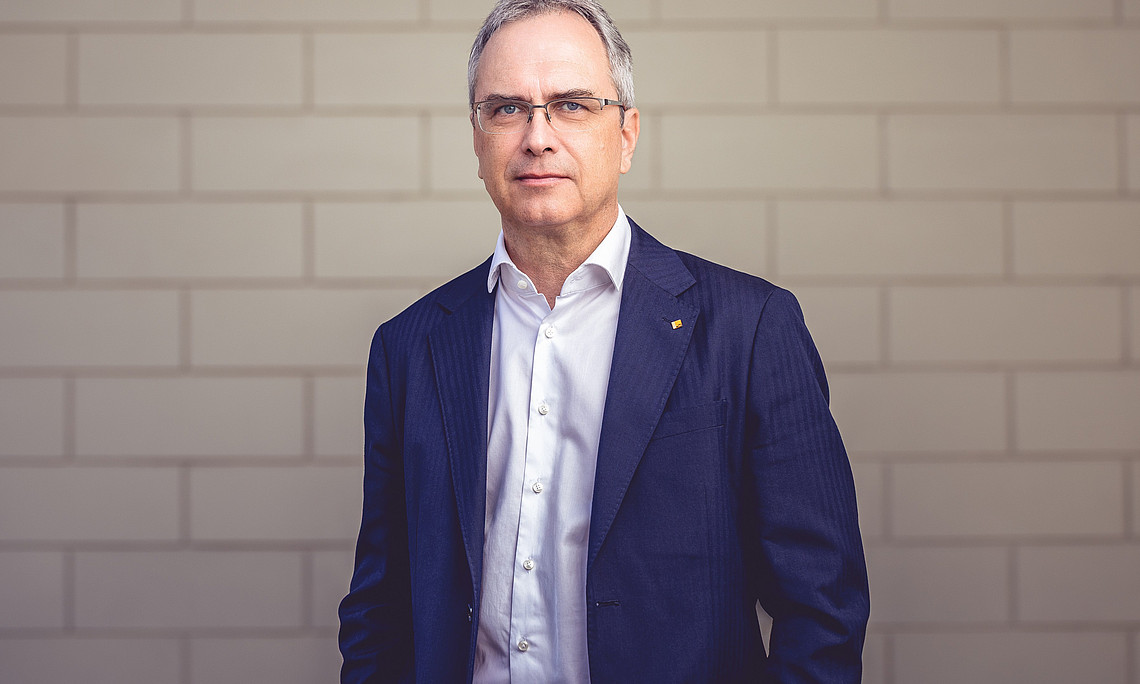
  • Somewhere over the Rainbow. Investigating Festival Decorations in the LGBT50 Celebration of Hull, UK City of Culture 2017
  • Tinted Visions: Performing Equalities Through Festive Decorations in LGBT-Themed Events in Hull
created by Andreas Schweiger

Related news

Full effort in the heat: the Sports Centre was in full swing at the Kleeblattlauf

On 19 June 2026, 2,000 runners and hundreds of supporters made their way to the Rosenhain for a sporting end-of-term event.

Save, invest or guarantee: What Austrians expect from the state

Austria needs to make savings. But where? And what should the Republic actually be spending its money on? The answers are provided by the initial findings of a major study involving the University of Graz. 99 per cent of those surveyed are in favour of the state ensuring healthcare provision. Almost three-quarters would like to see more public funding for education, whilst only around three per cent are in favour of cuts in this sector.

Complying with the norm: Why Do Standards Shape Our Lives, Elisabeth Staudegger?

Standards determine whether a sheet of paper fits in a printer or whether a charging plug can power multiple devices. These standards shape our everyday lives. But who actually sets these standards? Where are the weaknesses, and how could science help to improve them? Elisabeth Staudegger, Head of the ‘Law and IT’ Department at the Institute for Legal Foundations at the University of Graz, host the Academic Standards Day on 16 June. Here she relays how sciences can contribute to the topic of standardisation and reveals her personal favourite standard.

More body awareness than a culture war

In Italy, sex education lessons will in future only be permitted with parental consent, and will be banned entirely in nurseries and primary schools. At the same time, Pride Month highlights why knowledge about the body, relationships, boundaries and diversity is important for young people. A study by the University of Graz shows how important knowledge about the body, contraception, relationship skills and protection against violence is

Begin of page section:
Additional information:

University of Graz
Universitaetsplatz 3
8010 Graz
Austria
  • Contact
  • Web Editors
  • Moodle
  • UNIGRAZonline
  • Imprint
  • Data Protection Declaration
  • Accessibility Declaration
Weatherstation
Uni Graz

End of this page section. Go to overview of page sections

End of this page section. Go to overview of page sections

Begin of page section:

End of this page section. Go to overview of page sections


