Begin of page section:
Page sections:

  • Go to contents (Accesskey 1)
  • Go to position marker (Accesskey 2)
  • Go to main navigation (Accesskey 3)
  • Go to sub navigation (Accesskey 4)
  • Go to additional information (Accesskey 5)
  • Go to page settings (user/language) (Accesskey 8)
  • Go to search (Accesskey 9)

End of this page section. Go to overview of page sections

Begin of page section:
Page settings:

English en
Deutsch de
Search
Login

End of this page section. Go to overview of page sections

Begin of page section:
Search:

Search for details about Uni Graz
Close

End of this page section. Go to overview of page sections


Search

Begin of page section:
Main navigation:

Page navigation:

  • University

    University
    • About the University
    • Organisation
    • Faculties
    • Library
    • Working at University of Graz
    • Campus
    Developing solutions for the world of tomorrow - that is our mission. Our students and our researchers take on the great challenges of society and carry the knowledge out.
  • Research Profile

    Research Profile
    • Our Expertise
    • Research Questions
    • Research Portal
    • Promoting Research
    • Research Transfer
    • Ethics in Research
    • Commission for Scientific Integrity
    Scientific excellence and the courage to break new ground. Research at the University of Graz creates the foundations for making the future worth living.
  • Studies

    Studies
    • Prospective Students
    • Students
    • Welcome Weeks for First Year Students
  • Community

    Community
    • International
    • Location
    • Research and Business
    • Alumni
    The University of Graz is a hub for international research and brings together scientists and business experts. Moreover, it fosters the exchange and cooperation in study and teaching.
Topics
  • Sustainable University
  • Researchers answer
  • Work for us
Close menu

End of this page section. Go to overview of page sections

Begin of page section:
You are here:

University of Graz News Bevor die Blase platzt

End of this page section. Go to overview of page sections

Friday, 09 February 2018

Bevor die Blase platzt

Eine neue Methode soll Immobilienpreise in der Inflationsrate exakt abbilden. Wenn Zentralbanken besser auf boomende Preise reagieren könnten, wäre das unkontrollierte Platzen einer Immobilienblase vermeidbar. Foto: nattanan23/pixabay.com

Eine neue Methode soll Immobilienpreise in der Inflationsrate exakt abbilden. Wenn Zentralbanken besser auf boomende Preise reagieren könnten, wäre das unkontrollierte Platzen einer Immobilienblase vermeidbar. Foto: nattanan23/pixabay.com

ForscherInnen entwickeln Methode, um Immobilienpreise in der Inflationsrate exakt abzubilden

Zentralbanken legen Zinsen beinahe ausschließlich auf Grund der Entwicklung der Inflationsrate fest. Immobilienpreise sind allerdings kaum bis gar nicht in der Inflationsrate abgebildet, was dazu führt, dass diese nicht auf einen boomenden Immobilienmarkt reagiert. Zentralbanken müssen deshalb ohne ein geldpolitisches Instrument auskommen, dass es ihnen erlauben würde, vorbeugend auf solche Entwicklungen zu reagieren. Ihre Rolle ist darauf beschränkt, das Durcheinander nach dem Platzen einer Blase aufzuräumen.

Ein Forschungsteam bietet für dieses Problem neue Lösungsansätze an. Univ.-Prof. PhD Robert Hill und Mag. Miriam Steurer, MA PhD, beide vom Institut für Volkswirtschaftslehre der Karl-Franzens-Universität, sowie Dr. Sofie R. Waltl, die an der Uni Graz dissertierte und jetzt am Luxembourg Institute of Socio-Economic Research tätig ist, entwickelten eine neue Methode, um Immobilienpreise in der Inflationsrate akkurat abzubilden. „Das würde dazu führen, dass Zentralbanken automatisch bis zu einem gewissen Grad auf boomende Preise reagierten und könnte dazu beitragen das unkontrollierte Platzen einer Immobilienblase zu vermeiden – wie etwa jener vor gut zehn Jahren in den USA, welche die Globale Finanzkrise mitausgelöst hat“, erklärt Robert Hill.

Dieses Problem ist ganz allgemein gesprochen besonders für die EU relevant, da hier Immobilienpreise derzeit in der Inflationsrate gänzlich ignoriert werden. „Das ist auch der Grund, warum in den vergangenen Jahren in einigen Mitgliedsstaaten gleichzeitig niedrige Inflationsraten und stark steigende Immobilienpreise zu beobachten waren. Diese Länder, zu denen auch Luxemburg zählt, können sich in dieser Hinsicht also nicht auf geldpolitische Hilfe von Seiten der EZB verlassen“, schildert Sofie Waltl.

In dem kürzlich publizierten LISER Arbeitspapier „Owner Occupied Housing in the CPI and Its Impact On Monetary Policy During Housing Booms and Busts“ diskutieren Hill, Steurer und Waltl weitere Konsequenzen des Ignorierens von Immobilienpreisen in der Inflationsrate und stellen Lösungen bereit. „In der wissenschaftlichen Literatur gibt es vier verschiedene Hauptansätze dafür, wie man Immobilienpreise für Wohnungseigentum in die Inflationsrate einbeziehen kann. Eine endgültige Lösung wurde bislang nicht gefunden, obwohl aufgrund stark steigender Immobilienpreise das Thema in einigen EU-Staaten dringlicher ist als je zuvor“, umreißt Miriam Steurer die Problematik.

Die AutorInnen des Forschungspapiers argumentieren, dass die großen Unterschiede in Bezug auf den Eigentumsanteil bei Immobilien zwischen den einzelnen EU Ländern, zusammen einigen anderen Faktoren, dazu geführt haben, dass man sich in den letzten zehn Jahren auf eine sub-optimale Methode, nämlich die Akquisitionsmethode, konzentriert hat. Sie empfehlen stattdessen eine Version der sogenannten user-cost“-Methode zu implementieren. Diese bildet die Kosten, die das Wohnen im Eigenheim mit sich bringen, sehr genau ab. „Diese user-cost-Methode wurde bisher von den meisten Ländern kaum genutzt, weil Verwirrung darüber bestand, wie Kapitalgewinne aus Immobilien zu behandeln wären“, fassen die ForscherInnen zusammen und weisen gleichzeitig auf einen einfachen Weg hin, wie Kapitalgewinne aus Immobilien in die user-cost-Methode miteinbezogen werden können. Sie zeigen in ihrer Arbeit auch, dass diese adaptierte Version ein Inflationsmaß generiert, das viel besser auf Bewegungen am Immobilienmarkt reagiert.

„Durch die Einführung dieser Variante der user-cost-Methode zur Messung der Immobilienpreisentwicklung von eigengenutztem Wohnraum könnte der Blasenentwicklung im Immobilienmarkt schneller begegnet werden“, sind sich die WissenschafterInnen sicher. Das würde in der Folge auch das Risiko künftiger Finanzkrisen in der Europäischen Union verringern.
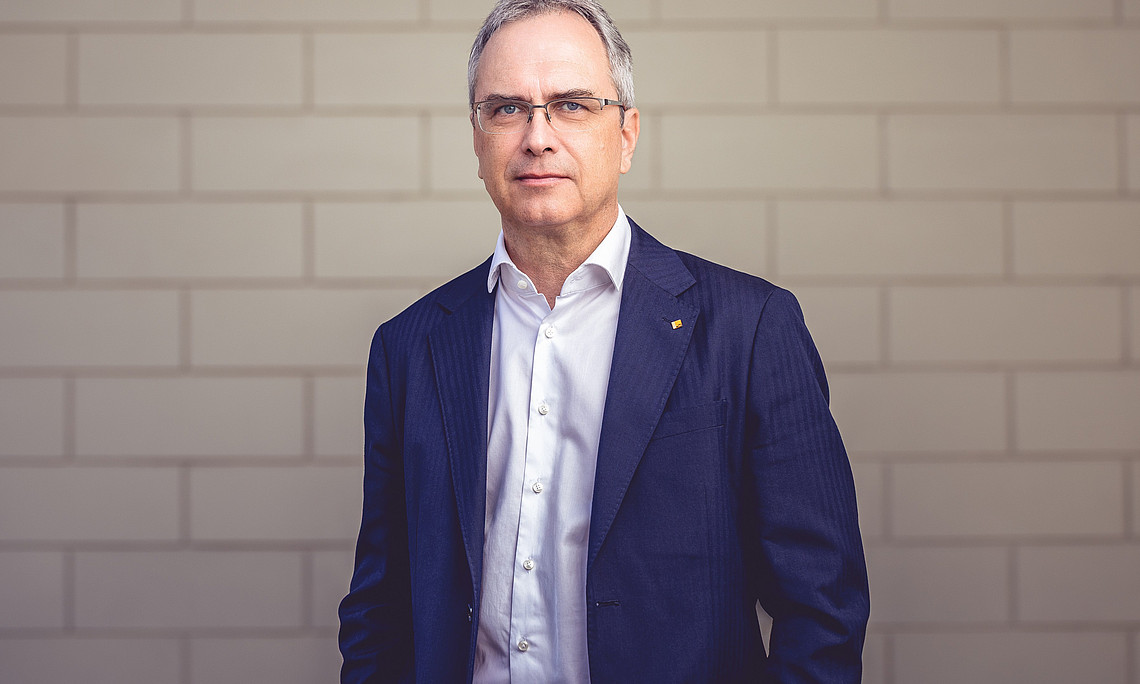
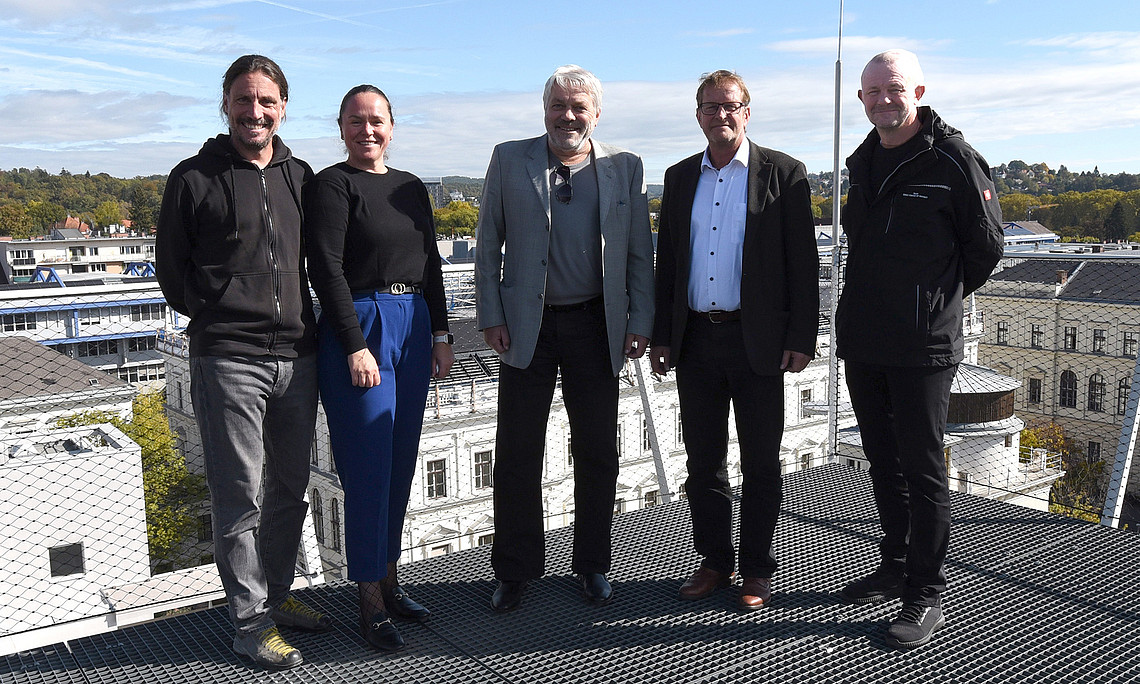
created by Miriam Steurer & Gerhild Leljak

Related news

Jurassic Sounds: Biologist reconstructs insect songs from 165 million years ago

It was apparently not just the roars of the dinosaurs that made up the soundscape of the animal world during the Jurassic period. Crickets and grasshoppers communicated through a variety of songs and high-pitched sounds, as Thorin Jonsson from the Institute of Biology at the University of Graz discovered together with colleagues from the universities of Lincoln, Bristol (UK), Beijing (China) and Tempe (USA). The findings on what are so far the oldest traces of sound on Earth have just been published in the journal PNAS.

EU funding boosts international exchange between universities

The University of Graz is further expanding its international study opportunities through the European university alliance Arqus and is taking the lead in two key projects. In future, students will benefit from even more joint degree programmes and from simplified recognition of academic achievements through the Joint European Degree Label.

Rescue and risks: Researchers have surveyed public perceptions of AI

The use of artificial intelligence has had to be made transparent since 2 August 2026. The EU’s AI Act, which has been in force since then, also sets out how risky an application is and which security measures apply as a result. However, the assessment of risks by the legislation differs in some cases significantly from the perceptions of the Austrian public. This is the finding of a representative study carried out by data scientist Stefan Thalmann from the University of Graz and his team.

The Healing Sea: Researchers discover new approaches to treating chronic inflammation in sponges

Chronic inflammation plays a key role in many diseases, ranging from metabolic disorders and cardiovascular diseases to tissue damage following injuries or infections. “Normally, the body is able to resolve inflammation on its own. If this process becomes unbalanced, immune cells remain permanently active and continue to drive negative changes in the tissue,” explains Andreas Koeberle, a pharmacist at the University of Graz.

Begin of page section:
Additional information:

University of Graz
Universitaetsplatz 3
8010 Graz
Austria
  • Contact
  • Web Editors
  • Moodle
  • UNIGRAZonline
  • Imprint
  • Data Protection Declaration
  • Accessibility Declaration
Weatherstation
Uni Graz

End of this page section. Go to overview of page sections

End of this page section. Go to overview of page sections

Begin of page section:

End of this page section. Go to overview of page sections