



Begin of page section:
Page sections:

  • Go to contents (Accesskey 1)
  • Go to position marker (Accesskey 2)
  • Go to main navigation (Accesskey 3)
  • Go to sub navigation (Accesskey 4)
  • Go to additional information (Accesskey 5)
  • Go to page settings (user/language) (Accesskey 8)
  • Go to search (Accesskey 9)

End of this page section. Go to overview of page sections

Begin of page section:
Page settings:

English en
Deutsch de
Search
Login

End of this page section. Go to overview of page sections

Begin of page section:
Search:

Search for details about Uni Graz
Close

End of this page section. Go to overview of page sections


Search

Begin of page section:
Main navigation:

Page navigation:

  • University

    University
    • About the University
    • Organisation
    • Faculties
    • Library
    • Working at University of Graz
    • Campus
    Developing solutions for the world of tomorrow - that is our mission. Our students and our researchers take on the great challenges of society and carry the knowledge out.
  • Research Profile

    Research Profile
    • Our Expertise
    • Research Questions
    • Research Portal
    • Promoting Research
    • Research Transfer
    • Ethics in Research
    • Commission for Scientific Integrity
    Scientific excellence and the courage to break new ground. Research at the University of Graz creates the foundations for making the future worth living.
  • Studies

    Studies
    • Prospective Students
    • Students
  • Community

    Community
    • International
    • Location
    • Research and Business
    • Alumni
    The University of Graz is a hub for international research and brings together scientists and business experts. Moreover, it fosters the exchange and cooperation in study and teaching.
  • Spotlight
Topics
  • Sustainable University
  • Researchers answer
  • Work for us
Close menu

End of this page section. Go to overview of page sections

Begin of page section:
You are here:

University of Graz News Berechnende Kunst

End of this page section. Go to overview of page sections

Wednesday, 23 July 2014

Berechnende Kunst
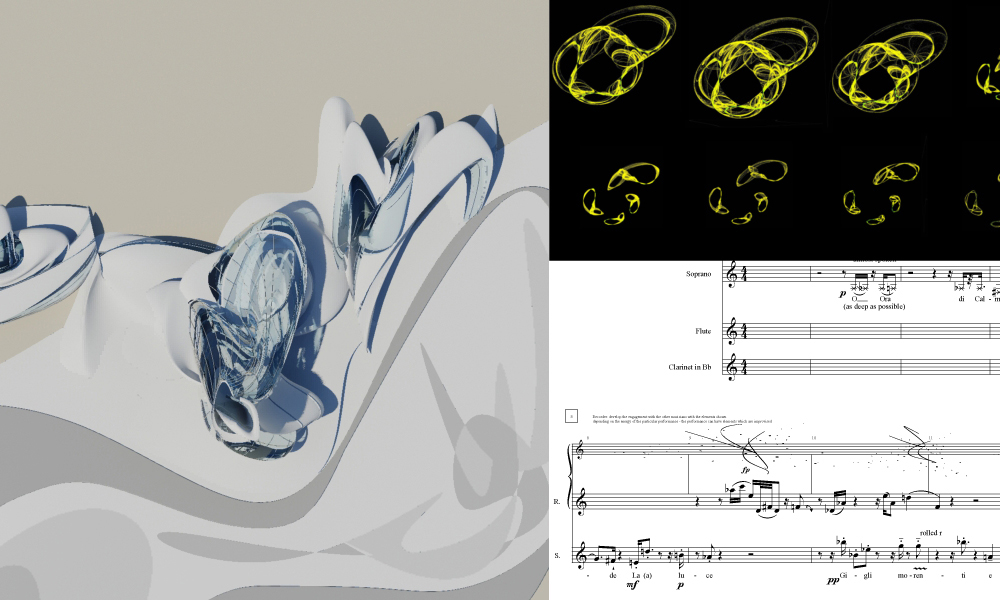
Architektur (l.) und Komposition (r. unten) bedienen sich mathematischer Strukturen (r. oben). Ein Team der Uni Graz arbeitet nun an Systemen, die für die KünstlerInnen besser zu handhaben sind.

Architektur (l.) und Komposition (r. unten) bedienen sich mathematischer Strukturen (r. oben). Ein Team der Uni Graz arbeitet nun an Systemen, die für die KünstlerInnen besser zu handhaben sind.

MathematikerInnen der Uni Graz entwickeln Inspirationsquellen für Musik und Architektur

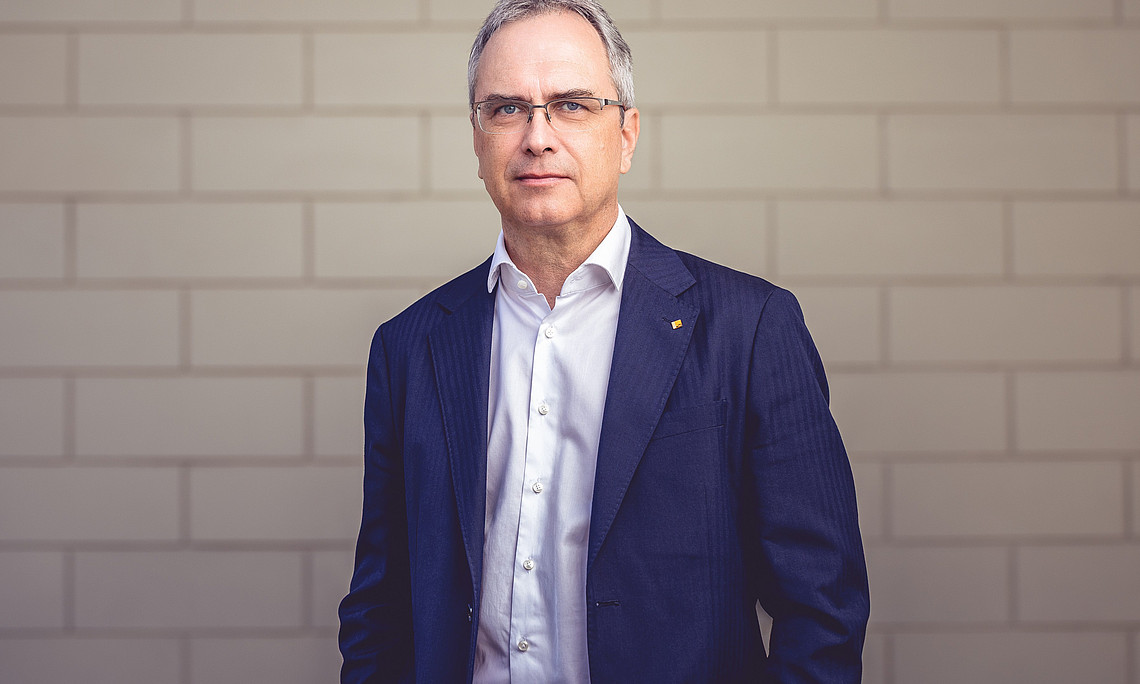
„Die Kunst bedient sich schon seit Jahrzehnten mathematischer Strukturen, um neue Formen zu finden“, erklärt Univ.-Prof. Dr. Klemens Fellner vom Institut für Mathematik und Wissenschaftliches Rechnen der Karl-Franzens-Universität Graz. Größen wie Zaha Hadid benützen algorithmische Design Software, um ihre spektakulären Gebäude zu entwerfen. Komponisten wie Jannis Xenakis oder György Ligeti bedienten sich der Mathematik, um ihre Klänge zu kreieren. „Manche der verwendeten Modelle sind allerdings so unkontrollierbar komplex, dass sie die Gestaltungsfähigkeit schon wieder einschränken“, schildert Fellner. Im Team mit seiner Kollegin Univ.-Prof. Dr. Karin Baur und Univ.-Prof. Dr. Gerhard Eckel vom Institut für Elektronische Musik und Akustik der Kunstuni Graz werden nun verschiedene Systeme mit hoher künstlerischer Inspirationskraft analysiert, die sich gezielt regulieren lassen. „Wir orientieren uns beispielsweise an Gleichungen, die beschreiben, wie sich Fischschwärme arrangieren“, so Fellner. „Manipuliert man das Verhalten einzelner Individuen, ergibt sich immer noch eine große Bandbreite an verschiedenen Ausdrucksformen, sie wird aber kontrollierbarer“, ergänzt Karin Baur. Trotz eingebauter Kontrollgrößen bleibt also die Palette an kreativen Möglichkeiten breit.

Das innovative Projekt soll nicht nur die Kunst fördern, sondern auch der Mathematik weiterhelfen. „Wir erwarten uns durch den Dialog mit MusikerInnen und ArchitektInnen neue Perspektiven und Erkenntnisse, die auch das Verständnis komplexer mathematischer Strukturen erleichtern“, erhofft sich Baur einen Mehrwert.
Das Vorhaben wird als unkonventionelle Forschung von der Karl-Franzens-Universität Graz für drei Jahre mit rund 180.000 Euro gefördert.

created by Dagmar Eklaude

Related news

Higher Education Strategy 2040: Austria’s universities on course for the future

Austria has 77 higher education institutions, which is above the EU average – but does this really make sense? The new Higher Education Strategy 2040 focuses on cooperation rather than mergers. As one of the six largest universities in Austria, the University of Graz plays a central role in this.

Climate research in Greenland: Old data provides new insights

The polar explorer and University of Graz professor Alfred Wegener left behind a unique collection of climate data from Greenland. A research team from the University of Graz is now analysing this 100-year-old treasure trove of data and comparing it with current measurements.

Diversity in nature and science: How we talk about plants and each other

Ginkgo, kiwi, hemp: they exist as male and female plants. Anyone who paid attention in biology class will confirm this. But is this categorisation, established by Carl von Linné almost 300 years ago, still valid today? An interdisciplinary team at the University of Graz is questioning these attributions and using this as a starting point to provide food for thought for gender-sensitive interaction between students, scientific and teaching staff.

Around the world in eight stops: the Long Night of Research at the University of Graz

On 24 April from 5 pm, you can take a short trip around the globe at the University of Graz, discovering pecularities of foreign countries or new local features in the entrance hall of the University Library. The itinerary takes you through introduced animal species, political attitudes and the omnipotence of algorithms. There will also be a programme in the historic reading hall, as well as at the UniGraz@Museum and the University Archive.

Begin of page section:
Additional information:

University of Graz
Universitaetsplatz 3
8010 Graz
Austria
  • Contact
  • Web Editors
  • Moodle
  • UNIGRAZonline
  • Imprint
  • Data Protection Declaration
  • Accessibility Declaration
Weatherstation
Uni Graz

End of this page section. Go to overview of page sections

End of this page section. Go to overview of page sections

Begin of page section:

End of this page section. Go to overview of page sections

