Begin of page section:
Page sections:

  • Go to contents (Accesskey 1)
  • Go to position marker (Accesskey 2)
  • Go to main navigation (Accesskey 3)
  • Go to sub navigation (Accesskey 4)
  • Go to additional information (Accesskey 5)
  • Go to page settings (user/language) (Accesskey 8)
  • Go to search (Accesskey 9)

End of this page section. Go to overview of page sections

Begin of page section:
Page settings:

English en
Deutsch de
Search
Login

End of this page section. Go to overview of page sections

Begin of page section:
Search:

Search for details about Uni Graz
Close

End of this page section. Go to overview of page sections


Search

Begin of page section:
Main navigation:

Page navigation:

  • University

    University
    • About the University
    • Organisation
    • Faculties
    • Library
    • Working at University of Graz
    • Campus
    Developing solutions for the world of tomorrow - that is our mission. Our students and our researchers take on the great challenges of society and carry the knowledge out.
  • Research Profile

    Research Profile
    • Our Expertise
    • Research Questions
    • Research Portal
    • Promoting Research
    • Research Transfer
    • Ethics in Research
    Scientific excellence and the courage to break new ground. Research at the University of Graz creates the foundations for making the future worth living.
  • Studies

    Studies
    • Prospective Students
    • Students
  • Community

    Community
    • International
    • Location
    • Research and Business
    • Alumni
    The University of Graz is a hub for international research and brings together scientists and business experts. Moreover, it fosters the exchange and cooperation in study and teaching.
  • Spotlight
Topics
  • Our digital Advent calendar
  • Sustainable University
  • Researchers answer
  • Work for us
Close menu

End of this page section. Go to overview of page sections

Begin of page section:
You are here:

University of Graz News Bemerkenswert, aber unbeachtet

End of this page section. Go to overview of page sections

Thursday, 18 June 2015

Bemerkenswert, aber unbeachtet

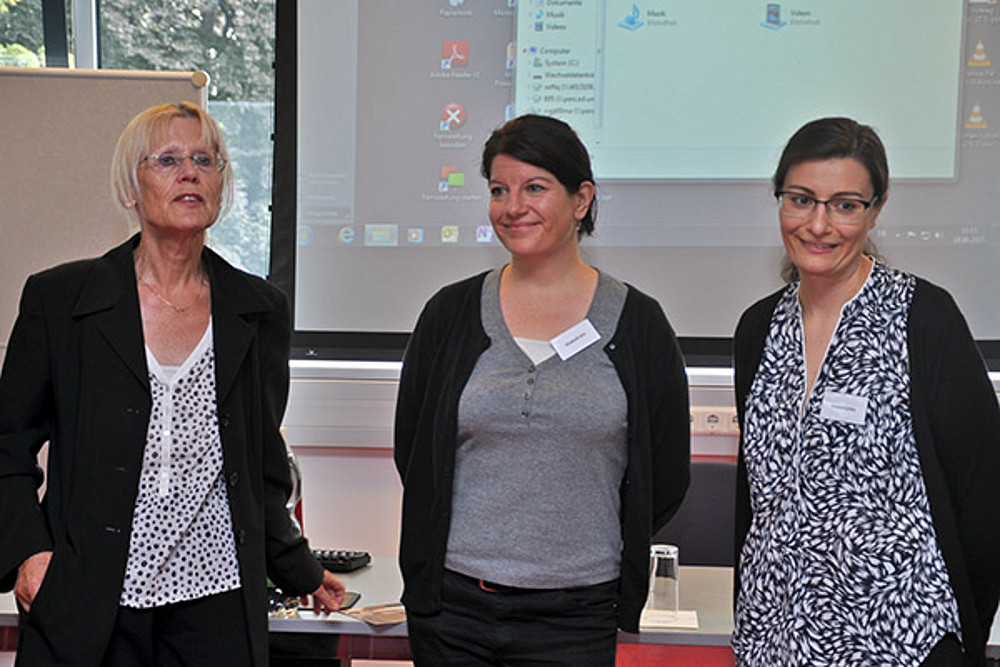
Karin Schmidlechner, Elisabeth Arlt und Verena Lorber initiierten den Workshop zum Thema Gastarbeiterinnen

Karin Schmidlechner, Elisabeth Arlt und Verena Lorber initiierten den Workshop zum Thema Gastarbeiterinnen

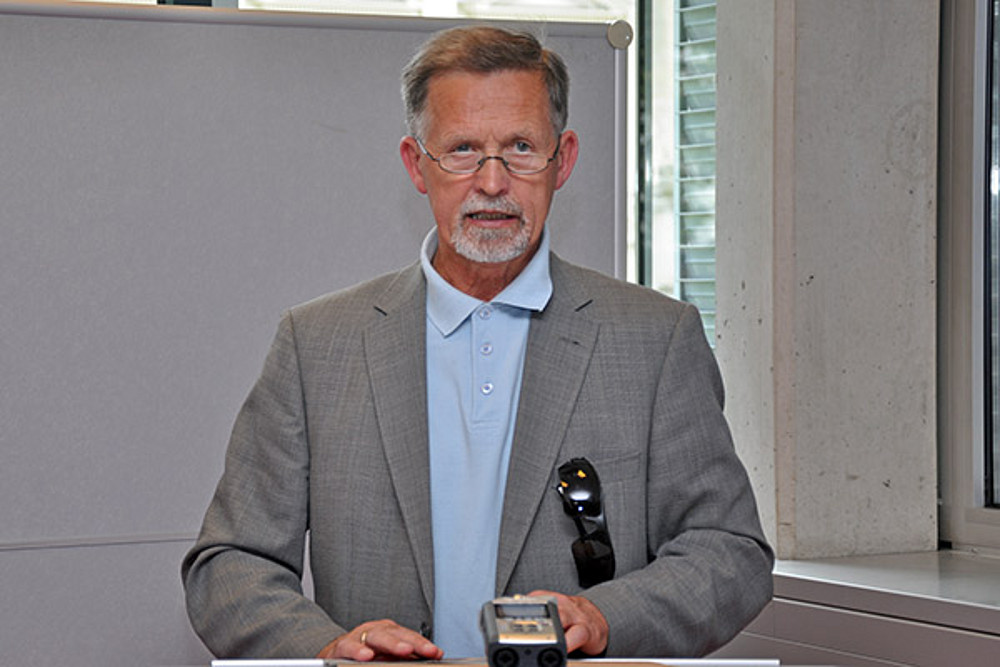
Institutsleiter Harald Heppner unterstrich die Bedeutung von GastarbeiterInnen als Stützen unserer Gesellschaft.

Institutsleiter Harald Heppner unterstrich die Bedeutung von GastarbeiterInnen als Stützen unserer Gesellschaft.

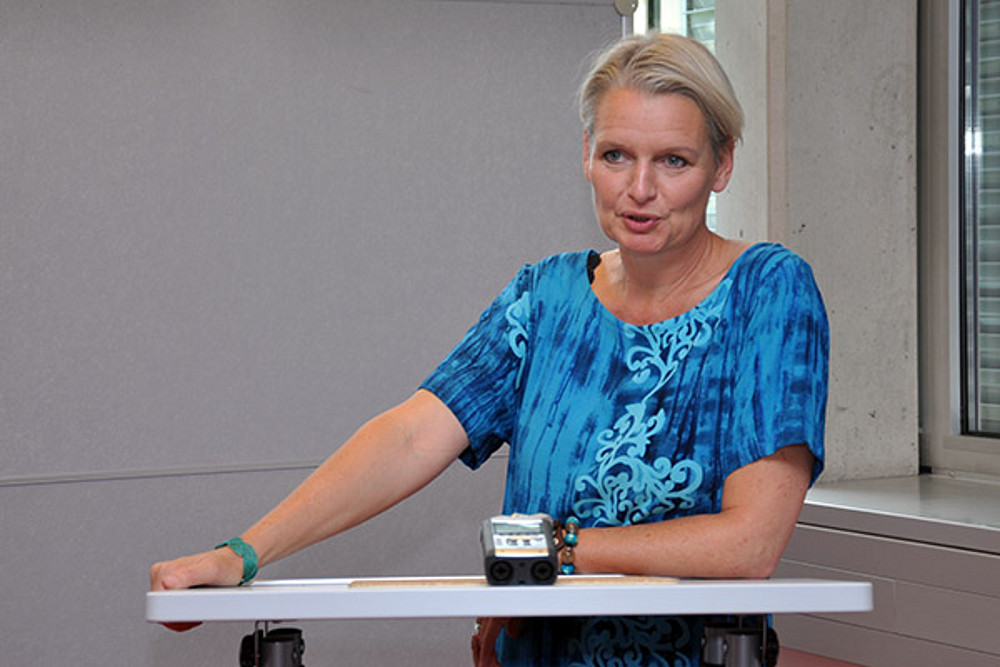
Stadträtin Lisa Rücker bedankte sich für die Forschung und die Initiativen, die Gesellschaft für das Thema zu sensibilisieren. Fotos: Uni Graz/Eklaude

Stadträtin Lisa Rücker bedankte sich für die Forschung und die Initiativen, die Gesellschaft für das Thema zu sensibilisieren. Fotos: Uni Graz/Eklaude

Workshop präsentiert Forschungen und Projekte zum Thema Gastarbeiterinnen

Bei dem Begriff „Gastarbeiter“ denkt man hierzulande für gewöhnlich an Männer, die ab den 1960er-Jahren vor allem aus Jugoslawien und der Türkei zum Geldverdienen nach Österreich kamen. Aber auch viele Frauen gingen zum Arbeiten ins Ausland. Gründe dafür waren bessere Verdienstmöglichkeiten, mangelnde Schulausbildung, geringe Perspektiven im Herkunftsland, Abenteuerlust, die Liebe oder auch die Flucht aus der Enge traditioneller Gemeinschaften. In der öffentlichen Wahrnehmung sind diese Frauen jedoch kaum präsent.

Am 18. Juni 2015 widmete sich an der Uni Graz ein Workshop unter der Leitung der Historikerinnen Karin Schmidlechner und Verena Lorber sowie von Elisabeth Arlt vom Kulturverein Pavelhaus der weiblichen Arbeitsmigration. Bei der Veranstaltung stellten ExpertInnen aus ganz Österreich aktuelle Forschungen über „Gastarbeiterinnen“ in Österreich und konkrete Projekte zu ihrer Repräsentation im öffentlichen Raum vor. Ziel der Veranstaltung ist neben der Vernetzung und dem Erfahrungsaustausch, die Lebensrealitäten und Biografien von Gastarbeiterinnen ans Licht zu bringen und in der Folge durch entsprechende Aktivitäten in der Gesellschaft sichtbar zu machen.

Bei der Eröffnung begrüßte Harald Heppner, Leiter des Instituts für Geschichte, dass durch die Forschungen alle Teile der Gesellschaft mehr Wertschätzung erfahren. "Der slowenische und der steirische Raum waren zumindest bis 1918 eng verflochten. GastarbeiterInnen verkörpern auch heute noch zentrale Stützen der Gesellschaft." Kulturstadträtin Lisa Rücker verwies ebenfalls auf die Bedeutung von Frauen mit Migrationshintergrund: "Ohne ihren Einsatz in Reinigung und Pflege wären weder die Emanzipationsbemühungen der Frauen noch unser Wohlstand denkbar. In der gesellschaftlichen Diskussion muss darauf hingewiesen werden, gerade jetzt, wo eine Werteverschiebung spürbar ist. Danke, dass diese Forschung passiert!"
>> nähere Informationen zum Workshop

Der Workshop ist eine Ergänzung zur Ausstellung „Lebenswege – Slowenische ,Gastarbeiterinnen‘ in der Steiermark“, kuratiert von Verena Lorber, die noch bis 6. November 2015 im Pavelhaus in Laafeld/Bad Radkersburg zu sehen ist. "Die Idee war es, so Praxis und Theorie zu verbinden", erklärt die Historikerin.

created by Gudrun Pichler und Dagmar Eklaude

Related news

Chemical Christmas show at the University of Graz: An explosive evening at the Schauspielh

At the beginning of December, the University of Graz transformed the theater into a laboratory: as part of “Chemical Life,” teacher training students staged a chemical Christmas show for Styrian school classes—complete with ethanol rockets, nitrogen snow, and glowing effects. An evening designed to inspire interest in studying chemistry.

Train by train: Koralm railway accelerates exchange between the Universities

Lectures at the University of Klagenfurt in the morning, seminars at the University of Graz in the afternoon: Austria's longest tunnel and a journey time of around 45 minutes make it easy. The Koralm railway increases the speed of networking between the two university locations. The collaboration builds on existing cooperation - for example in the areas of teacher training, Slavic studies and as employers, the universities are well coordinated.

On the trail of the Big Bang: University of Graz receives 1.5 million euros for doctoral programmes

The Austrian Science Fund FWF has selected the Doctoral Programme in Theoretical Particle Physics at the University of Graz for funding from the Doc.funds. Six young scientists will be funded for 3.5 years. They will gain fundamentally new insights into the origins of the world.

From trans women and knee prostheses: sports science prizes awarded

Walking better with a prosthesis, successfully getting rid of excess weight, training more effectively, more fairness for trans people in sport: these were the topics addressed by the students at the University of Graz who were awarded the sports science prizes for their Master's theses on 3 December 2025.

Begin of page section:
Additional information:

University of Graz
Universitaetsplatz 3
8010 Graz
Austria
  • Contact
  • Web Editors
  • Moodle
  • UNIGRAZonline
  • Imprint
  • Data Protection Declaration
  • Accessibility Declaration
Weatherstation
Uni Graz

End of this page section. Go to overview of page sections

End of this page section. Go to overview of page sections

Begin of page section:

End of this page section. Go to overview of page sections