



Begin of page section:
Page sections:

  • Go to contents (Accesskey 1)
  • Go to position marker (Accesskey 2)
  • Go to main navigation (Accesskey 3)
  • Go to sub navigation (Accesskey 4)
  • Go to additional information (Accesskey 5)
  • Go to page settings (user/language) (Accesskey 8)
  • Go to search (Accesskey 9)

End of this page section. Go to overview of page sections

Begin of page section:
Page settings:

English en
Deutsch de
Search
Login

End of this page section. Go to overview of page sections

Begin of page section:
Search:

Search for details about Uni Graz
Close

End of this page section. Go to overview of page sections


Search

Begin of page section:
Main navigation:

Page navigation:

  • University

    University
    • About the University
    • Organisation
    • Faculties
    • Library
    • Working at University of Graz
    • Campus
    Developing solutions for the world of tomorrow - that is our mission. Our students and our researchers take on the great challenges of society and carry the knowledge out.
  • Research Profile

    Research Profile
    • Our Expertise
    • Research Questions
    • Research Portal
    • Promoting Research
    • Research Transfer
    • Ethics in Research
    • Commission for Scientific Integrity
    Scientific excellence and the courage to break new ground. Research at the University of Graz creates the foundations for making the future worth living.
  • Studies

    Studies
    • Prospective Students
    • Students
  • Community

    Community
    • International
    • Location
    • Research and Business
    • Alumni
    The University of Graz is a hub for international research and brings together scientists and business experts. Moreover, it fosters the exchange and cooperation in study and teaching.
  • Spotlight
Topics
  • Sustainable University
  • Researchers answer
  • Work for us
Close menu

End of this page section. Go to overview of page sections

Begin of page section:
You are here:

University of Graz News Beihilfe zum Zelltod

End of this page section. Go to overview of page sections

Monday, 30 July 2012

Beihilfe zum Zelltod

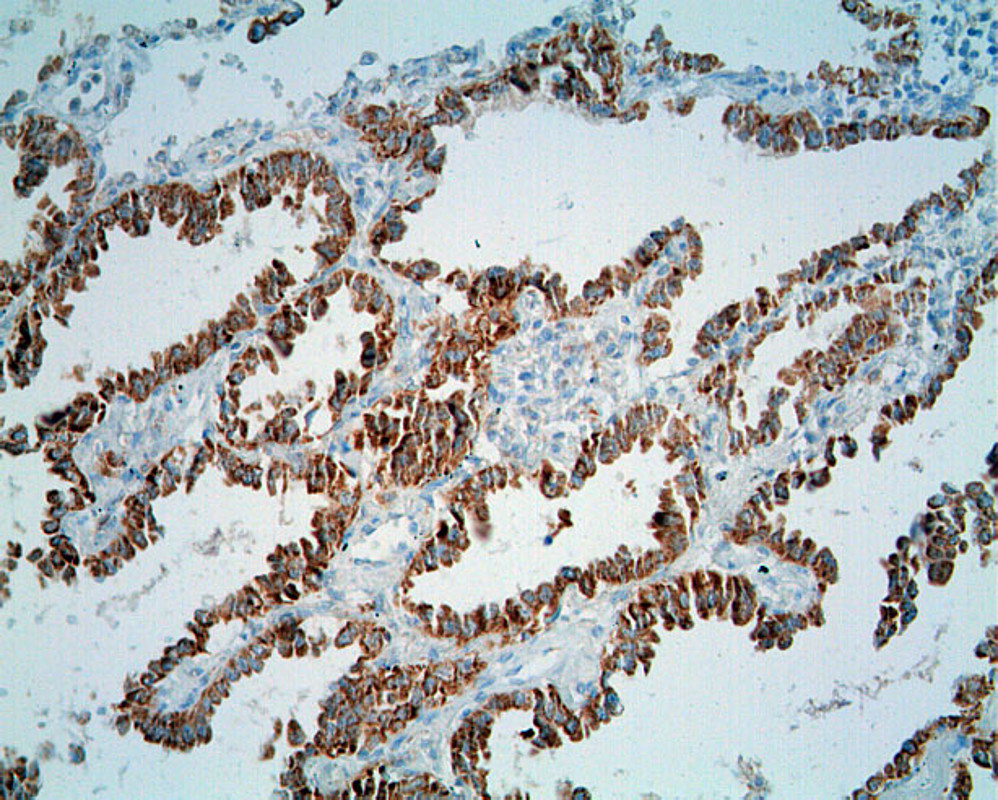
ForscherInnen haben herausgefunden, dass Vitamin B6 Chemotherapien im Kampf gegen Lungenkrebs unterstützt. Das Bild zeigt eine Biopsie mit Expression von Pyridoxalkinase, einem wichtigen Enzym zur Aktivierung von Vitamis B6. Foto: Lorenzo Galluzzi

ForscherInnen haben herausgefunden, dass Vitamin B6 Chemotherapien im Kampf gegen Lungenkrebs unterstützt. Das Bild zeigt eine Biopsie mit Expression von Pyridoxalkinase, einem wichtigen Enzym zur Aktivierung von Vitamis B6. Foto: Lorenzo Galluzzi

Vitamin B6 bestimmt den Erfolg einer Chemotherapie gegen Lungenkrebszellen

Der Vitamin B6 Stoffwechsel kann den positiven Ausgang von Chemotherapien entscheidend beeinflussen und ist somit ein wichtiger Biomarker, um die Antwort von LungenkrebspatientInnen auf eine entsprechende Behandlung zu prognostizieren. Das wurde in einer aktuellen, aufsehenerregenden Studie des Centre National de la Recherche Scientifique unter der Federführung von Univ.-Prof. Dr. Guido Kroemer, L'Université Paris Descartes, bewiesen. Auch Dr. Didac Carmona-Gutierrez , Dr. Tobias Eisenberg und Univ.-Prof. Dr. Francesco Madeo vom Institut für Molekulare Biowissenschaften der Karl-Franzens-Universität Graz waren an der Studie beteiligt, die im renommierten Journal „Cell Reports“ (CELL press) erschienen ist.


Krebszellen zeichnen sich unter anderem durch ein unkontrolliertes, rasantes Wachstum aus. Das rechtzeitige Eingreifen mittels einer Chemotherapie entscheidet oft über Leben und Tod der PatientInnen. Die Therapie bedeutet für die Krebszellen den gezielten Mord: Sie verraten sich aufgrund ihres charakteristischen Wucherns im Körper und werden durch eingesetzte chemotherapeutische Substanzen zur Strecke gebracht. Ein dafür besonders bei Lungenkrebs häufig eingesetztes Mittel ist Cisplatin. Die ForscherInnen fanden nun heraus, dass Cisplatin besser funktioniert, wenn der Körper über ein hohes Maß an aktiviertem Vitamin B6 (Pyridoxalphosphat) verfügt. „Vitamin B6 fungiert in diesem Fall als wichtige Beihilfe zum Tod der Krebszellen“, fasst Didac Carmona-Gutierrez zusammen.


Die Grazer Forscher lieferten in ihrer Beteiligung der Studie einen von vielen Beweisen für die Schlüsselrolle von Pyridoxin. Ihr Labor ist auf Hefezellen spezialisiert, die viele Ähnlichkeiten mit der menschlichen Zellstruktur aufweisen, auch im Bereich des zellulären Selbstmords. Die Zugabe von Vitamin B6 verstärkte auch bei Hefezellen die Toxizität von Cisplatin. Die Störung des Vitamin B6-Stoffwechsels führte dagegen zu einer erhöhten Resistenz gegenüber der Substanz. Ein Allheilmittel ist Vitamin B6 jedoch nicht, betont Carmona-Gutierrez, denn die individuelle, also tumorspezifische Aktivität des Enzyms Pyridoxalkinase, das Pyridoxin in dessen aktive Form überführt, spiele bei der effektiven Behandlung der Krebszellen eine entscheidende Rolle: „PatientInnen, deren Tumore höhere Pyridoxalkinase-Levels aufweisen, werden besser auf eine kombinierte Chemotherapie mit Vitamin B6 und Cisplatin ansprechen als andere.“ Mit dem Wissen um die toxizitätsfördernden Effekte von Vitamin B6 beim Einsatz von Chemotherapeutika lassen sich die Therapiemöglichkeiten für PatientInnen jedenfalls effektiver und personalisierter gestalten.


Damit liefert die Studie, an der 69 internationale WissenschafterInnen beteiligt waren, eine wichtige Grundlage für die bessere Einschätzung des Erfolgs von Chemotherapien und deren Prognose.




created by Gerhild Kastrun

Related news

Career Booster: How the Research Careers Campus supports researchers

They are innovative, creative and productive – researchers who have not yet been appointed to a professorship make a massive contribution to a university’s research output. To provide them with even better support on their career path, the University of Graz has established the Research Careers Campus. The official launch took place on 22 April 2026 with a ‘festival’.

Greenery on the rise: over 500 new flowers, perennials and shrubs on campus

Bright blooms and fresh greenery make our hearts beat faster in spring. But it is not just us humans who delight in this colourful growth. For many animals, this splendour provides, above all, food and habitat. There has recently been an increase in this on the University of Graz campus. More than 500 native flowers, perennials and shrubs have been planted on strips of fallow land around Universitätsplatz 2.

Around the world in eight stops: the Long Night of Research at the University of Graz

On 24 April from 5 pm, you can take a short trip around the globe at the University of Graz, discovering pecularities of foreign countries or new local features in the entrance hall of the University Library. The itinerary takes you through introduced animal species, political attitudes and the omnipotence of algorithms. There will also be a programme in the historic reading hall, as well as at the UniGraz@Museum and the University Archive.

Building biological bridges: Chemist discovers an ecological tool for the pharmaceutical industry

Building a relationship on a solid foundation is also important in chemistry. To produce medicines, disinfectants or plant protection products, stable bonds between carbon atoms must be formed. Conventional chemical methods rely on environmentally harmful reagents and solvents to carry out the desired reaction. This process also produces unusable by-products. Chemist Lilla Gal has discovered an enzyme that enables the same process to take place efficiently and sustainably. The results of her research were recently published in the prestigious journal Angewandte Chemie.

Begin of page section:
Additional information:

University of Graz
Universitaetsplatz 3
8010 Graz
Austria
  • Contact
  • Web Editors
  • Moodle
  • UNIGRAZonline
  • Imprint
  • Data Protection Declaration
  • Accessibility Declaration
Weatherstation
Uni Graz

End of this page section. Go to overview of page sections

End of this page section. Go to overview of page sections

Begin of page section:

End of this page section. Go to overview of page sections