Begin of page section:
Page sections:

  • Go to contents (Accesskey 1)
  • Go to position marker (Accesskey 2)
  • Go to main navigation (Accesskey 3)
  • Go to sub navigation (Accesskey 4)
  • Go to additional information (Accesskey 5)
  • Go to page settings (user/language) (Accesskey 8)
  • Go to search (Accesskey 9)

End of this page section. Go to overview of page sections

Begin of page section:
Page settings:

English en
Deutsch de
Search
Login

End of this page section. Go to overview of page sections

Begin of page section:
Search:

Search for details about Uni Graz
Close

End of this page section. Go to overview of page sections


Search

Begin of page section:
Main navigation:

Page navigation:

  • University

    University
    • About the University
    • Organisation
    • Faculties
    • Library
    • Working at University of Graz
    • Campus
    Developing solutions for the world of tomorrow - that is our mission. Our students and our researchers take on the great challenges of society and carry the knowledge out.
  • Research Profile

    Research Profile
    • Our Expertise
    • Research Questions
    • Research Portal
    • Promoting Research
    • Research Transfer
    • Ethics in Research
    • Commission for Scientific Integrity
    Scientific excellence and the courage to break new ground. Research at the University of Graz creates the foundations for making the future worth living.
  • Studies

    Studies
    • Prospective Students
    • Students
  • Community

    Community
    • International
    • Location
    • Research and Business
    • Alumni
    The University of Graz is a hub for international research and brings together scientists and business experts. Moreover, it fosters the exchange and cooperation in study and teaching.
  • Spotlight
Topics
  • Sustainable University
  • Researchers answer
  • Work for us
Close menu

End of this page section. Go to overview of page sections

Begin of page section:
You are here:

University of Graz News Bakterium trickst Fressfeind aus

End of this page section. Go to overview of page sections

Monday, 28 May 2018

Bakterium trickst Fressfeind aus

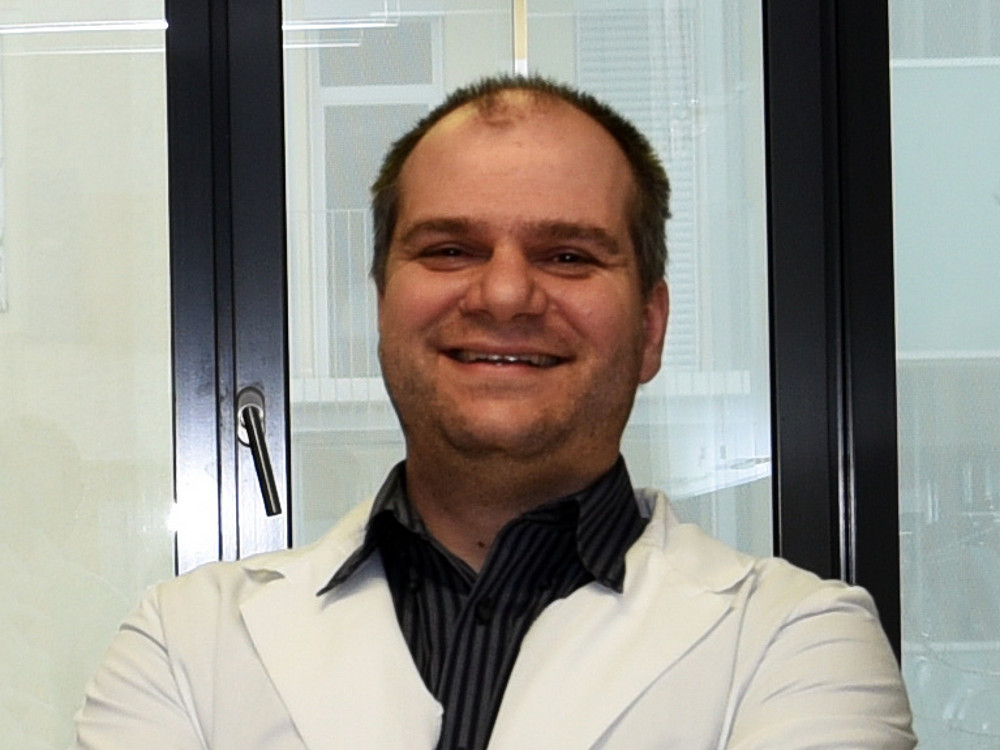
Stefan Schild sucht nach neuen Strategien, die Cholera zu bekämpfen. Foto: Uni Graz/Eklaude ©Uni Graz/Eklaude

Stefan Schild sucht nach neuen Strategien, die Cholera zu bekämpfen. Foto: Uni Graz/Eklaude

ForscherInnen der Uni Graz entschlüsseln, wie der Cholera-Erreger zwischen Ausbrüchen überlebt

Nur abgekochtes Wasser und durchgegarte Speisen konsumieren ist eine Gesundheits-Grundregel für Individualreisen in südlichere Gefilde. In mit Fäkalien verunreinigten Gewässern gedeiht nämlich unter anderem das Bakterium Vibrio cholerae. Wie es dort überlebt und sich vermehrt, bevor es im Menschen die lebensbedrohliche Durchfallerkrankung auslösen kann, untersuchen WissenschafterInnen weltweit. So wollen sie neue Strategien gegen die Seuche entwickeln und die explosionsartigen Cholera-Ausbrüche bereits in der Entstehung bekämpfen. Das Team um Kristina Schild-Prüfert und Stefan Schild vom Institut für Molekulare Biowissenschaften der Universität Graz haben erste Erkenntnisse gewonnen, wie Vibrio cholerae räuberischen Fadenwürmern in der Umwelt entkommen. Die Ergebnisse wurden im Journal mSpheres veröffentlicht.

Fadenwürmer, die sowohl im Meer, im Süßwasser als auch im Erdboden vorkommen, haben unter anderem Bakterien auf dem Speiseplan und sorgen damit für hygienischere Bedingungen in ihrer Umwelt. Der Cholera-Erreger hat allerdings einen Weg gefunden, diesen Gegner zu überwinden. „Er besiedelt den Verdauungstrakt des Wurms und setzt dabei Stoffe frei, die Entwicklung und Wachstum des Fressfeindes behindern“, beschreibt Schild. Die befallenen Tiere erreichen das Erwachsenenstadium nicht mehr und können sich folglich auch nicht fortpflanzen. Das Grazer Team hat unter anderem jenes Gen identifiziert, das für die Besiedelung und Kolonisierung des Fadenwurms verantwortlich ist.
Die Studie zeigt außerdem, dass das Bakterium für diese Abwehr völlig andere Mechanismen in Gang setzt als im menschlichen Körper. Die ForscherInnen wollen zukünftig das Wechselspiel zwischen dem Krankheitserreger und seinem Fressfeind noch weiter untersuchen, und möglicherweise Strategien erarbeiten, wie Vibrio cholerae bereits in der Umwelt dezimiert werden kann. „Wir haben hier wissenschaftliches Neuland betreten. Ein besseres Verständnis wo und wie menschliche Pathogene zwischen den Ausbrüchen existieren, kann hoffentlich zu neuen Ansätzen zur Eindämmung von Seuchen beitragen“, betont Schild.
Die Forschungen wurden vom österreichischen Wissenschaftsfonds FWF im Rahmen des Doktoratskollegs „Molekulare Enzymologie“ sowie durch die NAWI-Graz-Frauenförderung finanziert.

Artikel auf mSphere

created by Dagmar Eklaude

Related news

Career Booster: How the Research Careers Campus supports researchers

They are innovative, creative and productive – researchers who have not yet been appointed to a professorship make a massive contribution to a university’s research output. To provide them with even better support on their career path, the University of Graz has established the Research Careers Campus. The official launch took place on 22 April 2026 with a ‘festival’.

Greenery on the rise: over 500 new flowers, perennials and shrubs on campus

Bright blooms and fresh greenery make our hearts beat faster in spring. But it is not just us humans who delight in this colourful growth. For many animals, this splendour provides, above all, food and habitat. There has recently been an increase in this on the University of Graz campus. More than 500 native flowers, perennials and shrubs have been planted on strips of fallow land around Universitätsplatz 2.

Building biological bridges: Chemist discovers an ecological tool for the pharmaceutical industry

Building a relationship on a solid foundation is also important in chemistry. To produce medicines, disinfectants or plant protection products, stable bonds between carbon atoms must be formed. Conventional chemical methods rely on environmentally harmful reagents and solvents to carry out the desired reaction. This process also produces unusable by-products. Chemist Lilla Gal has discovered an enzyme that enables the same process to take place efficiently and sustainably. The results of her research were recently published in the prestigious journal Angewandte Chemie.

Higher Education Strategy 2040: Austria’s universities on course for the future

Austria has 77 higher education institutions, which is above the EU average – but does this really make sense? The new Higher Education Strategy 2040 focuses on cooperation rather than mergers. As one of the six largest universities in Austria, the University of Graz plays a central role in this.

Begin of page section:
Additional information:

University of Graz
Universitaetsplatz 3
8010 Graz
Austria
  • Contact
  • Web Editors
  • Moodle
  • UNIGRAZonline
  • Imprint
  • Data Protection Declaration
  • Accessibility Declaration
Weatherstation
Uni Graz

End of this page section. Go to overview of page sections

End of this page section. Go to overview of page sections

Begin of page section:

End of this page section. Go to overview of page sections