Begin of page section:
Page sections:

  • Go to contents (Accesskey 1)
  • Go to position marker (Accesskey 2)
  • Go to main navigation (Accesskey 3)
  • Go to sub navigation (Accesskey 4)
  • Go to additional information (Accesskey 5)
  • Go to page settings (user/language) (Accesskey 8)
  • Go to search (Accesskey 9)

End of this page section. Go to overview of page sections

Begin of page section:
Page settings:

English en
Deutsch de
Search
Login

End of this page section. Go to overview of page sections

Begin of page section:
Search:

Search for details about Uni Graz
Close

End of this page section. Go to overview of page sections


Search

Begin of page section:
Main navigation:

Page navigation:

  • University

    University
    • About the University
    • Organisation
    • Faculties
    • Library
    • Working at University of Graz
    • Campus
    Developing solutions for the world of tomorrow - that is our mission. Our students and our researchers take on the great challenges of society and carry the knowledge out.
  • Research Profile

    Research Profile
    • Our Expertise
    • Research Questions
    • Research Portal
    • Promoting Research
    • Research Transfer
    • Ethics in Research
    Scientific excellence and the courage to break new ground. Research at the University of Graz creates the foundations for making the future worth living.
  • Studies

    Studies
    • Prospective Students
    • Students
  • Community

    Community
    • International
    • Location
    • Research and Business
    • Alumni
    The University of Graz is a hub for international research and brings together scientists and business experts. Moreover, it fosters the exchange and cooperation in study and teaching.
  • Spotlight
Topics
  • Our digital Advent calendar
  • Sustainable University
  • Researchers answer
  • Work for us
Close menu

End of this page section. Go to overview of page sections

Begin of page section:
You are here:

University of Graz News Bakterium trickst Fressfeind aus

End of this page section. Go to overview of page sections

Monday, 28 May 2018

Bakterium trickst Fressfeind aus
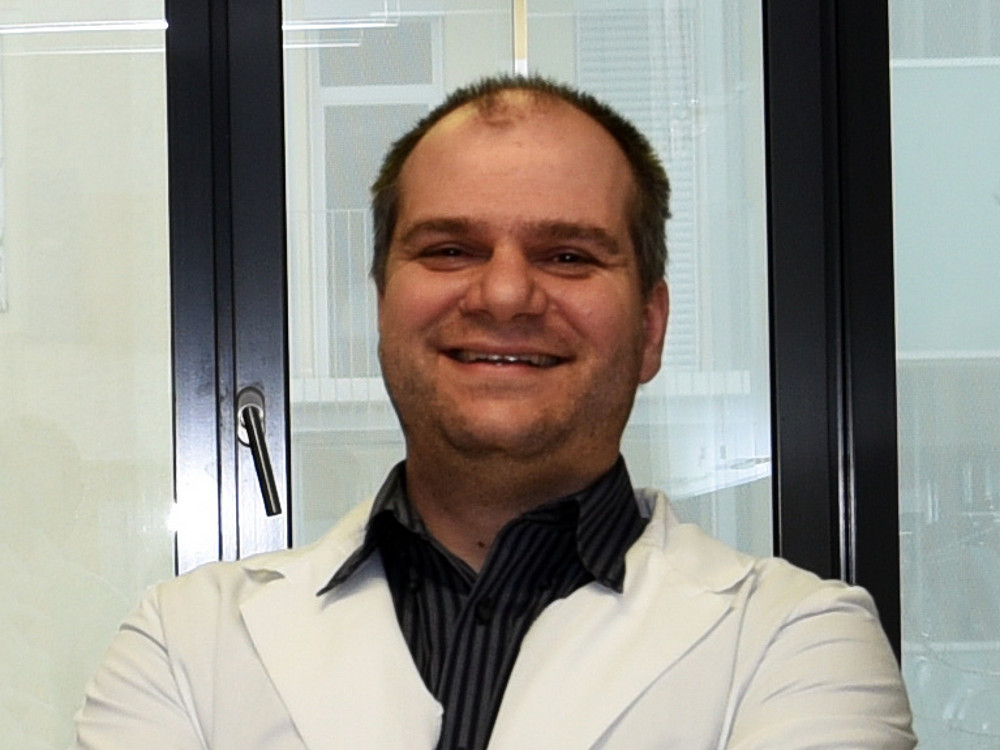
Stefan Schild sucht nach neuen Strategien, die Cholera zu bekämpfen. Foto: Uni Graz/Eklaude ©Uni Graz/Eklaude

Stefan Schild sucht nach neuen Strategien, die Cholera zu bekämpfen. Foto: Uni Graz/Eklaude

ForscherInnen der Uni Graz entschlüsseln, wie der Cholera-Erreger zwischen Ausbrüchen überlebt

Nur abgekochtes Wasser und durchgegarte Speisen konsumieren ist eine Gesundheits-Grundregel für Individualreisen in südlichere Gefilde. In mit Fäkalien verunreinigten Gewässern gedeiht nämlich unter anderem das Bakterium Vibrio cholerae. Wie es dort überlebt und sich vermehrt, bevor es im Menschen die lebensbedrohliche Durchfallerkrankung auslösen kann, untersuchen WissenschafterInnen weltweit. So wollen sie neue Strategien gegen die Seuche entwickeln und die explosionsartigen Cholera-Ausbrüche bereits in der Entstehung bekämpfen. Das Team um Kristina Schild-Prüfert und Stefan Schild vom Institut für Molekulare Biowissenschaften der Universität Graz haben erste Erkenntnisse gewonnen, wie Vibrio cholerae räuberischen Fadenwürmern in der Umwelt entkommen. Die Ergebnisse wurden im Journal mSpheres veröffentlicht.

Fadenwürmer, die sowohl im Meer, im Süßwasser als auch im Erdboden vorkommen, haben unter anderem Bakterien auf dem Speiseplan und sorgen damit für hygienischere Bedingungen in ihrer Umwelt. Der Cholera-Erreger hat allerdings einen Weg gefunden, diesen Gegner zu überwinden. „Er besiedelt den Verdauungstrakt des Wurms und setzt dabei Stoffe frei, die Entwicklung und Wachstum des Fressfeindes behindern“, beschreibt Schild. Die befallenen Tiere erreichen das Erwachsenenstadium nicht mehr und können sich folglich auch nicht fortpflanzen. Das Grazer Team hat unter anderem jenes Gen identifiziert, das für die Besiedelung und Kolonisierung des Fadenwurms verantwortlich ist.
Die Studie zeigt außerdem, dass das Bakterium für diese Abwehr völlig andere Mechanismen in Gang setzt als im menschlichen Körper. Die ForscherInnen wollen zukünftig das Wechselspiel zwischen dem Krankheitserreger und seinem Fressfeind noch weiter untersuchen, und möglicherweise Strategien erarbeiten, wie Vibrio cholerae bereits in der Umwelt dezimiert werden kann. „Wir haben hier wissenschaftliches Neuland betreten. Ein besseres Verständnis wo und wie menschliche Pathogene zwischen den Ausbrüchen existieren, kann hoffentlich zu neuen Ansätzen zur Eindämmung von Seuchen beitragen“, betont Schild.
Die Forschungen wurden vom österreichischen Wissenschaftsfonds FWF im Rahmen des Doktoratskollegs „Molekulare Enzymologie“ sowie durch die NAWI-Graz-Frauenförderung finanziert.

Artikel auf mSphere

created by Dagmar Eklaude

Related news

Chemical Christmas show at the University of Graz: An explosive evening at the Schauspielh

At the beginning of December, the University of Graz transformed the theater into a laboratory: as part of “Chemical Life,” teacher training students staged a chemical Christmas show for Styrian school classes—complete with ethanol rockets, nitrogen snow, and glowing effects. An evening designed to inspire interest in studying chemistry.

Train by train: Koralm railway accelerates exchange between the Universities

Lectures at the University of Klagenfurt in the morning, seminars at the University of Graz in the afternoon: Austria's longest tunnel and a journey time of around 45 minutes make it easy. The Koralm railway increases the speed of networking between the two university locations. The collaboration builds on existing cooperation - for example in the areas of teacher training, Slavic studies and as employers, the universities are well coordinated.

On the trail of the Big Bang: University of Graz receives 1.5 million euros for doctoral programmes

The Austrian Science Fund FWF has selected the Doctoral Programme in Theoretical Particle Physics at the University of Graz for funding from the Doc.funds. Six young scientists will be funded for 3.5 years. They will gain fundamentally new insights into the origins of the world.

From trans women and knee prostheses: sports science prizes awarded

Walking better with a prosthesis, successfully getting rid of excess weight, training more effectively, more fairness for trans people in sport: these were the topics addressed by the students at the University of Graz who were awarded the sports science prizes for their Master's theses on 3 December 2025.

Begin of page section:
Additional information:

University of Graz
Universitaetsplatz 3
8010 Graz
Austria
  • Contact
  • Web Editors
  • Moodle
  • UNIGRAZonline
  • Imprint
  • Data Protection Declaration
  • Accessibility Declaration
Weatherstation
Uni Graz

End of this page section. Go to overview of page sections

End of this page section. Go to overview of page sections

Begin of page section:

End of this page section. Go to overview of page sections