Begin of page section:
Page sections:

  • Go to contents (Accesskey 1)
  • Go to position marker (Accesskey 2)
  • Go to main navigation (Accesskey 3)
  • Go to sub navigation (Accesskey 4)
  • Go to additional information (Accesskey 5)
  • Go to page settings (user/language) (Accesskey 8)
  • Go to search (Accesskey 9)

End of this page section. Go to overview of page sections

Begin of page section:
Page settings:

English en
Deutsch de
Search
Login

End of this page section. Go to overview of page sections

Begin of page section:
Search:

Search for details about Uni Graz
Close

End of this page section. Go to overview of page sections


Search

Begin of page section:
Main navigation:

Page navigation:

  • University

    University
    • About the University
    • Organisation
    • Faculties
    • Library
    • Working at University of Graz
    • Campus
    Developing solutions for the world of tomorrow - that is our mission. Our students and our researchers take on the great challenges of society and carry the knowledge out.
  • Research Profile

    Research Profile
    • Our Expertise
    • Research Questions
    • Research Portal
    • Promoting Research
    • Research Transfer
    • Ethics in Research
    • Commission for Scientific Integrity
    Scientific excellence and the courage to break new ground. Research at the University of Graz creates the foundations for making the future worth living.
  • Studies

    Studies
    • Prospective Students
    • Students
    • Post-registration Law
  • Community

    Community
    • International
    • Location
    • Research and Business
    • Alumni
    The University of Graz is a hub for international research and brings together scientists and business experts. Moreover, it fosters the exchange and cooperation in study and teaching.
Topics
  • Sustainable University
  • Researchers answer
  • Work for us
Close menu

End of this page section. Go to overview of page sections

Begin of page section:
You are here:

University of Graz News Austria's greenhouse gas emissions continue to fall: Uni Graz researchers identify causes

End of this page section. Go to overview of page sections

Wednesday, 13 August 2025

Austria's greenhouse gas emissions continue to fall: Uni Graz researchers identify causes

Photovoltaic panels, the sun, blue sky with a few clouds ©CR - stock.adobe.com

Between 2023 and 2024, Austria's greenhouse gas emissions fell by around 2.6 per cent. Almost two-thirds of this reduction can be attributed to climate-friendly changes in production processes, heating systems and the behaviour of the population. Photo: CR - stock.adobe.com

Climate protection is working. Austria's greenhouse gas emissions fell by 2.56 percent between 2023 and 2024, the Environment Agency Austria announced on 13 August 2025. This marks the third consecutive year of decline for the country. However, the decline in 2024 was weaker than in previous years, and emissions are now slightly above the target set in the EU agreement. Researchers at the University of Graz have analysed the reasons for the reduction in the previous year. They show that climate protection measures are responsible for almost two-thirds of the savings.


Austria's CO2 emissions have fallen significantly in recent years: by 5.8 per cent in 2022, 6.4 per cent in 2023 and around 2.6 per cent in 2024, in each case compared to the previous year. Apart from the sharp decline due to the COVID-related lockdown, they had remained at a relatively stable level for a long time before that. “The last time we had greenhouse gas emissions as low as in 2024 was in 1970,” knows Karl Steininger from the Wegener Center at the University of Graz. However, even greater efforts are needed to achieve the 2030 target.

Climate protection pays off
In their analyses, Steininger and his team calculated the influence of various factors: “Almost two-thirds of the decline in Austrian greenhouse gas emissions last year can be attributed to climate-friendly changes in production processes, heating systems and the behaviour of the population. These were triggered, among other things, by price signals such as the national CO2 tax,” reports the researcher. Just over a third of the reduction is due to the weak economy (0.1 percentage points) and the exceptionally mild winter (0.9 percentage points).

More effort needed to achieve 2030 emissions target
“International climate agreements use 1990 emission levels as a reference for their targets. Austria currently emits just under 16 per cent less than that. However, we are still above our target path according to the EU agreement,” warns Steininger, adding: “If winter temperatures and the economic cycle had been in line with the ten-year average, emissions would have been two million tonnes of CO2 equivalents – three per cent – higher. For Austria to achieve its 2030 targets, the savings in the coming years must therefore be significantly greater than in 2024,” says the scientist.

  • Details on the development of Austrian greenhouse gas emissions until 2024
  • Summary of the development of Austrian greenhouse gas emissions until 2024
empty picture
empty picture
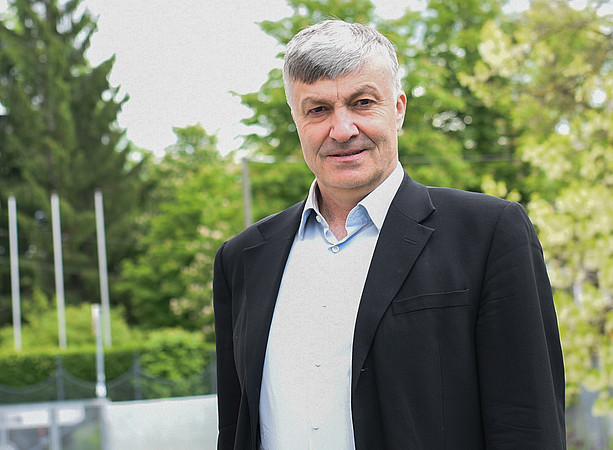
Karl Steininger, portrait ©University of Graz / Kanizaj
©University of Graz / Kanizaj
Karl Steininger and his team at the University of Graz calculated the influence of various factors on the decline in Austrian greenhouse gas emissions. Photo: University of Graz / Kanizaj
created by Gudrun Pichler

Related news

Record of reported species: Styria wins the global City Nature Challenge

Observers in Styria recorded 4,660 different animals, plants and fungi as part of the international City Nature Challenge between 24 and 27 April 2026. This saw the region take first place in the "species" category. Ostrava in the Czech Republic made the most observations, with just under 140,000, whilst the San Francisco Bay Area had the highest number of participants, namely 3,019.

Studying at the University of Graz: How to enrol

Ready for a new chapter in your life with the start of your studies at the University of Graz in the winter semester 2026/27? Here you will find information on deadlines, admission procedures, registration, and everything else you need to successfully start your studies in the fall.

Europe Day: Strengthening international expertise with Arqus

On 9 May, the spotlight will be on Europe. At the University of Graz, European cooperation is also a tangible part of everyday student life – not least through the Arqus university alliance. Master’s and PhD students can currently register for the Arqus micro-credential in ‘Advanced Creative Thinking and Communication’.

A substantial community: the key role of soil crusts in the earth system

They are often overshadowed by the plant world: lichens, fungi, mosses and bacteria, which form unique communities on rocks and trees or as soil crusts. Bettina Weber from the University of Graz is bringing this biological alliance into the research spotlight. Her research shows that these communities form an essential part of the Earth’s critical zone and play a key role in the interactions between land and atmosphere. Bettina Weber was honoured by the European Geosciences Union for her groundbreaking research at the beginning of May.

Begin of page section:
Additional information:

University of Graz
Universitaetsplatz 3
8010 Graz
Austria
  • Contact
  • Web Editors
  • Moodle
  • UNIGRAZonline
  • Imprint
  • Data Protection Declaration
  • Accessibility Declaration
Weatherstation
Uni Graz

End of this page section. Go to overview of page sections

End of this page section. Go to overview of page sections

Begin of page section:

End of this page section. Go to overview of page sections