




Begin of page section:
Page sections:

  • Go to contents (Accesskey 1)
  • Go to position marker (Accesskey 2)
  • Go to main navigation (Accesskey 3)
  • Go to sub navigation (Accesskey 4)
  • Go to additional information (Accesskey 5)
  • Go to page settings (user/language) (Accesskey 8)
  • Go to search (Accesskey 9)

End of this page section. Go to overview of page sections

Begin of page section:
Page settings:

English en
Deutsch de
Search
Login

End of this page section. Go to overview of page sections

Begin of page section:
Search:

Search for details about Uni Graz
Close

End of this page section. Go to overview of page sections


Search

Begin of page section:
Main navigation:

Page navigation:

  • University

    University
    • About the University
    • Organisation
    • Faculties
    • Library
    • Working at University of Graz
    • Campus
    Developing solutions for the world of tomorrow - that is our mission. Our students and our researchers take on the great challenges of society and carry the knowledge out.
  • Research Profile

    Research Profile
    • Our Expertise
    • Research Questions
    • Research Portal
    • Promoting Research
    • Research Transfer
    • Ethics in Research
    • Commission for Scientific Integrity
    Scientific excellence and the courage to break new ground. Research at the University of Graz creates the foundations for making the future worth living.
  • Studies

    Studies
    • Prospective Students
    • Students
    • Welcome Weeks for First Year Students
  • Community

    Community
    • International
    • Location
    • Research and Business
    • Alumni
    The University of Graz is a hub for international research and brings together scientists and business experts. Moreover, it fosters the exchange and cooperation in study and teaching.
Topics
  • Sustainable University
  • Researchers answer
  • Work for us
Close menu

End of this page section. Go to overview of page sections

Begin of page section:
You are here:

University of Graz News Aufstieg, Kampf und Freiheit

End of this page section. Go to overview of page sections

Thursday, 10 March 2016

Aufstieg, Kampf und Freiheit

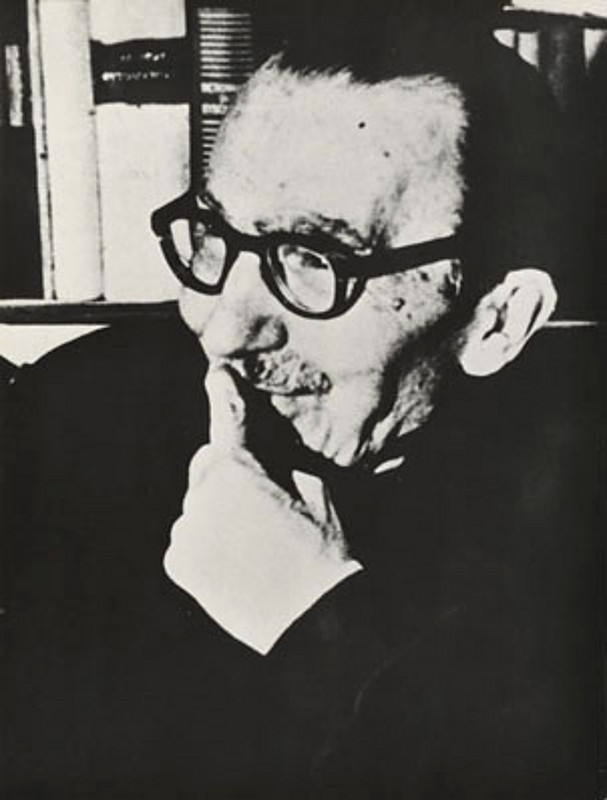
Nikos Kazantzakis zählt zu den bedeutendsten griechischen Schriftstellern des 20. Jahrhunderts. Foto: Μουσείο N. Καζαντζάκη / Kazantzakis Museum / Wikimedia Commons

Nikos Kazantzakis zählt zu den bedeutendsten griechischen Schriftstellern des 20. Jahrhunderts. Foto: Μουσείο N. Καζαντζάκη / Kazantzakis Museum / Wikimedia Commons

Basilius Groen ist Inhaber des UNESCO-Lehrstuhls für interkulturellen und interreligiösen Dialog für Südosteuropa an der Uni Graz. Foto: Sissi Furgler ©Beachten Sie die Nutzungsbedingungen unter www.mediendiens.com
©Beachten Sie die Nutzungsbedingungen unter www.mediendiens.com

Basilius Groen ist Inhaber des UNESCO-Lehrstuhls für interkulturellen und interreligiösen Dialog für Südosteuropa an der Uni Graz. Foto: Sissi Furgler

Basilius J. Groen: Aufstieg, Kampf und Freiheit. Nikos Kazantzakis, seine "Asketik: Die Retter Gottes" und die griechisch-orthodoxe spirituelle und liturgische Tradition. Wien, LIT 2015, Studies on South East Europe 18

Basilius J. Groen: Aufstieg, Kampf und Freiheit. Nikos Kazantzakis, seine "Asketik: Die Retter Gottes" und die griechisch-orthodoxe spirituelle und liturgische Tradition. Wien, LIT 2015, Studies on South East Europe 18

Basilius Groen präsentiert sein neuestes Buch über den berühmten griechischen Schriftsteller Nikos Kazantzakis

Alexis Sorbas und Die letzte Versuchung zählen zu den bekanntesten Romanen von Nikos Kazantzakis (1883-1957). Durch ihre Verfilmung erlangten sie Weltruhm. Sein bewegender Roman Griechische Passion diente wiederum als Grundlage für eine Oper des tschechischen Komponisten Bohuslav Martinů, die derzeit in Graz aufgeführt wird. Univ.-Prof. Dr. Basilius Groen, Theologe an der Karl-Franzens-Universität Graz, widmete sein jüngstes Buch den religiösen Aspekten in Kazantzakis' Werken. Am Donnerstag, den 10. März 2016 wird die Publikation in der Buchhandlung Moser in Kooperation mit der Oper Graz präsentiert.

Nikos Kazantzakis gilt als einer der bedeutendsten griechischen Schriftsteller des 20. Jahrhunderts. Er wurde in der liturgischen und spirituellen Tradition der griechisch-orthodoxen Kirche erzogen, distanzierte sich aber später von dieser und fand zahlreiche andere spirituelle Wege. „Dennoch versuchte er das, was ihm von der christlichen Tradition für seine eigenen philosophisch-religiösen Auffassungen nützlich zu sein schien, zu bewahren“, weiß Basilius Groen. Der gebürtige Niederländer verbrachte einige Jahre in Griechenland und ist ein profunder Kenner von Kazantzakis' Schaffen. 1997 übersetzte er dessen Schlüsselwerk Asketik: Die Retter Gottes ins Niederländische. In seinem aktuellen Buch zeigt Groen die religiösen und philosophischen Wurzeln der Asketik auf. Dazu zählen christlich-orthodoxe und buddhistische Einflüsse ebenso wie kommunistische Ideen.

„Für Kazantzakis gibt es im Leben zwei gegensätzliche Strömungen: eine, die nach oben und eine, die nach unten führt“, so Groen. Aufgabe des Menschen sei es, nach oben zu gehen, was Schwierigkeiten und Opfer bedeute. „Wir müssen über uns selbst hinauswachsen, uns immer neue Ziele setzen, im ständigen Ringen um Freiheit“, erläutert der Theologe die Vorstellung des griechischen Autors. „Kazantzakis versteht Gott als die Stimme, die uns auffordert, uns auf dem Weg nach oben zu kämpfen, ob wir es wollen oder nicht.“ Die Asketik – die Lehre von der Askese – zeigt auf, wie es mit Ausdauer und Verzicht möglich ist, dieser Stimme zu folgen.

Obwohl er feste Moralvorstellungen hatte, lehnte Kazantzakis alles Dogmatische ab. „Er überschritt traditionelle Grenzen, geriet in Konflikt mit der orthodoxen Kirche, begeisterte sich für den Kommunismus, den er später auch kritisierte, und näherte sich dem Buddhismus an. Letztendlich aber blieb er überall ein Outsider, ein moderner Odysseus, immer auf der Suche“, beschreibt Groen die vielschichtige Persönlichkeit des großen griechischen Schriftstellers.

Buchpräsentation
Basilius J. Groen: Aufstieg, Kampf und Freiheit. Nikos Kazantzakis und seine Asketik
Zeit: Donnerstag, 10. März 2016, 19.30 Uhr
Ort: Buchhandlung Moser, Am Eisernen Tor 1, 8010 Graz
Der Autor führt in Leben und Werk von Nikos Kazantzakis ein und stellt den Roman Griechische Passion vor. Die Dramaturgin Marlene Hahn gibt Einblicke in die aktuelle Produktion an der Oper Graz.

Basilius Groen ist seit 2002 Professor für Liturgiewissenschaft an der Uni Graz und seit 2007 Inhaber des UNESCO-Lehrstuhls für interkulturellen und interreligiösen Dialog für Südosteuropa.

created by Gudrun Pichler

Related news

Jurassic Sounds: Biologist reconstructs insect songs from 165 million years ago

It was apparently not just the roars of the dinosaurs that made up the soundscape of the animal world during the Jurassic period. Crickets and grasshoppers communicated through a variety of songs and high-pitched sounds, as Thorin Jonsson from the Institute of Biology at the University of Graz discovered together with colleagues from the universities of Lincoln, Bristol (UK), Beijing (China) and Tempe (USA). The findings on what are so far the oldest traces of sound on Earth have just been published in the journal PNAS.

EU funding boosts international exchange between universities

The University of Graz is further expanding its international study opportunities through the European university alliance Arqus and is taking the lead in two key projects. In future, students will benefit from even more joint degree programmes and from simplified recognition of academic achievements through the Joint European Degree Label.

Rescue and risks: Researchers have surveyed public perceptions of AI

The use of artificial intelligence has had to be made transparent since 2 August 2026. The EU’s AI Act, which has been in force since then, also sets out how risky an application is and which security measures apply as a result. However, the assessment of risks by the legislation differs in some cases significantly from the perceptions of the Austrian public. This is the finding of a representative study carried out by data scientist Stefan Thalmann from the University of Graz and his team.

The Healing Sea: Researchers discover new approaches to treating chronic inflammation in sponges

Chronic inflammation plays a key role in many diseases, ranging from metabolic disorders and cardiovascular diseases to tissue damage following injuries or infections. “Normally, the body is able to resolve inflammation on its own. If this process becomes unbalanced, immune cells remain permanently active and continue to drive negative changes in the tissue,” explains Andreas Koeberle, a pharmacist at the University of Graz.

Begin of page section:
Additional information:

University of Graz
Universitaetsplatz 3
8010 Graz
Austria
  • Contact
  • Web Editors
  • Moodle
  • UNIGRAZonline
  • Imprint
  • Data Protection Declaration
  • Accessibility Declaration
Weatherstation
Uni Graz

End of this page section. Go to overview of page sections

End of this page section. Go to overview of page sections

Begin of page section:

End of this page section. Go to overview of page sections