



Begin of page section:
Page sections:

  • Go to contents (Accesskey 1)
  • Go to position marker (Accesskey 2)
  • Go to main navigation (Accesskey 3)
  • Go to sub navigation (Accesskey 4)
  • Go to additional information (Accesskey 5)
  • Go to page settings (user/language) (Accesskey 8)
  • Go to search (Accesskey 9)

End of this page section. Go to overview of page sections

Begin of page section:
Page settings:

English en
Deutsch de
Search
Login

End of this page section. Go to overview of page sections

Begin of page section:
Search:

Search for details about Uni Graz
Close

End of this page section. Go to overview of page sections


Search

Begin of page section:
Main navigation:

Page navigation:

  • University

    University
    • About the University
    • Organisation
    • Faculties
    • Library
    • Working at University of Graz
    • Campus
    Developing solutions for the world of tomorrow - that is our mission. Our students and our researchers take on the great challenges of society and carry the knowledge out.
  • Research Profile

    Research Profile
    • Our Expertise
    • Research Questions
    • Research Portal
    • Promoting Research
    • Research Transfer
    • Ethics in Research
    • Commission for Scientific Integrity
    Scientific excellence and the courage to break new ground. Research at the University of Graz creates the foundations for making the future worth living.
  • Studies

    Studies
    • Prospective Students
    • Students
  • Community

    Community
    • International
    • Location
    • Research and Business
    • Alumni
    The University of Graz is a hub for international research and brings together scientists and business experts. Moreover, it fosters the exchange and cooperation in study and teaching.
  • Spotlight
Topics
  • Sustainable University
  • Researchers answer
  • Work for us
Close menu

End of this page section. Go to overview of page sections

Begin of page section:
You are here:

University of Graz News Am Radar

End of this page section. Go to overview of page sections

Monday, 22 August 2022

Am Radar

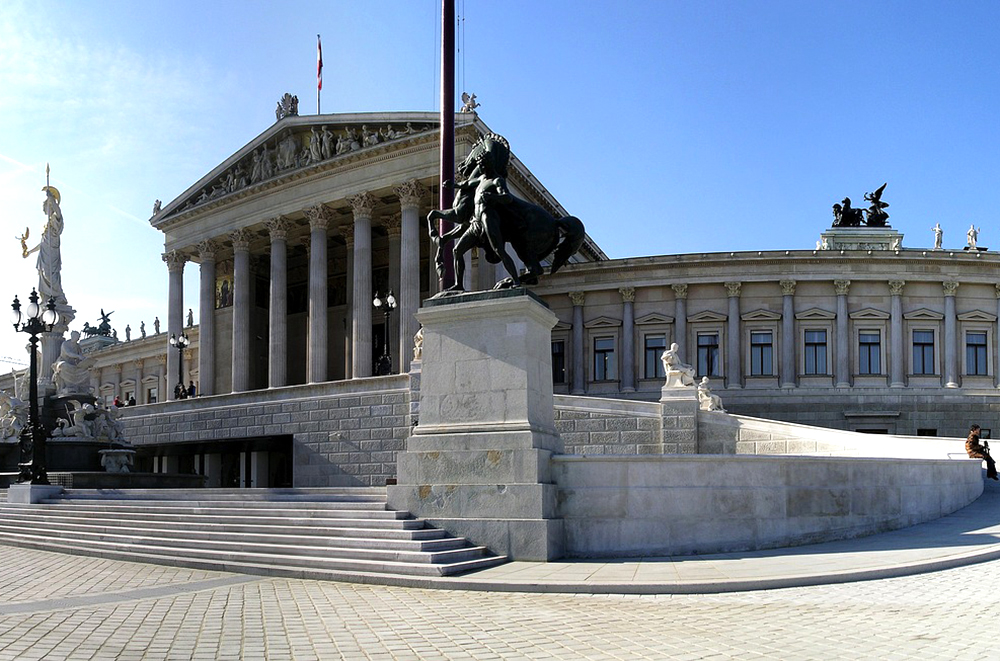
Parlamentsgebäude in Wien Foto: Neugiernase - pixabay

Die Zustimmung zur Demokratie als beste Regierungsform ist in Österreich stabil geblieben, unzufrieden sind damit dennoch viele. Foto: Neugiernase - pixabay

Zufriedenheit mit Demokratie in Österreich bleibt auf niedrigem Niveau, zeigt Studie der Unis Graz und Krems

Die heimische Demokratie funktioniert nur für rund 61 Prozent der Befragten sehr bzw. eher gut. 37 Prozent bescheinigen ihr ein eher bzw. sehr schlechtes Funktionieren. Somit stagniert die Demokratiezufriedenheit hierzulande auf niedrigem Niveau, leicht über dem bisherigen Tiefststand der Messungen des Demokratieradars vom Herbst 2020. Damals waren nur 60 Prozent zufrieden. Die Studie wird vom Austrian Democracy Lab durchgeführt, das von der Universität für Weiterbildung Krems und der Universität Graz betrieben wird.

„Viele sind unzufrieden mit der Art und Weise, wie die Demokratie in Österreich gelebt wird. Die Zustimmung zur Demokratie als beste Regierungsform ist jedoch stabil geblieben“ kommentiert Katrin Praprotnik, Projektleiterin des Austrian Democracy Lab (ADL) von der Universität Graz, das Ergebnis. 87 Prozent der Befragten stimmen der Aussage zu, dass die Demokratie trotz Probleme besser als jede andere Regierungsform ist. „Es ist der Wunsch nach strukturellen Erneuerungen im politischen System, der sich verfestigt hat“, analysiert ADL-Projektleiterin. Christina Hainzl, Universität für Weiterbildung Krems.

Demokratiezufriedenheit in gesellschaftlichen Gruppen
Es gibt keinen Unterschied zwischen Männern und Frauen in der Zufriedenheit mit dem Funktionieren der Demokratie in Österreich. Sehr wohl unterscheiden sich die Einschätzungen zwischen den Altersgruppen. Hier zeigen sich besonders Menschen mit 60 Jahren und älter sehr zufrieden, jüngere zwischen 30 und 44 Jahren sehr unzufrieden mit der Demokratie. Ebenso unzufriedener sind Menschen ohne Matura. Jene, die sich nach eigenen Angaben ihr Geld sehr genau einteilen müssen, sind besonders unzufrieden mit der Demokratie. Darüber hinaus sind insbesondere Personen, die der FPÖ bzw. einer anderen Partei als jenen im Nationalrat vertretenen nahestehen, deutlich unzufriedener. Das trifft auch auf Menschen zu, die sich keiner Partei nahe fühlen und nicht bzw. ungültig wählen würden.

Künftige Entwicklungen werden kritisch gesehen
Aus Sicht der österreichischen Bevölkerung wird sich Österreich zunehmend schlechter entwickeln. Der Anteil der Personen, die eine positive Entwicklung sehen, hat sich in den letzten zwei Jahren fast halbiert. So erwarten sich nur 22 Prozent aller Befragten eine günstige Zukunft. Aber nicht nur auf dieser Ebene sehen sich die Befragten mit Herausforderungen konfrontiert. Auch sind rund 40 Prozent mit ihrer persönlichen wirtschaftlichen Situation nicht zufrieden, um rund acht Prozentpunkte mehr als bei der letzten Befragung im Herbst 2021. Knapp mehr als die Hälfte betont zudem, dass sie es zunehmend in Österreich schwerer hat.

Über das Demokratieradar
Das Demokratieradar ist eine halbjährliche Studie der Universität für Weiterbildung Krems und der Universität Graz, die in Kooperation mit Forum Morgen durchgeführt wird. Sie basiert auf einer Umfrage unter rund 4500 Personen ab 14 Jahren in Österreich. Das Demokratieradar ist Teil des Austrian Democracy Lab, das seit Anfang 2018 den Zustand der Demokratie in Österreich analysiert und Vorschläge zu ihrer Weiterentwicklung ausarbeitet.

www.austriandemocracylab.at

created by Uni Krems & Andreas Schweiger

Related news

Greenery on the rise: over 500 new flowers, perennials and shrubs on campus

Bright blooms and fresh greenery make our hearts beat faster in spring. But it is not just us humans who delight in this colourful growth. For many animals, this splendour provides, above all, food and habitat. There has recently been an increase in this on the University of Graz campus. More than 500 native flowers, perennials and shrubs have been planted on strips of fallow land around Universitätsplatz 2.

Around the world in eight stops: the Long Night of Research at the University of Graz

On 24 April from 5 pm, you can take a short trip around the globe at the University of Graz, discovering pecularities of foreign countries or new local features in the entrance hall of the University Library. The itinerary takes you through introduced animal species, political attitudes and the omnipotence of algorithms. There will also be a programme in the historic reading hall, as well as at the UniGraz@Museum and the University Archive.

Building biological bridges: Chemist discovers an ecological tool for the pharmaceutical industry

Building a relationship on a solid foundation is also important in chemistry. To produce medicines, disinfectants or plant protection products, stable bonds between carbon atoms must be formed. Conventional chemical methods rely on environmentally harmful reagents and solvents to carry out the desired reaction. This process also produces unusable by-products. Chemist Lilla Gal has discovered an enzyme that enables the same process to take place efficiently and sustainably. The results of her research were recently published in the prestigious journal Angewandte Chemie.

Higher Education Strategy 2040: Austria’s universities on course for the future

Austria has 77 higher education institutions, which is above the EU average – but does this really make sense? The new Higher Education Strategy 2040 focuses on cooperation rather than mergers. As one of the six largest universities in Austria, the University of Graz plays a central role in this.

Begin of page section:
Additional information:

University of Graz
Universitaetsplatz 3
8010 Graz
Austria
  • Contact
  • Web Editors
  • Moodle
  • UNIGRAZonline
  • Imprint
  • Data Protection Declaration
  • Accessibility Declaration
Weatherstation
Uni Graz

End of this page section. Go to overview of page sections

End of this page section. Go to overview of page sections

Begin of page section:

End of this page section. Go to overview of page sections