



Begin of page section:
Page sections:

  • Go to contents (Accesskey 1)
  • Go to position marker (Accesskey 2)
  • Go to main navigation (Accesskey 3)
  • Go to sub navigation (Accesskey 4)
  • Go to additional information (Accesskey 5)
  • Go to page settings (user/language) (Accesskey 8)
  • Go to search (Accesskey 9)

End of this page section. Go to overview of page sections

Begin of page section:
Page settings:

English en
Deutsch de
Search
Login

End of this page section. Go to overview of page sections

Begin of page section:
Search:

Search for details about Uni Graz
Close

End of this page section. Go to overview of page sections


Search

Begin of page section:
Main navigation:

Page navigation:

  • University

    University
    • About the University
    • Organisation
    • Faculties
    • Library
    • Working at University of Graz
    • Campus
    Developing solutions for the world of tomorrow - that is our mission. Our students and our researchers take on the great challenges of society and carry the knowledge out.
  • Research Profile

    Research Profile
    • Our Expertise
    • Research Questions
    • Research Portal
    • Promoting Research
    • Research Transfer
    • Ethics in Research
    • Commission for Scientific Integrity
    Scientific excellence and the courage to break new ground. Research at the University of Graz creates the foundations for making the future worth living.
  • Studies

    Studies
    • Prospective Students
    • Students
    • Welcome Weeks for First Year Students
  • Community

    Community
    • International
    • Location
    • Research and Business
    • Alumni
    The University of Graz is a hub for international research and brings together scientists and business experts. Moreover, it fosters the exchange and cooperation in study and teaching.
Topics
  • Sustainable University
  • Researchers answer
  • Work for us
Close menu

End of this page section. Go to overview of page sections

Begin of page section:
You are here:

University of Graz News Altes Wissen frisch gekocht

End of this page section. Go to overview of page sections

Monday, 01 August 2016

Altes Wissen frisch gekocht
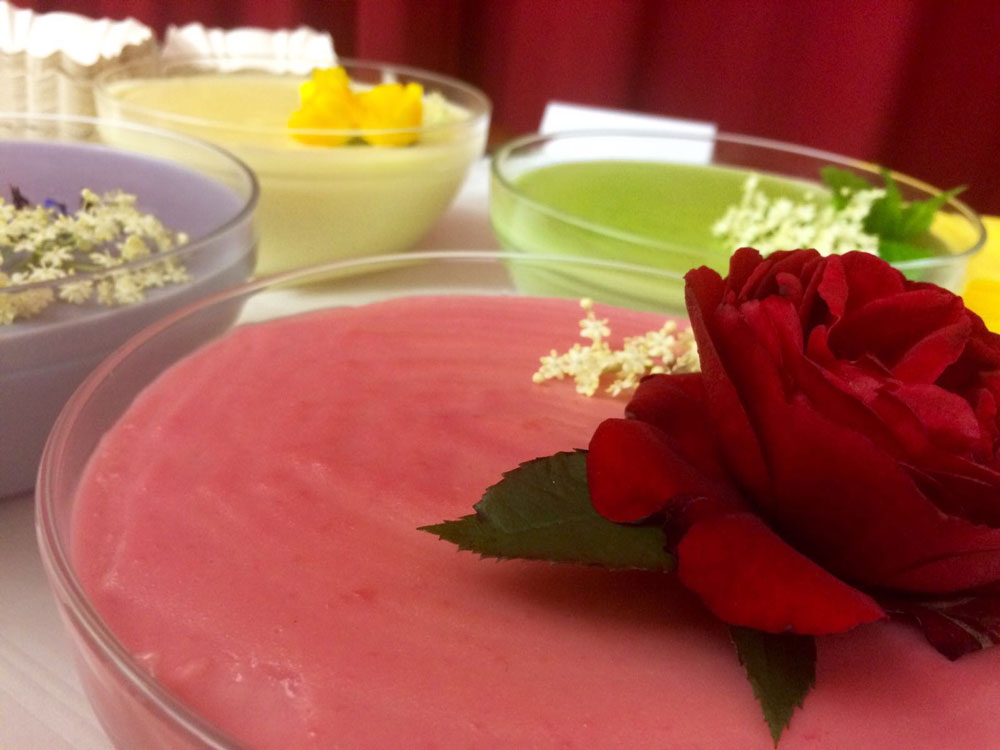
Mittelalterliche Küche wissenschaftlich und geschmacklich betrachtet: Eine Tagung von 24. bis 26. August gibt geschmackvolle Einblicke. Foto: Anna Mohr:

Mittelalterliche Küche wissenschaftlich und geschmacklich betrachtet: Eine Tagung von 24. bis 26. August gibt geschmackvolle Einblicke. Foto: Anna Mohr
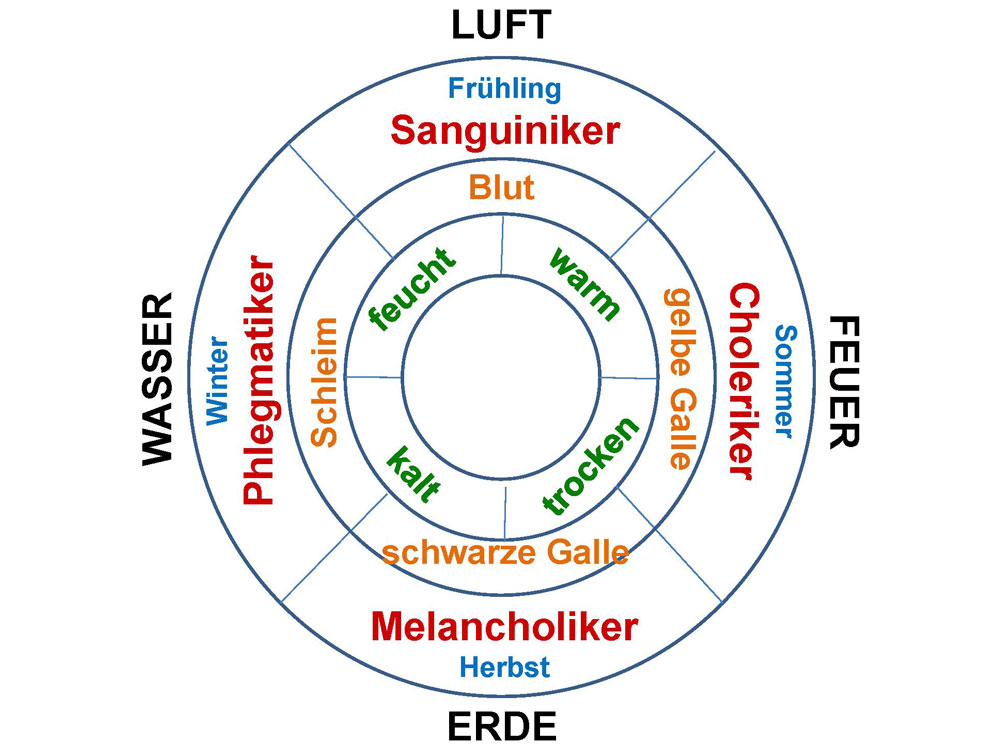
Das Prinzip der vier Elemente dominiert die mittelalterliche Ernährung und Gesundheitslehre. Grafik: Andrea Hofmeister

Das Prinzip der vier Elemente dominiert die mittelalterliche Ernährung und Gesundheitslehre. Grafik: Andrea Hofmeister

Uni Graz veranstaltet Tagung zur mittelalterlichen Kulinarik in Seckau

Gesundheitstipps von Hildegard von Bingen kennen lernen, neue Speisen-Kombinationen analysieren, selbst den Kochlöffel schwingen: All diese Möglichkeiten bietet die Tagung zur interdisziplinären Kochbuchforschung, die Mittelalter-ExpertInnen der Uni Graz von 24. bis 26. August 2016 in Seckau veranstalten. Teilnehmen können daran nicht nur Fachleute, sondern alle Interessierten mit oder ohne Kocherfahrung. „Viel Wissen aus dem Mittelalter wird heute noch angewendet, besonders von älteren Menschen auf dem Land. Der Austausch mit Laien hilft uns also immer wieder, die Texte von damals richtig zu interpretieren“, betonen die OrganisatorInnen Priv.-Doz. Dr. Andrea Hofmeister und Dr. Helmut Klug von Institut für Germanistik der Uni Graz.

Einen Schwerpunkt der Veranstaltung bildet das Thema Gesundheit. Es wird erklärt, welche Lebensmittel und Gewürze etwa Hildegard von Bingen in welcher Situation empfiehlt – und gezeigt, dass die mittelalterliche Ernährungslehre der vier Elemente sich oftmals mit dem modernen medizinischen Wissen deckt. Dazu passend gibt es eine Erlebnisführung entlang des Literaturpfades in Seckau, der die ältesten erhaltenen deutschsprachigen Gesundheitsregeln abbildet.
Wie scheinbar gewagte Zusammenstellungen von Speisen und Gewürzen schmecken können, ist ein weiteres Thema der Tagung. Der Schweizer Molekularkoch Rolf Caviezel präsentiert gemeinsam mit dem Molekularbiologen Dr. Fritz Treiber vom Offenen Labor der Uni Graz neueste Forschungsergebnisse. Historische Originalrezepte analysieren, interpretieren und praktisch umsetzen kann man schließlich bei einem Kochworkshop. „Die uns überlieferten Texte enthalten weder Zeit- und Mengenangaben noch Zubereitungsmethoden, waren also ausschließlich für Fachleute gedacht“, schildert Klug. In Theorie und Praxis wird auch der Programmpunkt Speiseninszenierung und Tafelgestaltung einst und jetzt behandelt. Die international mehrfach ausgezeichneten Konditormeister Michael und Gregor Regner präsentieren dabei Philosophie und Techniken moderner Patisseriekunst.

Details zum Programm
Informationen zum Seckauer Literaturpfad

Die Tagung ist für alle Interessierten kostenlos zugänglich. Für die Literaturpfad-Führung und den Kochworkshop ist eine Anmeldung bei Andrea Hofmeister unter 0316/380-2456 bzw. andrea.hofmeister(at)uni-graz.at bis spätestens 10. August 2016 erforderlich. Für den Kochworkshop ist ein Unkostenbeitrag von 15 Euro zu entrichten.

created by Dagmar Eklaude

Related news

Jurassic Sounds: Biologist reconstructs insect songs from 165 million years ago

It was apparently not just the roars of the dinosaurs that made up the soundscape of the animal world during the Jurassic period. Crickets and grasshoppers communicated through a variety of songs and high-pitched sounds, as Thorin Jonsson from the Institute of Biology at the University of Graz discovered together with colleagues from the universities of Lincoln, Bristol (UK), Beijing (China) and Tempe (USA). The findings on what are so far the oldest traces of sound on Earth have just been published in the journal PNAS.

EU funding boosts international exchange between universities

The University of Graz is further expanding its international study opportunities through the European university alliance Arqus and is taking the lead in two key projects. In future, students will benefit from even more joint degree programmes and from simplified recognition of academic achievements through the Joint European Degree Label.

Rescue and risks: Researchers have surveyed public perceptions of AI

The use of artificial intelligence has had to be made transparent since 2 August 2026. The EU’s AI Act, which has been in force since then, also sets out how risky an application is and which security measures apply as a result. However, the assessment of risks by the legislation differs in some cases significantly from the perceptions of the Austrian public. This is the finding of a representative study carried out by data scientist Stefan Thalmann from the University of Graz and his team.

The Healing Sea: Researchers discover new approaches to treating chronic inflammation in sponges

Chronic inflammation plays a key role in many diseases, ranging from metabolic disorders and cardiovascular diseases to tissue damage following injuries or infections. “Normally, the body is able to resolve inflammation on its own. If this process becomes unbalanced, immune cells remain permanently active and continue to drive negative changes in the tissue,” explains Andreas Koeberle, a pharmacist at the University of Graz.

Begin of page section:
Additional information:

University of Graz
Universitaetsplatz 3
8010 Graz
Austria
  • Contact
  • Web Editors
  • Moodle
  • UNIGRAZonline
  • Imprint
  • Data Protection Declaration
  • Accessibility Declaration
Weatherstation
Uni Graz

End of this page section. Go to overview of page sections

End of this page section. Go to overview of page sections

Begin of page section:

End of this page section. Go to overview of page sections