



Begin of page section:
Page sections:

  • Go to contents (Accesskey 1)
  • Go to position marker (Accesskey 2)
  • Go to main navigation (Accesskey 3)
  • Go to sub navigation (Accesskey 4)
  • Go to additional information (Accesskey 5)
  • Go to page settings (user/language) (Accesskey 8)
  • Go to search (Accesskey 9)

End of this page section. Go to overview of page sections

Begin of page section:
Page settings:

English en
Deutsch de
Search
Login

End of this page section. Go to overview of page sections

Begin of page section:
Search:

Search for details about Uni Graz
Close

End of this page section. Go to overview of page sections


Search

Begin of page section:
Main navigation:

Page navigation:

  • University

    University
    • About the University
    • Organisation
    • Faculties
    • Library
    • Working at University of Graz
    • Campus
    Developing solutions for the world of tomorrow - that is our mission. Our students and our researchers take on the great challenges of society and carry the knowledge out.
  • Research Profile

    Research Profile
    • Our Expertise
    • Research Questions
    • Research Portal
    • Promoting Research
    • Research Transfer
    • Ethics in Research
    • Commission for Scientific Integrity
    Scientific excellence and the courage to break new ground. Research at the University of Graz creates the foundations for making the future worth living.
  • Studies

    Studies
    • Prospective Students
    • Students
    • Registration for Study Programme (Winter semester 2026/27)
  • Community

    Community
    • International
    • Location
    • Research and Business
    • Alumni
    The University of Graz is a hub for international research and brings together scientists and business experts. Moreover, it fosters the exchange and cooperation in study and teaching.
Topics
  • Sustainable University
  • Researchers answer
  • Work for us
Close menu

End of this page section. Go to overview of page sections

Begin of page section:
You are here:

University of Graz News Ästhetik im Alltag

End of this page section. Go to overview of page sections

Wednesday, 31 March 2021

Ästhetik im Alltag

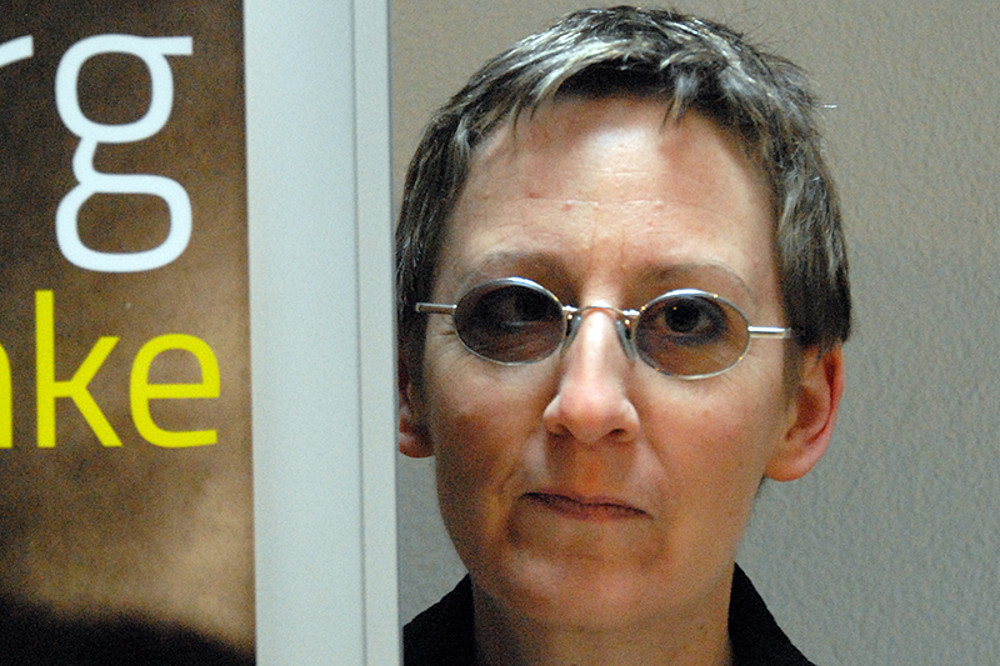
Wie Kunst unseren Alltag beeinflusst, erforscht Susanne Kogler, seit diesem Studienjahr neue Professorin für Musikwissenschaft an der Universität Graz. Foto: Joachim Schauer

Wie Kunst unseren Alltag beeinflusst, erforscht Susanne Kogler, seit diesem Studienjahr neue Professorin für Musikwissenschaft an der Universität Graz. Foto: Joachim Schauer

Wie Kunst Politik beeinflussen und die Gesellschaft gestalten kann, erforscht Susanne Kogler

Schräge Töne, ungewohnte Klänge, oder gar Krach? Zeitgenössische Musik geht nicht unbedingt immer so ins Ohr wie Vivaldi oder Mozart. Aber sie rüttelt uns auf, stellt uns kritische Fragen, verlangt mehr Offenheit. Was kann man mit Kunst über uns und unsere Gesellschaft herausfinden? Die Antwort darauf sucht Musikwissenschafterin Susanne Kogler in ihrer Forschung. Kompositionen aus dem 20. und 21. Jahrhundert sind für sie besonders aufschlussreich. „Sie vermitteln uns eine neue Erfahrung, zwingen uns, Ungewohntes zu hören und auf Unerwartetes zu reagieren“, fasst die gebürtige Leobnerin zusammen, die seit Oktober 2020 neue Professorin am Institut für Musikwissenschaft der Uni Graz ist. „Das bewusste Zuhören zu lernen, ist auch im Alltag extrem wichtig“, ist die Forscherin überzeugt, die zuletzt an der Kunstuniversität tätig war. „Sich dem Augenblick zu öffnen, abzuwarten und Überraschungen zuzulassen stärkt unsere Resilienz, gerade in Krisenzeiten.“
Zeitgenössische Werke sind für Kogler auch deswegen besonders attraktiv, weil sie bewusst Konventionen brechen, Grenzen überschreiten, Genres und Gattungen verschmelzen lassen. „Auch das macht uns offener, hilft uns in unserem täglichen Umgang, Grenzen zu überwinden, neue Standpunkte einzunehmen oder zumindest zu verstehen“, so die Wissenschafterin.
Kritische Standpunkte und politische Botschaften sind ein Thema, dem sich die doppelt Habilitierte – in Musikwissenschaft an der Uni Graz und in Historischer Musikwissenschaft an der Kunstuniversität Graz – in einem ihrer Schwerpunkte widmet. „Zur Frage, wie man ästhetische Erfahrung mit politischer Relevanz versehen kann, erforsche ich die Texte von Hanna Arendt“, berichtet Kogler. Nicht nur Noten, sondern auch Worte haben es ihr nämlich angetan: „Mein Studium der klassischen Philologie an der Universität Graz hat mich sehr geprägt.“ Folglich beschäftigt sie sich viel mit Musiktheater, ganz besonders mit den Werken von Olga Neuwirth, über die sie unlängst mit Stefan Drees ein Buch herausgegeben hat: „Kunst als Spiegel realer, virtueller und imaginärer Welten“ ist im Leykam-Verlag erschienen.
An ihrer „Heimat“-Universität will Kogler nun diese Forschung fortsetzten und dabei unbedingt auch den Nachwuchs einbinden. „Hier an der Geisteswissenschaftlichen Fakultät in einem dynamischen, internationalen Team arbeiten zu können, ist spannend und bereitet mir sehr viel Freude.“


 

created by Dagmar Eklaude

Related news

Complying with the norm: Why Do Standards Shape Our Lives, Elisabeth Staudegger?

Standards determine whether a sheet of paper fits in a printer or whether a charging plug can power multiple devices. These standards shape our everyday lives. But who actually sets these standards? Where are the weaknesses, and how could science help to improve them? Elisabeth Staudegger, Head of the ‘Law and IT’ Department at the Institute for Legal Foundations at the University of Graz, host the Academic Standards Day on 16 June. Here she relays how sciences can contribute to the topic of standardisation and reveals her personal favourite standard.

More body awareness than a culture war

In Italy, sex education lessons will in future only be permitted with parental consent, and will be banned entirely in nurseries and primary schools. At the same time, Pride Month highlights why knowledge about the body, relationships, boundaries and diversity is important for young people. A study by the University of Graz shows how important knowledge about the body, contraception, relationship skills and protection against violence is

Will Austria win the World Cup? Mathematician reveals calculation method

Michael Fischer uses the football tournament as a practical example for highschool lessons.

Survival strategies: How plants respond to drought

According to Geosphere Austria, this spring was the driest in Austria since records began around 170 years ago. The low rainfall put particular pressure on the agricultural sector. And climate change is set to make the situation even worse in the coming decades. We asked Johannes Liesche, a professor at the Department of Biology at the University of Graz, how plants react to water shortages and how they survive periods of drought.

Begin of page section:
Additional information:

University of Graz
Universitaetsplatz 3
8010 Graz
Austria
  • Contact
  • Web Editors
  • Moodle
  • UNIGRAZonline
  • Imprint
  • Data Protection Declaration
  • Accessibility Declaration
Weatherstation
Uni Graz

End of this page section. Go to overview of page sections

End of this page section. Go to overview of page sections

Begin of page section:

End of this page section. Go to overview of page sections

