Begin of page section:
Page sections:

  • Go to contents (Accesskey 1)
  • Go to position marker (Accesskey 2)
  • Go to main navigation (Accesskey 3)
  • Go to sub navigation (Accesskey 4)
  • Go to additional information (Accesskey 5)
  • Go to page settings (user/language) (Accesskey 8)
  • Go to search (Accesskey 9)

End of this page section. Go to overview of page sections

Begin of page section:
Page settings:

English en
Deutsch de
Search
Login

End of this page section. Go to overview of page sections

Begin of page section:
Search:

Search for details about Uni Graz
Close

End of this page section. Go to overview of page sections


Search

Begin of page section:
Main navigation:

Page navigation:

  • University

    University
    • About the University
    • Organisation
    • Faculties
    • Library
    • Working at University of Graz
    • Campus
    Developing solutions for the world of tomorrow - that is our mission. Our students and our researchers take on the great challenges of society and carry the knowledge out.
  • Research Profile

    Research Profile
    • Our Expertise
    • Research Questions
    • Research Portal
    • Promoting Research
    • Research Transfer
    • Ethics in Research
    • Commission for Scientific Integrity
    Scientific excellence and the courage to break new ground. Research at the University of Graz creates the foundations for making the future worth living.
  • Studies

    Studies
    • Prospective Students
    • Students
    • Welcome Weeks for First Year Students
  • Community

    Community
    • International
    • Location
    • Research and Business
    • Alumni
    The University of Graz is a hub for international research and brings together scientists and business experts. Moreover, it fosters the exchange and cooperation in study and teaching.
Topics
  • Sustainable University
  • Researchers answer
  • Work for us
Close menu

End of this page section. Go to overview of page sections

Begin of page section:
You are here:

University of Graz News Gemeinsames Zeichen für Demokratie und Pluralität

End of this page section. Go to overview of page sections

Wednesday, 01 July 2026

Gemeinsames Zeichen für Demokratie und Pluralität

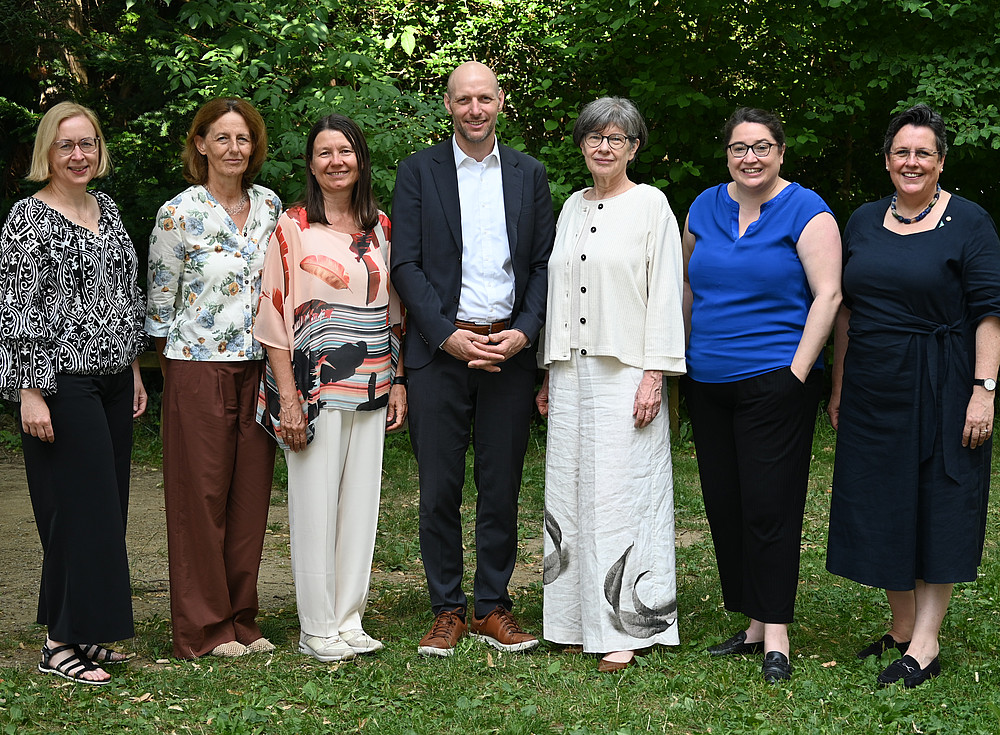
Repräsentant:innen der Grazer Arbeitsgruppe sowie der Gruppe der Unterzeichner:innen (von links nach rechts): Renate Wieser (PPH Augustinum), Angelika Magnes (PPH Augustinum), Sabine Weisz (PPH Burgenland), Nikolaus Janovsky (KPH Edith Stein), Andrea Seel (PPH Augustinum), Katharina Pyschny (Universität Graz), Anna Hollwöger (Diözese Graz-Seckau) ©© PPH Augustinum
© PPH Augustinum

Repräsentant:innen der Grazer Arbeitsgruppe sowie der Gruppe der Unterzeichner:innen (von links nach rechts): Renate Wieser (PPH Augustinum), Angelika Magnes (PPH Augustinum), Sabine Weisz (PPH Burgenland), Nikolaus Janovsky (KPH Edith Stein), Andrea Seel (PPH Augustinum), Katharina Pyschny (Universität Graz), Anna Hollwöger (Diözese Graz-Seckau)

Stellungnahme der Theologischen Fakultäten und Pädagogischen Hochschulen am 1. Juli 2026


Mit einer gemeinsamen Erklärung haben die Katholisch-Theologischen Fakultäten und Pädagogischen Hochschulen in kirchlicher Trägerschaft in Österreich gegen rechtsautoritäre und rechtsextreme Tendenzen in Gesellschaft und Kirche Stellung bezogen. Die Unterzeichner:innen bekräftigen damit ihr gemeinsames Engagement für Demokratie, Menschenwürde, Pluralität und Menschenrechte. Ausgangspunkt der Stellungnahme, die von einer Grazer Arbeitsgruppe initiiert worden ist, ist die Beobachtung, dass christlich-nationalistische Strömungen und rechtspopulistische Ideologien in Europa und Österreich zunehmend an Sichtbarkeit und Einfluss gewinnen. Die Hochschulen warnen vor Versuchen, christliche Symbole, religiöse Sprache und Glaubensinhalte zur Legitimation von antipluralistischen, autoritären und rechtspopulistischen Ideologien bzw. Positionen zu instrumentalisieren. Eine solche Vereinnahmung widerspreche dem christlichen Menschenbild ebenso wie den Grundwerten einer offenen und demokratischen Gesellschaft. „Wir wollen nicht erst dann sprechen, wenn sich Extremismus bereits verfestigt hat. Theologische und kirchliche Ausbildungsstätten haben auch einen präventiven Bildungsauftrag. Demokratie lebt davon, dass wir problematische Entwicklungen früh erkennen, kritisch reflektieren und öffentlich benennen“, betont Katharina Pyschny, Dekanin der Katholisch-Theologischen Fakultät der Uni Graz. 

Mit ihrer Erklärung verbinden die Hochschulen ausdrücklich den Aufruf, sich in der Hochschulbildung aktiv gegen christlich-nationalistische Tendenzen einzusetzen. Die Katholisch-Theologischen Fakultäten und die Pädagogischen Hochschulen in kirchlicher Trägerschaft tragen nach Ansicht der Unterzeichner:innen eine besondere Verantwortung, demokratiepolitische Bildung zu stärken, kritisches Denken zu fördern und Studierende zu befähigen, politisch aufgeladene religiöse Narrative und Symboliken differenziert zu reflektieren. „Theologische und kirchliche Bildungsinstitutionen sind Orte der kritischen Reflexion von Glauben und Vernunft. Sie leisten einen wesentlichen Beitrag zur Förderung einer pluralitätssensiblen Bildung, zur demokratischen Resilienz und zur Prävention religiös legitimierter Extremismen“, heißt es in der Stellungnahme. Die Unterzeichner:innen rufen Verantwortungsträger:innen in Kirche, Politik, Wissenschaft und Bildung dazu auf, sich klar gegen christlich-nationalistische Gruppierungen mit rechtsextremen Ideologien zu positionieren und gemeinsam für eine offene, demokratische und menschenwürdige Gesellschaft einzutreten. „Wir treten jeglicher Form von Diskriminierung, Antifeminismus, Antisemitismus und Islamfeindlichkeit entschieden entgegen“, betonen die Unterzeichnenden.

Unterzeichnet wurde die Stellungnahme von den Dekaninnen und Dekanen Prof. Klara Antonia Csiszar (KU Linz), Prof. Wilhelm Guggenberger (Innsbruck), Prof. Andrea Lehner-Hartmann (Wien), Prof. Katharina Pyschny (Graz), Prof. Dietmar Winkler (Salzburg) sowie von den Rektorinnen und Rektoren Ulrike Greiner (KPH Wien/NÖ), Nikolaus Janovsky (KPH Edith Stein), Johannes Reitinger (Private Pädagogische Hochschule der Diözese Linz), Andrea Seel (Private Pädagogische Hochschule Augustinum) sowie von Sabine Weisz (Private Pädagogische Hochschule Burgenland).

Die Stellungnahme markiert den Auftakt zur Entwicklung und Umsetzung konkreter Maßnahmen für eine demokratiesensible (religiöse) Hochschulbildung an den jeweiligen Standorten. 

Stellungnahme zu rechtsautoritären und rechtsextremen Gruppierungen (in Kirche und Gesellschaft) in Österreich


Berichterstattungen 

Theologische Fakultäten und Hochschulen setzen Zeichen gegen Rechts (KathPress)

Österreich: Unis und Hochschulen setzen Zeichen gegen Rechts (religion.ORF.at)

Related news

Legal scholar Clarissa Groß on European values at the EU’s external borders

The tense situation in the Spanish exclave of Ceuta has been making headlines for weeks. The exodus of thousands of Moroccans has once again placed migration and border policy at the very top of the EU’s agenda. Clarissa Groß, a research assistant at the Institute for European Law, is examining the reform of the Common European Asylum System (CEAS), the design and practical implementation of the new border procedures, and their compatibility with the right to personal liberty as part of her doctoral thesis. She recently visited the Greek island of Lesbos, which remains a migration hotspot, to assess the situation on the ground.

Graz is a magnet for 750 physicists: international conference on campus

Whether in mobile phones, medical devices or solar power systems: physical phenomena are part of our everyday lives. The vast scope of this discipline will be explored at a major conference taking place at the University of Graz from 20 to 25 September 2026. More than 750 scientists will transform the campus into a European hub for physics.

A fresh start, a calling, holidays: what draws people from other career paths to teaching

They used to develop software; now they teach maths in the classroom. Career changers are expected to help address the shortage of qualified teachers in Austria’s schools. In their doctoral theses at the Institute for Educational Research and Teacher Training at the University of Graz, Melanie Gürentz and Claudia Mair examined how these new teachers perceive their new professional roles.

Talent Talks bridge the gap in career guidance

The Styrian Chamber of Commerce (WKO Steiermark), the Styrian Chamber of Labour (AK Steiermark) and the AMS are joining forces when it comes to training young people and, through the “Talent Talks”, are creating a seamless pathway to career guidance. This takes preparation and follow-up support – just in time for the start of the term and the scheme’s tenth anniversary – to a whole new level. A new survey conducted by the Talent Centre among 2,687 former participants to mark the anniversary shows just how important this development is. Of the young people who received follow-up support from the Talent Report, 74.6 per cent stated that they had a good understanding of their own strengths and talents following the Talent Check. Without follow-up support, the figure was 66.5 per cent – a significant difference of 8.1 percentage points.

Begin of page section:
Additional information:

University of Graz
Universitaetsplatz 3
8010 Graz
Austria
  • Contact
  • Web Editors
  • Moodle
  • UNIGRAZonline
  • Imprint
  • Data Protection Declaration
  • Accessibility Declaration
Weatherstation
Uni Graz

End of this page section. Go to overview of page sections

End of this page section. Go to overview of page sections

Begin of page section:

End of this page section. Go to overview of page sections