Begin of page section:
Page sections:

  • Go to contents (Accesskey 1)
  • Go to position marker (Accesskey 2)
  • Go to main navigation (Accesskey 3)
  • Go to sub navigation (Accesskey 4)
  • Go to additional information (Accesskey 5)
  • Go to page settings (user/language) (Accesskey 8)
  • Go to search (Accesskey 9)

End of this page section. Go to overview of page sections

Begin of page section:
Page settings:

English en
Deutsch de
Search
Login

End of this page section. Go to overview of page sections

Begin of page section:
Search:

Search for details about Uni Graz
Close

End of this page section. Go to overview of page sections


Search

Begin of page section:
Main navigation:

Page navigation:

  • University

    University
    • About the University
    • Organisation
    • Faculties
    • Library
    • Working at University of Graz
    • Campus
    Developing solutions for the world of tomorrow - that is our mission. Our students and our researchers take on the great challenges of society and carry the knowledge out.
  • Research Profile

    Research Profile
    • Our Expertise
    • Research Questions
    • Research Portal
    • Promoting Research
    • Research Transfer
    • Ethics in Research
    Scientific excellence and the courage to break new ground. Research at the University of Graz creates the foundations for making the future worth living.
  • Studies

    Studies
    • Prospective Students
    • Students
  • Community

    Community
    • International
    • Location
    • Research and Business
    • Alumni
    The University of Graz is a hub for international research and brings together scientists and business experts. Moreover, it fosters the exchange and cooperation in study and teaching.
  • Spotlight
Topics
  • Our digital Advent calendar
  • Sustainable University
  • Researchers answer
  • Work for us
Close menu

End of this page section. Go to overview of page sections

Begin of page section:
You are here:

University of Graz News 200 Jahre

End of this page section. Go to overview of page sections

Thursday, 23 September 2021

200 Jahre

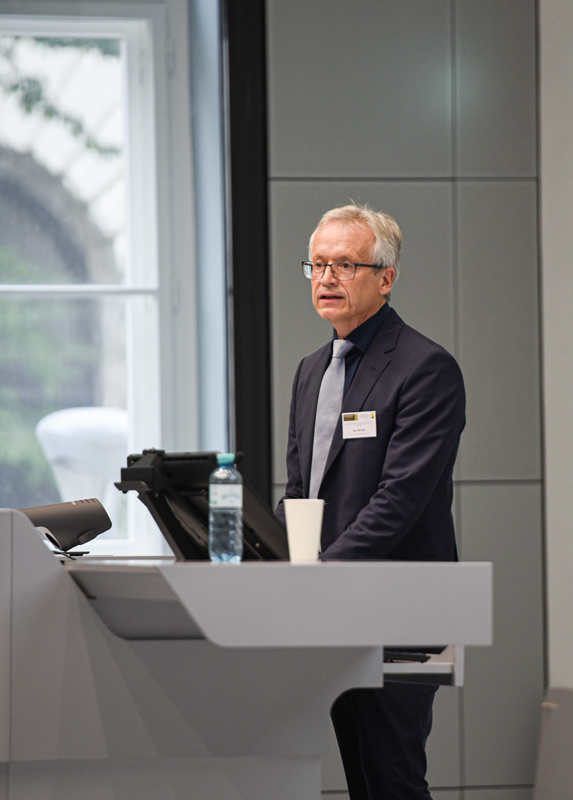
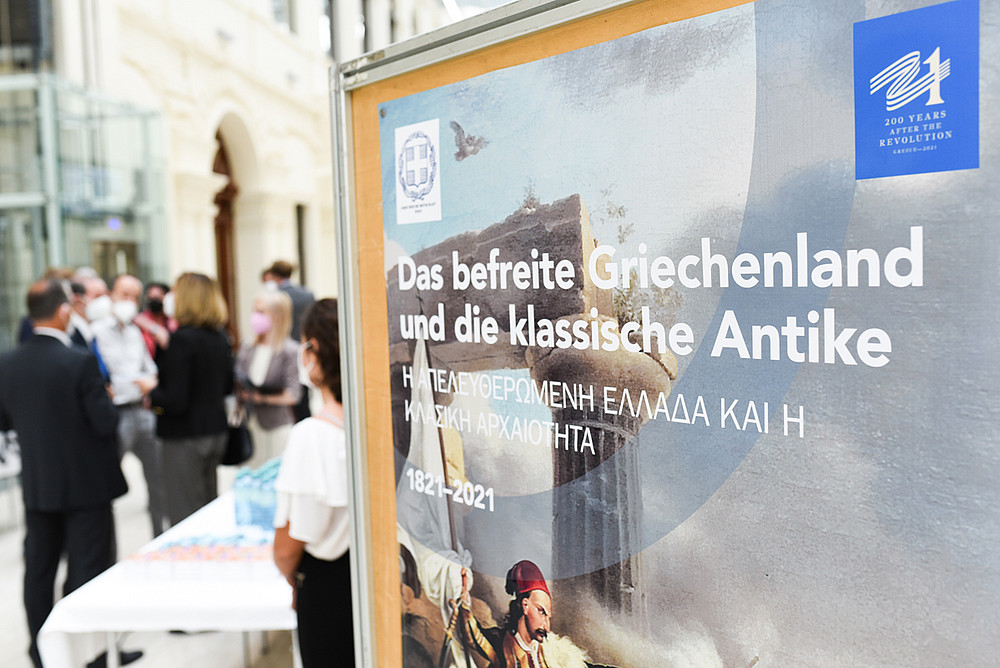
Das befreite Griechenland und die klassische Archäologie waren Thema eines Symposiums an der Uni Graz. Foto: Uni Graz/Tzivanopoulos

Das befreite Griechenland und die klassische Archäologie waren Thema eines Symposiums an der Uni Graz. Foto: Uni Graz/Tzivanopoulos

Am 25. März 1821 wurde die griechische Revolution ausgerufen. Die Uni Graz widmete diesem Ereignis ein Symposium

Im Jahre 1453 wurde Konstantinopel, die Hauptstadt des Byzantinischen Reiches, von Sultan Mehmed II erobert. Fast vier Jahrhunderte dauerte die osmanische Herrschaft über große Teile des oströmischen Reiches, darunter auch das heutige Griechenland. 1821 wurde der Aufstand der Griechen gegen die Osmanen ausgerufen. Das befreite Hellas musste sich nach der Stunde null auch mit seiner neuen und alten Geschichte auseinandersetzen. Das Symposium „Das befreite Griechenland und die klassische Antike / Η απελευθερωμένη Ελλάδα και η κλασική αρχαιότητα (1821–2021)“an der Universität Grazin Kooperation mit dem Archäologiemuseum Joanneum beleuchtete die Hintergründe dieses Neuanfangs und die Rolle der klassischen Antike.
 

„Als Griechin der Diaspora war es meine Pflicht, dieses wichtige historische Ereignis auch im Ausland bekannt zu machen. Es steht in enger Verbindung mit der Intensivierung der Erforschung der klassischen Antike”, erzählt Organisatorin Elli Papazoi. Begleitend zur Tagung zeigte eine Ausstellung verschiedene Aspekte der griechischen Revolution. Fokussiert wurde auf die Themen „Hellenische Bildung während der türkischen Herrschaft“, „die Inspiratoren des Befreiungskampfes“, die entscheidenden Schlachten“ sowie „der Beitrag der Philhellenen“, welche die griechische „Landschaft“ vor, während und nach der Revolution geprägt haben. Die Ausstellung fand in Kooperation mit dem Museum der Griechischen Geschichte von Pavlos Vrellis in Ioannina und dem Museum für Philhellenismus in Athen statt. Sowohl das Symposium als auch die Ausstellung standen unter der Schirmherrschaft des “Greece 2021” Committee und der Botschaft der Hellenischen Republik in Österreich.

Das Symposium umfasste Vorträge griechischer, österreichischer und deutscher WissenschafterInnen aus den Disziplinen Geschichte, Politikwissenschaft, Archäologie, Kunstgeschichte und Philologie. Ziel des Symposiums war es, den Facettenreichtum des Griechischen Befreiungskampfs und dessen Folgewirkungen auf Europa, 200 Jahre nach seinem Ausbruch, zu beleuchten. Darüber hinaus wurden verschiedene Ausdrucksformen des Philhellenismus vorgestellt und diskutiert, darunter auch die Entwicklung der Erforschung der klassischen Antike, da sich gerade die Archäologie hiervon ausgehend zu einer anerkannten Wissenschaft entwickeln konnte.
 

Institutsleiter und Archäologe Peter Scherrer konnte zum Auftakt der Tagung am 16. September die gegenwärtige Botschafterin Griechenlands in Österreich, Katharina Koika, begrüßen.
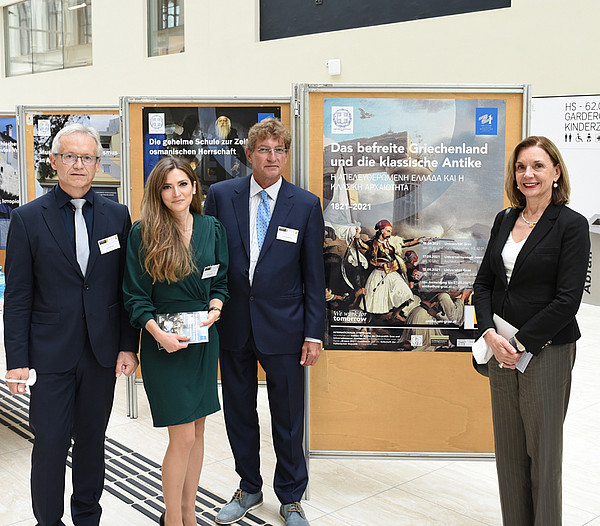
Das befreite Griechenland und die klassische Archäologie waren Thema eines Symposiums an der Uni Graz. Foto: Uni Graz/Tzivanopoulos
Peter Scherrer (3.v.l.) begrüßte die Botschafterin der Hellenischen Republik, Katherina Koika (rechts), an der Uni Graz. Karl Peitler vom Universalmuseum Joanneum und Elli Papazoi waren für die Gestaltung der Tagung verantwortlich. Fotos: Uni Graz/Tzivanopoulos
created by Konstantin Tzivanopoulos

Related news

Semester abroad without barriers: University of Graz wins award for promoting inclusion

The University of Graz has been awarded the Internationalization Award for its new inclusion initiative. Students with fewer opportunities now also receive financial support for their semester abroad outside Europe.

Fair distribution: Researchers determine just greenhouse gas budgets for all EU regions

Ten years ago, on 12 December 2015, the Paris Climate Agreement was signed at the UN Climate Conference. In order to limit global warming to well below two degrees, only a certain amount of CO2 may be emitted worldwide. While the focus was originally on national emission targets, more than 200 subnational regions and almost 300 cities have now adopted their own targets. But how many emissions are they fairly entitled to? Researchers at the University of Graz have now developed transparent criteria for fair distribution at the subnational level for the first time and determined corresponding greenhouse gas budgets for all European regions. The paper was published today in the scientific journal Nature Communications.

Chemical Christmas show at the University of Graz: An explosive evening at the Schauspielh

At the beginning of December, the University of Graz transformed the theater into a laboratory: as part of “Chemical Life,” teacher training students staged a chemical Christmas show for Styrian school classes—complete with ethanol rockets, nitrogen snow, and glowing effects. An evening designed to inspire interest in studying chemistry.

Train by train: Koralm railway accelerates exchange between the Universities

Lectures at the University of Klagenfurt in the morning, seminars at the University of Graz in the afternoon: Austria's longest tunnel and a journey time of around 45 minutes make it easy. The Koralm railway increases the speed of networking between the two university locations. The collaboration builds on existing cooperation - for example in the areas of teacher training, Slavic studies and as employers, the universities are well coordinated.

Begin of page section:
Additional information:

University of Graz
Universitaetsplatz 3
8010 Graz
Austria
  • Contact
  • Web Editors
  • Moodle
  • UNIGRAZonline
  • Imprint
  • Data Protection Declaration
  • Accessibility Declaration
Weatherstation
Uni Graz

End of this page section. Go to overview of page sections

End of this page section. Go to overview of page sections

Begin of page section:

End of this page section. Go to overview of page sections