TROUBLED WATERS
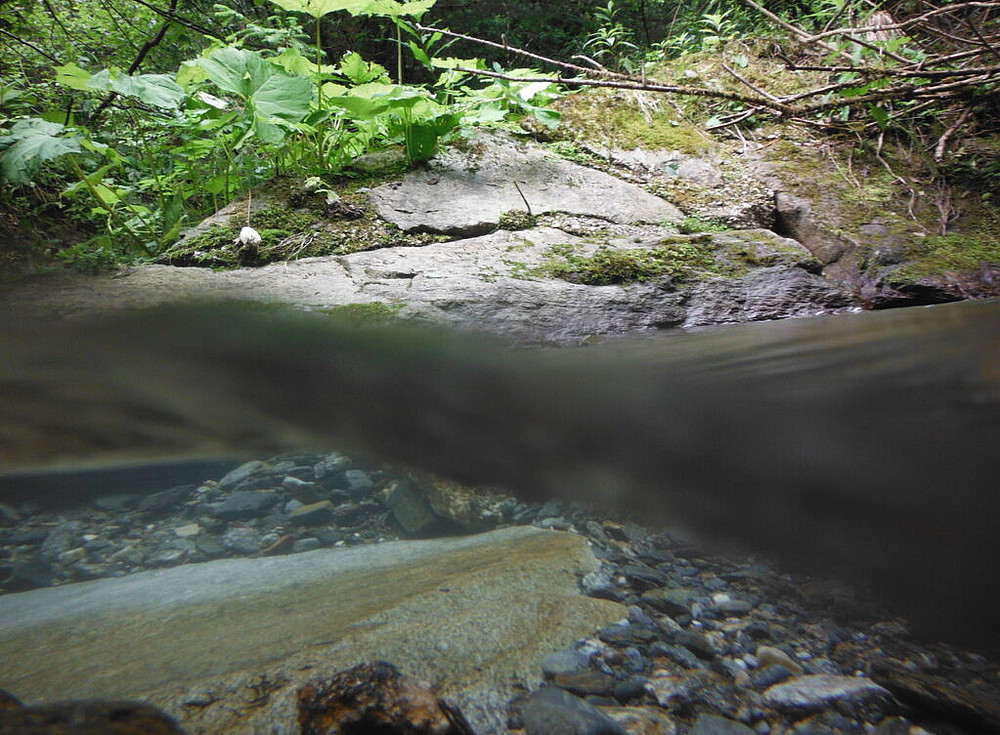
© Anita Fuchs
Ausstellung / Exhibition
Eröffnung / Opening: Donnerstag, 28. Mai 2026, 19.00 Uhr
Dauer / Duration: 29.05. – 10.07.2026
Öffnungszeiten/Opening Hours: Mo/Mon – Do/Thu, 10.00 – 17.00 Uhr / Fr, 10.00 – 14.00 Uhr
Digitale Publikation / Digital Publication
Erscheinungstermin / Release Date: 31.12.2026
Without water, there is no life – and yet our waterways are neglected, polluted and treated as commodities. These vital waterways are in crisis, and at the same time they reflect crucial turning points in history. What stories do rivers tell? How are human relationships with waterways and coastal landscapes depicted in art and literature? Can these cultural narratives help us to better understand key crises of modernity such as war, displacement, migration and ecological degradation?
The documentary exhibition and the accompanying digital publication are being produced in collaboration with the Akademie Graz, the University of Graz / Institute of Slavic Studies and the Maritime and Historical Museum of the Croatian Littoral (PPMHP) in Rijeka.
Artists: Benedikt Alphart (AT), Anita Fuchs (AT), Ivar Korbar (HR), Ivo Vičić (HR) and Susanne Miggitsch (AT)
Curated by: Yvonne Živković, Astrid Kury with Milka Car, Tea Perinčić and Stefanie Populorum
The interdisciplinary research project “Waterways in Crisis” explores the centuries-old geographical, historical and cultural interconnections of waterways in Austria and the Western Balkans, and demonstrates how they both connect and divide the two regions in the cultural imagination. Anyone travelling along these rivers soon notices significant differences: whilst there are practically no unregulated rivers left in Austria, the Sava and the Drava still flow largely untouched for long stretches through Croatia and Bosnia. These and many other relationships with waterways are also preserved in the folk songs, novels, poems and films of both regions.
They give us cause to explore our alienated relationship with waterways today.
How are human relationships with rivers and coastal landscapes depicted in art and literature? Can these cultural narratives help us to better understand key crises of modernity such as war, displacement, migration and ecological degradation?
Project themes:
How does dialogue with waterways take place in times of crisis?
How can engaging with waterways help us to better come to terms with a history marked by conflict?
How do alienation and rapprochement play out in a crisis?
What cartographies, routes and connections emerge as a result?
How can traditional knowledge relating to waterways be utilised in the present day?
In what ways can waterways help us to overcome the modern crisis of imagination (according to Robert McFarlane) and of attention (according to Naomi Klein)?
Akademie Graz is a project partner responsible for knowledge transfer within this Chanse EU project, in collaboration with: the Institute of Slavic Studies at the University of Graz, the Winchester School of Art in Southampton, MUCEM Lab in Marseille, and the Museum of Maritime History and the History of the Croatian Coast (PPMHP) in Rijeka.
River and floodplain landscapes, as well as coastal areas, have always formed the basis of human civilisation. Here, a specific cultural heritage of great diversity and an eventful past has developed, shaped by ever-changing historical border situations. From this, we can learn essential lessons for today, particularly regarding how to deal with upheavals and change. For it is precisely the border regions along waterways that have given rise to productive counter-cultures, both historically and in the present day. Within them, we can discover models of resilience and ways of adapting to radical transformations.
The project demonstrates how flows of people, ideas and cultural assets have shaped Europe positively and continue to do so. The aim is to collect a variety of stories about life along waterways and thus create a cultural cartography of narratives of upheaval, featuring ‘hidden’ stories of ecological resilience, intercultural encounters and cultural production along European waterways, both past and present.
At the Graz research centre, the links between Austria and the Balkans are being studied, using cultural migration along the rivers Mur, Drau, Drina and Sava as a case study, in collaboration with the Museum of Maritime History and History of the Croatian Coast (PPMHP) in Rijeka.