Begin of page section:
Page sections:

  • Go to contents (Accesskey 1)
  • Go to position marker (Accesskey 2)
  • Go to main navigation (Accesskey 3)
  • Go to sub navigation (Accesskey 4)
  • Go to additional information (Accesskey 5)
  • Go to page settings (user/language) (Accesskey 8)
  • Go to search (Accesskey 9)

End of this page section. Go to overview of page sections

Begin of page section:
Page settings:

English en
Deutsch de
Search
Login

End of this page section. Go to overview of page sections

Begin of page section:
Search:

Search for details about Uni Graz
Close

End of this page section. Go to overview of page sections


Search

Begin of page section:
Main navigation:

Page navigation:

  • University

    University
    • About the University
    • Organisation
    • Faculties
    • Library
    • Working at University of Graz
    • Campus
    Developing solutions for the world of tomorrow - that is our mission. Our students and our researchers take on the great challenges of society and carry the knowledge out.
  • Research Profile

    Research Profile
    • Our Expertise
    • Research Questions
    • Research Portal
    • Promoting Research
    • Research Transfer
    • Ethics in Research
    • Commission for Scientific Integrity
    Scientific excellence and the courage to break new ground. Research at the University of Graz creates the foundations for making the future worth living.
  • Studies

    Studies
    • Prospective Students
    • Students
    • Registration for Study Programme (Winter semester 2026/27)
  • Community

    Community
    • International
    • Location
    • Research and Business
    • Alumni
    The University of Graz is a hub for international research and brings together scientists and business experts. Moreover, it fosters the exchange and cooperation in study and teaching.
Topics
  • Sustainable University
  • Researchers answer
  • Work for us
Close menu

End of this page section. Go to overview of page sections

Begin of page section:
You are here:

University of Graz News Von Mur bis Meer

End of this page section. Go to overview of page sections

Friday, 12 April 2019

Von Mur bis Meer

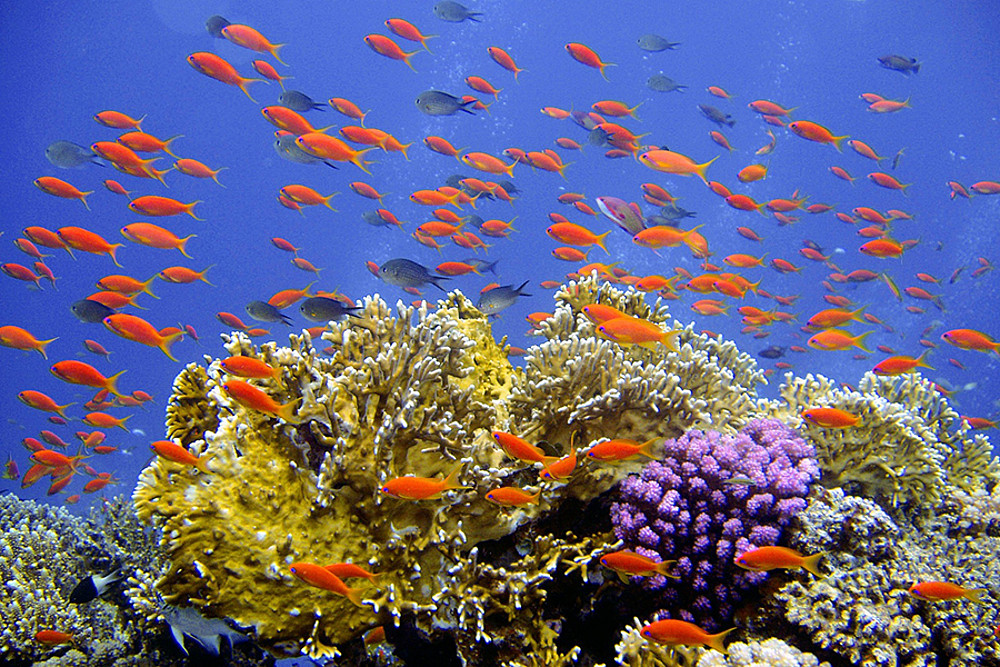
Lebensräume lebensnah: Wie man Biologie bestmöglich lehrt und lernt, erforscht seit genau zehn Jahren das Fachdidaktikzentrum. Foto: Joakant / Pixabay

Lebensräume lebensnah: Wie man Biologie bestmöglich lehrt und lernt, erforscht seit genau zehn Jahren das Fachdidaktikzentrum. Foto: Joakant / Pixabay

Was das Fachdidaktikzentrum für Biologie im Unterricht bewirkt

Was entsteht bei der Photosynthese der Pflanzen? Aus wie vielen Chromosomen setzt sich das menschliche Genom zusammen? Wie verseucht der Plastikmüll das Meer? Zum einen gesellschaftlich hoch relevante Fragen, zum anderen Inhalte des Biologie-Unterrichts. Wie man diese Themen bestmöglich lehrt und lernt, erforscht seit genau zehn Jahren das Fachdidaktikzentrum für Biologie und Umweltkunde an der Universität Graz. Das Ziel: Biologie im Klassenzimmer lebensnah und spannend vermitteln. Digitalisierung und Klimawandel haben das Fach massiv verändert. 

„Wir arbeiten als zentrale Drehscheibe des Lehramtsstudiums für Biologie und Umweltkunde, um den großen Herausforderungen der Zukunft gerecht zu werden“, fasst Zentrumsleiter Uwe Simon, Professor für Fachdidaktik Biologie, zusammen. So nimmt etwa der Klimawandel im neuen Masterstudium eine größere Rolle ein. Simon: „Wir wollen den Studierenden und in Folge den SchülerInnen positive Lösungsansätze aufzeigen und ihnen mitgeben: Ihr könnt etwas zur Veränderung beitragen!“ Das sei auch wirksamer, als die früher gängige Untergangsstimmung zu verbreiten.
„Es ist uns wichtig, ein Bewusstsein für eine nachhaltige Wirkung zu schaffen“, betont Fachdidaktikerin und Biologie-Lehrerin Margit Delefant. Mikroskopieren, Sezieren und Experimentieren fördere vor allem die Handlungskompetenz. Astrid Wonisch, Wissenschafterin am Fachdidaktikzentrum, ergänzt: „Wenn man das Gefühl hat, handlungsfähig zu sein, lassen sich auch Ängste überwinden.“ Sie bricht zudem eine Lanze für den regionalen Bezug: „Biologie fängt an der Haustür an.“ 
Großes Augenmerk wird auch auf die fachdidaktische Forschung gelegt. Uwe Simon verweist auf zwei aktuelle Projekte: die Spracharbeit in den Naturwissenschaften sowie die Gesundheitsbiologie mit Schwerpunkten zu Epilepsie, Viren sowie Antibiotikaresistenzen. Mehr Beachtung soll künftig der Sexualpädagogik geschenkt werden „Sie ist zwar im neuen Lehrplan verankert, aber es fehlt im deutschsprachigen Raum die universitäre Beschäftigung damit.“

Die Studierenden – und SchülerInnen – blicken dank Kooperationen auch über die Fächer- und Institutionengrenzen hinweg. Es stehen Exkursionen zur Meeresschule in Pula, wo an einem Projekt über Plastikmüll im Meer gearbeitet wird, und in den „Regenwald der ÖsterreichInnen“ in Costa Rica auf dem Programm, ebenso wie in den Nationalpark Gesäuse. 
Kooperation bestimmt auch das Fachdidaktikzentrum selbst, in dem Universität Graz, Pädagogische Hochschule Steiermark, Kirchliche Pädagogische Hochschule Graz, die Bildungsdirektion für Steiermark, das Joanneum und das Umweltbildungszentrum zusammenarbeiten. Zum Ausdruck kommt das beim Symposium „Kernelemente des Biologieunterrichts: Evolution, Biodiversität und Bildung für Nachhaltige Entwicklung“, das anlässlich des zehnjährigen Bestehens am 29. und 30. April 2019 an der Universität Graz stattfindet. 
>> Mehr über das Fachdidaktikzentrum erfahren 

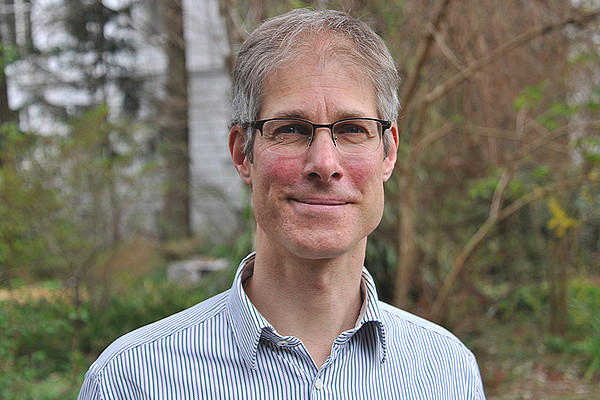
Uwe Simon ist Professor für Fachdidaktik für Biologie und Umweltkunde und leitet das gleichnamige Zentrum an der Universität Graz. Foto: Uni Graz/Tzivanopoulos ©Uni Graz /Tzivanopoulos
©Uni Graz /Tzivanopoulos
Uwe Simon ist Professor für Fachdidaktik für Biologie und Umweltkunde und leitet das gleichnamige Zentrum an der Universität Graz. Foto: Uni Graz/Tzivanopoulos
created by Andreas Schweiger

Related news

Complying with the norm: Why Do Standards Shape Our Lives, Elisabeth Staudegger?

Standards determine whether a sheet of paper fits in a printer or whether a charging plug can power multiple devices. These standards shape our everyday lives. But who actually sets these standards? Where are the weaknesses, and how could science help to improve them? Elisabeth Staudegger, Head of the ‘Law and IT’ Department at the Institute for Legal Foundations at the University of Graz, host the Academic Standards Day on 16 June. Here she relays how sciences can contribute to the topic of standardisation and reveals her personal favourite standard.

More body awareness than a culture war

In Italy, sex education lessons will in future only be permitted with parental consent, and will be banned entirely in nurseries and primary schools. At the same time, Pride Month highlights why knowledge about the body, relationships, boundaries and diversity is important for young people. A study by the University of Graz shows how important knowledge about the body, contraception, relationship skills and protection against violence is

Will Austria win the World Cup? Mathematician reveals calculation method

Michael Fischer uses the football tournament as a practical example for highschool lessons.

Biologie & Bohne

Chocolatiere Julia Zotter an der Uni Graz: nachhaltiger Kakaoanbau in Südamerika 

Begin of page section:
Additional information:

University of Graz
Universitaetsplatz 3
8010 Graz
Austria
  • Contact
  • Web Editors
  • Moodle
  • UNIGRAZonline
  • Imprint
  • Data Protection Declaration
  • Accessibility Declaration
Weatherstation
Uni Graz

End of this page section. Go to overview of page sections

End of this page section. Go to overview of page sections

Begin of page section:

End of this page section. Go to overview of page sections