Begin of page section:
Page sections:

  • Go to contents (Accesskey 1)
  • Go to position marker (Accesskey 2)
  • Go to main navigation (Accesskey 3)
  • Go to sub navigation (Accesskey 4)
  • Go to additional information (Accesskey 5)
  • Go to page settings (user/language) (Accesskey 8)
  • Go to search (Accesskey 9)

End of this page section. Go to overview of page sections

Begin of page section:
Page settings:

English en
Deutsch de
Search
Login

End of this page section. Go to overview of page sections

Begin of page section:
Search:

Search for details about Uni Graz
Close

End of this page section. Go to overview of page sections


Search

Begin of page section:
Main navigation:

Page navigation:

  • University

    University
    • About the University
    • Organisation
    • Faculties
    • Library
    • Working at University of Graz
    • Campus
    Developing solutions for the world of tomorrow - that is our mission. Our students and our researchers take on the great challenges of society and carry the knowledge out.
  • Research Profile

    Research Profile
    • Our Expertise
    • Research Questions
    • Research Portal
    • Promoting Research
    • Research Transfer
    • Ethics in Research
    Scientific excellence and the courage to break new ground. Research at the University of Graz creates the foundations for making the future worth living.
  • Studies

    Studies
    • Prospective Students
    • Students
  • Community

    Community
    • International
    • Location
    • Research and Business
    • Alumni
    The University of Graz is a hub for international research and brings together scientists and business experts. Moreover, it fosters the exchange and cooperation in study and teaching.
  • Spotlight
Topics
  • Our digital Advent calendar
  • Sustainable University
  • Researchers answer
  • Work for us
Close menu

End of this page section. Go to overview of page sections

Begin of page section:
You are here:

University of Graz News Winterverluste bei Honigbienen

End of this page section. Go to overview of page sections

Monday, 12 June 2017

Winterverluste bei Honigbienen

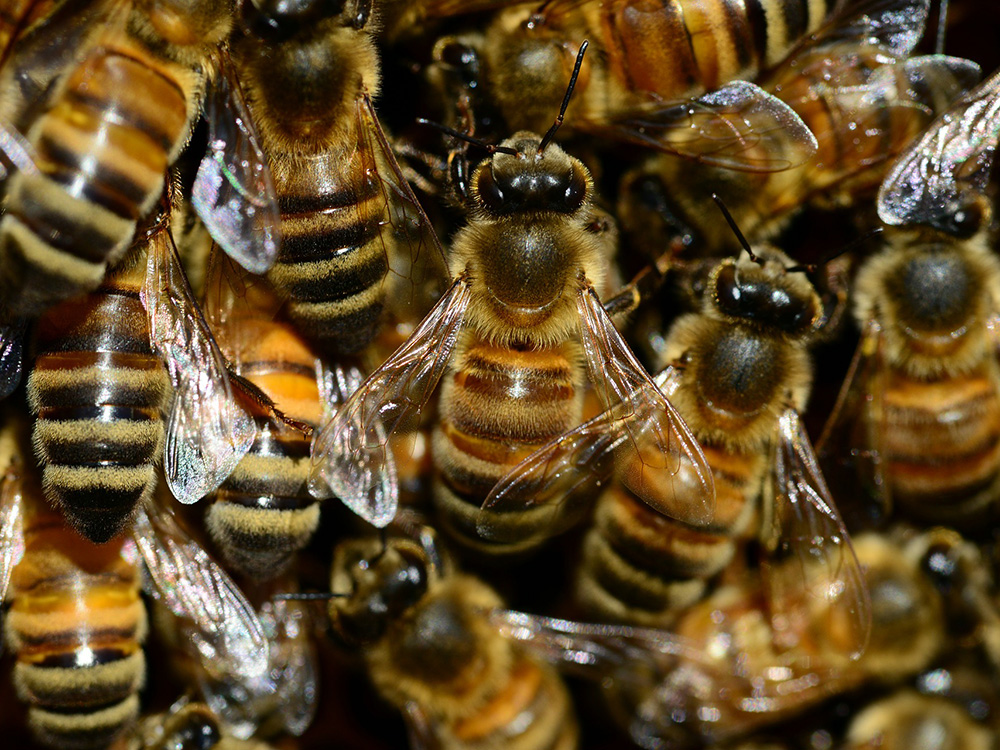
Rund 23 Prozent der Honigbienenvölker haben den vergangenen Winter nicht überlebt. Forscher der Uni Graz haben die aktuellen Verlustraten erhoben. Foto: Pixabay

Rund 23 Prozent der Honigbienenvölker haben den vergangenen Winter nicht überlebt. Forscher der Uni Graz haben die aktuellen Verlustraten erhoben. Foto: Pixabay

aktuelle Zahlen der Uni Graz zeigen große regionale Unterschiede

Der Anteil der Honigbienenvölker, die den Winter nicht überleben, schwankt stark über die Jahre und zwischen den Regionen. Diese Völker werden üblicherweise im Laufe des Jahres durch die Arbeit der Imkereien wieder aufgebaut. Insgesamt ist die auf 354.000 geschätzte Anzahl der Bienenvölker in Österreich seit 2000 weitgehend stabil. Den Winter 2016/17 haben rund 23 Prozent davon nicht überlebt. „Das sind die dritthöchsten Verluste der letzten zehn Jahre“, erklärt Dr. Robert Brodschneider vom Institut für Zoologie der Uni Graz. Er erhebt seit 2007 gemeinsam mit ImkerInnen die Winterverluste von Bienenvölkern in Österreich und sammelt damit wichtige Daten zum Schutz dieser Insekten. Eine Rekordzahl von 1656 Imkereien hat sich heuer beteiligt und Angaben zu insgesamt 43.852 im Herbst 2016 eingewinterten Völkern zur Verfügung gestellt.
Im Jahr davor lag die Sterblichkeit bei geringen acht Prozent. „Heuer gab es – im Gegensatz zum Vorjahr – vor allem in Vorarlberg hohe Völkerverluste. Die Rate schwankt zwischen den Bezirken der einzelnen Bundesländer, in einzelnen Regionen mussten die Imkereien Verluste von über 40 Prozent hinnehmen“, sagt Brodschneider.

Univ.-Prof. Dr. Karl Crailsheim, Leiter des vom Bundesministerium für Land- und Forstwirtschaft, Umwelt und Wasserwirtschaft in Auftrag gegebenen Forschungsprojektes „Zukunft Biene“ (2014–2017), das die Untersuchung der Bienengesundheit in Österreich zum Ziel hat, nennt auch aufgrund einer ausführlichen Vorjahresstudie mehrere Ursachen für die Wintersterblichkeit: „Im Rahmen des Projektes haben Uni Graz und AGES in den Jahren 2015 und 2016 fast 2000 Bienenvölker in ganz Österreich mehrmals genauestens untersucht und dabei wertvolle Erkenntnisse gewonnen“, berichtet Crailsheim. „Bei den toten Völkern dieser Studie konnte häufig ein hoher Befall mit der Varroa-Milbe und dem Flügeldeformationsvirus in der vorangegangenen Saison nachgewiesen werden.“ Zusätzlich spielen Faktoren wie das Wetter, der Aufbau ausreichend starker Überwinterungskolonien und die Verfügbarkeit von Nahrungspflanzen eine Rolle.

Wintersterblichkeit von Honigbienen 2016/17 (Stand: 6. Juni 2017)

Verlustrate in ProzentTeilnehmende ImkereienBeteiligung in Prozent
Österreich

23,0

16566,2
Burgenland20,25910,2
Kärnten21,91816,3
Niederösterreich24,24339,9
Oberösterreich18,92643,6
Salzburg16,8783,1
Steiermark19,32336,2
Tirol25,11314,9
Vorarlberg33,820713,8
Wien24,8709,9


Wintersterblichkeit von Honigbienen in Österreich seit 2007/08

JahrVerlustrate in Prozent
2007/0813,3
2008/099,3
2009/1014,7
2010/1116,4
2011/1225,9
2012/1317,3
2013/1412,8
2014/1528,4
2015/168,1
2016/1723,0


Zahl der Imkereien und Bienenvölker in Österreich (Quelle: Biene Österreich)

JahrImkereienVölker
200025.541363.967
200324.421327.346
200623.000311.000
201024.451367.583
201124.490368.183
201225.099376.485
201325.492382.638
201425.277376.121
201526.063347.128
201626.609354.080

Die Untersuchung wurde nach Standards der internationalen Non-Profit-Vereinigung COLOSS (Prevention of honey bee colony losses) durchgeführt.

Weiterführende Informationen:
www.Zukunft-Biene.at
www.Bienenstand.at
www.coloss.org

created by Robert Brodschneider, Karl Crailsheim, Rudolf Moosbeckhofer

Related news

Chemical Christmas show at the University of Graz: An explosive evening at the Schauspielh

At the beginning of December, the University of Graz transformed the theater into a laboratory: as part of “Chemical Life,” teacher training students staged a chemical Christmas show for Styrian school classes—complete with ethanol rockets, nitrogen snow, and glowing effects. An evening designed to inspire interest in studying chemistry.

Train by train: Koralm railway accelerates exchange between the Universities

Lectures at the University of Klagenfurt in the morning, seminars at the University of Graz in the afternoon: Austria's longest tunnel and a journey time of around 45 minutes make it easy. The Koralm railway increases the speed of networking between the two university locations. The collaboration builds on existing cooperation - for example in the areas of teacher training, Slavic studies and as employers, the universities are well coordinated.

On the trail of the Big Bang: University of Graz receives 1.5 million euros for doctoral programmes

The Austrian Science Fund FWF has selected the Doctoral Programme in Theoretical Particle Physics at the University of Graz for funding from the Doc.funds. Six young scientists will be funded for 3.5 years. They will gain fundamentally new insights into the origins of the world.

From trans women and knee prostheses: sports science prizes awarded

Walking better with a prosthesis, successfully getting rid of excess weight, training more effectively, more fairness for trans people in sport: these were the topics addressed by the students at the University of Graz who were awarded the sports science prizes for their Master's theses on 3 December 2025.

Begin of page section:
Additional information:

University of Graz
Universitaetsplatz 3
8010 Graz
Austria
  • Contact
  • Web Editors
  • Moodle
  • UNIGRAZonline
  • Imprint
  • Data Protection Declaration
  • Accessibility Declaration
Weatherstation
Uni Graz

End of this page section. Go to overview of page sections

End of this page section. Go to overview of page sections

Begin of page section:

End of this page section. Go to overview of page sections