Begin of page section:
Page sections:

  • Go to contents (Accesskey 1)
  • Go to position marker (Accesskey 2)
  • Go to main navigation (Accesskey 3)
  • Go to sub navigation (Accesskey 4)
  • Go to additional information (Accesskey 5)
  • Go to page settings (user/language) (Accesskey 8)
  • Go to search (Accesskey 9)

End of this page section. Go to overview of page sections

Begin of page section:
Page settings:

English en
Deutsch de
Search
Login

End of this page section. Go to overview of page sections

Begin of page section:
Search:

Search for details about Uni Graz
Close

End of this page section. Go to overview of page sections


Search

Begin of page section:
Main navigation:

Page navigation:

  • University

    University
    • About the University
    • Organisation
    • Faculties
    • Library
    • Working at University of Graz
    • Campus
    Developing solutions for the world of tomorrow - that is our mission. Our students and our researchers take on the great challenges of society and carry the knowledge out.
  • Research Profile

    Research Profile
    • Our Expertise
    • Research Questions
    • Research Portal
    • Promoting Research
    • Research Transfer
    • Ethics in Research
    Scientific excellence and the courage to break new ground. Research at the University of Graz creates the foundations for making the future worth living.
  • Studies

    Studies
    • Prospective Students
    • Students
  • Community

    Community
    • International
    • Location
    • Research and Business
    • Alumni
    The University of Graz is a hub for international research and brings together scientists and business experts. Moreover, it fosters the exchange and cooperation in study and teaching.
  • Spotlight
Topics
  • Our digital Advent calendar
  • Sustainable University
  • Researchers answer
  • Work for us
Close menu

End of this page section. Go to overview of page sections

Begin of page section:
You are here:

University of Graz News What makes cancer cells weak: a new approach in the fight against therapy resistance

End of this page section. Go to overview of page sections

Tuesday, 25 February 2025

What makes cancer cells weak: a new approach in the fight against therapy resistance

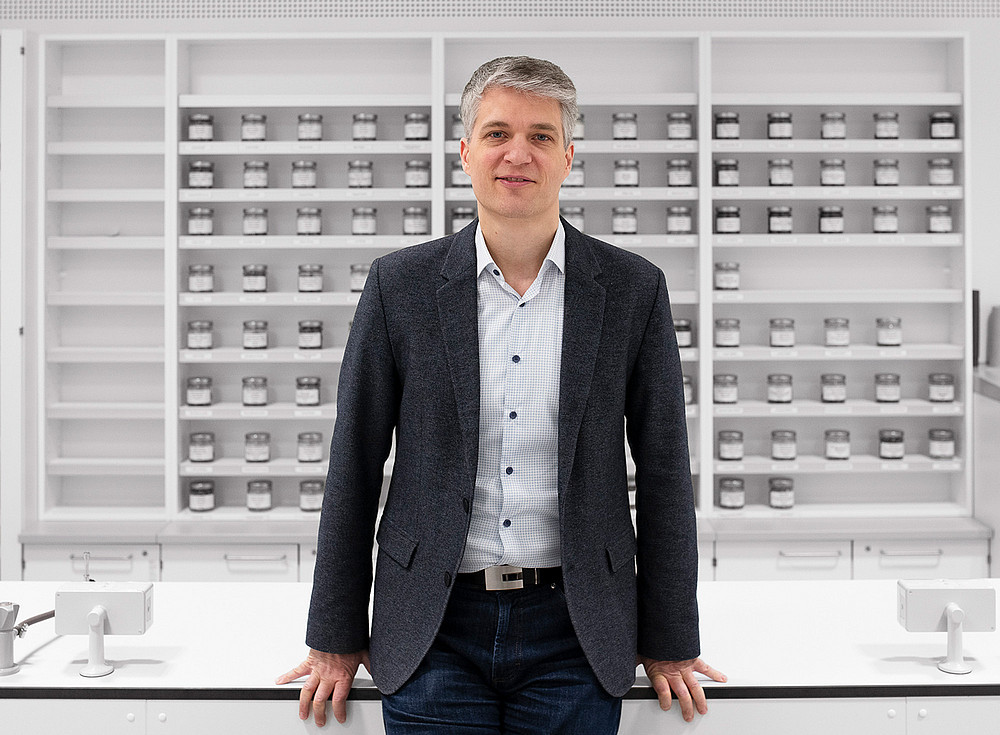
Andreas Koeberle in front of a wall of shelves with screw-in glasses ©University of Graz/Tzivanopoulos

Andreas Koeberle is researching the effect of various cytotoxic natural substances on cancer cells. Photo: University of Graz/Tzivanopoulos

One particular challenge in the treatment of cancer is therapy resistance. An international research team has now discovered a mechanism that opens up new treatment strategies for tumours in which conventional chemotherapeutic agents have reached their limits. "Cytotoxic agents from nature lead to an increased incorporation of polyunsaturated fatty acids into the membrane of cancer cells. This makes them more susceptible to ferroptosis, a type of cell death, at a very early stage," reports Andreas Koeberle, a pharmacist at the University of Graz and lead author of the study, which has just been published in the scientific journal Nature Communications.


In the treatment of cancer with chemotherapy, natural substances, such as those from the Chinese “happy tree”, play an important role. They interfere with vital cell processes and thereby damage them. However, a few cancer cells are often able to adapt to these challenges and survive. This is called resistance.

While studying the effect of various cytotoxic natural products on different cancer cells, Andreas Koeberle from the Institute of Pharmaceutical Sciences at the University of Graz has discovered a previously unknown mechanism that could point to new therapeutic options in the event of such resistance. "When the cancer cells come into contact with the active substance, they show a stress reaction. Even at this very early stage, long before they might possibly die, reduced growth signals cause increased levels of polyunsaturated fatty acids to be incorporated into the membrane. This makes them more susceptible to a particular cell death pathway, ferroptosis," explains the researcher, adding: "The mechanism appears to be universal. This means that it can be observed in all the cancer cells examined and in most cytotoxic agents." During ferroptosis, polyunsaturated fatty acids in cell membranes are damaged by oxygen radicals. The membranes become porous and the cell dies.

These findings create a basis for the systematic research of innovative treatment strategies for therapy-resistant tumours. Even if conventional chemotherapeutic agents do not kill the cells, they at least trigger a membrane change that can be utilised. "By adding substances that induce ferroptosis, cancer cells could ultimately be eliminated completely," Koeberle suspects.

Researchers from Innsbruck, Hamburg, Jena, Salzburg, Tokyo and Valbonne, among other places, were also involved in the study.

Publication
Gollowitzer, A., Pein, H., Rao, Z. et al. Attenuated growth factor signaling during cell death initiation sensitizes membranes towards peroxidation 
Nature Communications 16, 1774 (2025)
https://doi.org/10.1038/s41467-025-56711-2


⇒ If you are interested in the production and mode of action of medicines, you can study Pharmaceutical Sciences at the University of Graz.

created by Gudrun Pichler

Related news

Chemical Christmas show at the University of Graz: An explosive evening at the Schauspielh

At the beginning of December, the University of Graz transformed the theater into a laboratory: as part of “Chemical Life,” teacher training students staged a chemical Christmas show for Styrian school classes—complete with ethanol rockets, nitrogen snow, and glowing effects. An evening designed to inspire interest in studying chemistry.

Train by train: Koralm railway accelerates exchange between the Universities

Lectures at the University of Klagenfurt in the morning, seminars at the University of Graz in the afternoon: Austria's longest tunnel and a journey time of around 45 minutes make it easy. The Koralm railway increases the speed of networking between the two university locations. The collaboration builds on existing cooperation - for example in the areas of teacher training, Slavic studies and as employers, the universities are well coordinated.

On the trail of the Big Bang: University of Graz receives 1.5 million euros for doctoral programmes

The Austrian Science Fund FWF has selected the Doctoral Programme in Theoretical Particle Physics at the University of Graz for funding from the Doc.funds. Six young scientists will be funded for 3.5 years. They will gain fundamentally new insights into the origins of the world.

From trans women and knee prostheses: sports science prizes awarded

Walking better with a prosthesis, successfully getting rid of excess weight, training more effectively, more fairness for trans people in sport: these were the topics addressed by the students at the University of Graz who were awarded the sports science prizes for their Master's theses on 3 December 2025.

Begin of page section:
Additional information:

University of Graz
Universitaetsplatz 3
8010 Graz
Austria
  • Contact
  • Web Editors
  • Moodle
  • UNIGRAZonline
  • Imprint
  • Data Protection Declaration
  • Accessibility Declaration
Weatherstation
Uni Graz

End of this page section. Go to overview of page sections

End of this page section. Go to overview of page sections

Begin of page section:

End of this page section. Go to overview of page sections