



Begin of page section:
Page sections:

  • Go to contents (Accesskey 1)
  • Go to position marker (Accesskey 2)
  • Go to main navigation (Accesskey 3)
  • Go to sub navigation (Accesskey 4)
  • Go to additional information (Accesskey 5)
  • Go to page settings (user/language) (Accesskey 8)
  • Go to search (Accesskey 9)

End of this page section. Go to overview of page sections

Begin of page section:
Page settings:

English en
Deutsch de
Search
Login

End of this page section. Go to overview of page sections

Begin of page section:
Search:

Search for details about Uni Graz
Close

End of this page section. Go to overview of page sections


Search

Begin of page section:
Main navigation:

Page navigation:

  • University

    University
    • About the University
    • Organisation
    • Faculties
    • Library
    • Working at University of Graz
    • Campus
    Developing solutions for the world of tomorrow - that is our mission. Our students and our researchers take on the great challenges of society and carry the knowledge out.
  • Research Profile

    Research Profile
    • Our Expertise
    • Research Questions
    • Research Portal
    • Promoting Research
    • Research Transfer
    • Ethics in Research
    • Commission for Scientific Integrity
    Scientific excellence and the courage to break new ground. Research at the University of Graz creates the foundations for making the future worth living.
  • Studies

    Studies
    • Prospective Students
    • Students
    • Welcome Weeks for First Year Students
  • Community

    Community
    • International
    • Location
    • Research and Business
    • Alumni
    The University of Graz is a hub for international research and brings together scientists and business experts. Moreover, it fosters the exchange and cooperation in study and teaching.
Topics
  • Sustainable University
  • Researchers answer
  • Work for us
Close menu

End of this page section. Go to overview of page sections

Begin of page section:
You are here:

University of Graz News Weniger für mehr

End of this page section. Go to overview of page sections

Monday, 22 October 2012

Weniger für mehr

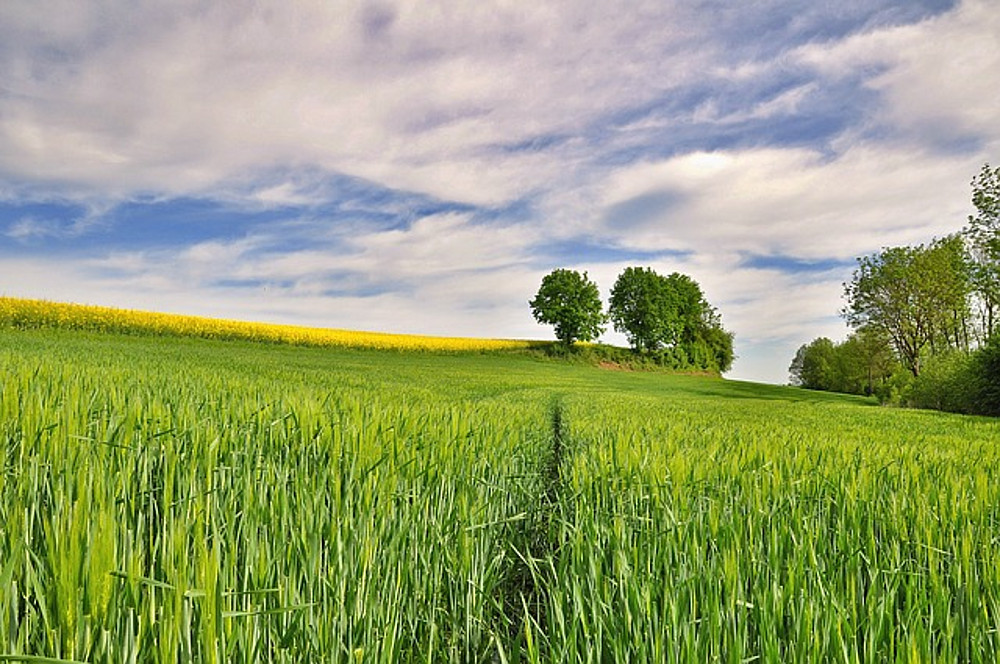
Im Projekt "Farm-Clim" suchen ForscherInnen nach Methoden, wie Stickstoff in der Landwirtschaft besser zum Einsatz kommen kann. Foto: pixabay

Im Projekt "Farm-Clim" suchen ForscherInnen nach Methoden, wie Stickstoff in der Landwirtschaft besser zum Einsatz kommen kann. Foto: pixabay

ForscherInnen suchen nach optimierten Methoden des Stickstoffeinsatzes in der Landwirtschaft

Pflanzen brauchen Stickstoff, um zu wachsen. In der Landwirtschaft wird ihnen das „Nitrogenium“ vor allem durch Kunstdünger zugeführt, der vor etwa hundert Jahren entwickelt wurde und seit den 1950er Jahren in steigendem Maß eingesetzt wird.


Was Pflanzen sprießen lässt, kann für die Umwelt jedoch schädlich sein: „Überdüngung verursacht Nitratbelastung in Grund- und Trinkwasser und Algenblüte in Gewässern, sowie indirekt eine Versauerung des Bodens. Außerdem wird ein Teil des Düngers im Boden zu Lachgas umgewandelt, das in die Atmosphäre entweicht und dort als besonders starkes Treibhausgas wirkt“, erklärt Univ.-Prof. Dipl-Ing. Dr. Wilfried Winiwarter vom Institut für Systemwissenschaften, Innovations- und Nachhaltigkeitsforschung (ISIS) der Karl-Franzens-Universität Graz. In dem gemeinsam mit der BOKU Wien eingereichten und dort koordinierten Projekt „Farm-Clim“ suchen ForscherInnen nun nach dem optimalen Einsatz von Stickstoff bei der Düngung und in der Produktion von Tierfutter.


Von 100 Kilogramm Stickstoff werden im globalen Durchschnitt nur 30 Kilogramm von Pflanzen aufgenommen; der Rest wird in Grundwasser und Oberflächengewässer ausgewaschen oder gelangt in die Atmosphäre. Winiwarter erklärt die großen Mengen von beigefügtem Stickstoff so: „Um Arbeitsschritte zu sparen, wird Kunstdünger meist einmalig pro Saison und dafür in reichem Maß zugegeben. Damit soll sichergestellt werden, dass auch bei guten Wachstumsbedingungen ausreichend Dünger vorhanden ist, sodass keine Ernteeinbußen entstehen.“ Eine den regionalen Erfordernissen und individuellen Bedürfnissen der Pflanzen angepasste Düngung wäre dabei nicht nur schonend für die Umwelt, sondern auch für die Geldbörse – denn Düngemittel sind nicht billig.


Hier setzt „Farm-Clim“ an: „Wir erforschen in diesem Projekt, wie Stickstoff zeitlich besser eingesetzt werden kann - bei gleichzeitiger Rücksichtnahme auf die lokalen Gegebenheiten, wie zum Beispiel Bodenqualität oder Wetterverhältnisse“, so der Systemwissenschafter. Das Problem: Die Variabilität des Bodens ist groß. „In Tests wurde gezeigt, dass Proben, die nur wenige Meter voneinander entfernt gezogen wurden, sich auch im Stickstoffgehalt stark voneinander unterscheiden können“, unterstreicht Winiwarter. Bei der Fütterung der landwirtschaftlichen Nutztiere spielt der Stickstofffluss ebenfalls eine wichtige Rolle: „Ideal wäre eine Abstimmung der Inhaltsstoffe der Nahrung mit Alter und Größe des zu fütternden Tieres.“ So könnte genauer abgeschätzt werden, wie viel Stickstoff die Tiere benötigen, um stickstoffhaltiges Protein in Produkten wie Fleisch, Milch oder Eiern zu liefern.


Ziel von „Farm-Clim“ ist, ein Maßnahmenpaket für den optimierten Einsatz von Stickstoff in Ackerbau und Viehzucht zu entwickeln, das praktikabel und durchführbar ist. Die ForscherInnen des Instituts für Systemwissenschaften, Innovations- und Nachhaltigkeitsforschung der Uni Graz sind als wichtige KooperationspartnerInnen der BOKU Wien für die Erstellung von Stickstoffbilanzen und für Szenarienentwicklungen verantwortlich. Außerdem sind das Umweltbundesamt Wien, die AGES, das Bundesforschungszentrum für Wald (BFW) und die Landwirtschaftskammer Niederösterreich in das Projekt involviert. „Farm-Clim“ hat im Mai 2012 begonnen und läuft für zwei Jahre.

 
Dieses Projekt ist Teil des Forschungsschwerpunkts „Umwelt und globaler Wandel“ der Karl-Franzens-Universität Graz.

created by Gerhild Kastrun

Related news

A fresh start, a calling, holidays: what draws people from other career paths to teaching

They used to develop software; now they teach maths in the classroom. Career changers are expected to help address the shortage of qualified teachers in Austria’s schools. In their doctoral theses at the Institute for Educational Research and Teacher Training at the University of Graz, Melanie Gürentz and Claudia Mair examined how these new teachers perceive their new professional roles.

Talent Talks bridge the gap in career guidance

The Styrian Chamber of Commerce (WKO Steiermark), the Styrian Chamber of Labour (AK Steiermark) and the AMS are joining forces when it comes to training young people and, through the “Talent Talks”, are creating a seamless pathway to career guidance. This takes preparation and follow-up support – just in time for the start of the term and the scheme’s tenth anniversary – to a whole new level. A new survey conducted by the Talent Centre among 2,687 former participants to mark the anniversary shows just how important this development is. Of the young people who received follow-up support from the Talent Report, 74.6 per cent stated that they had a good understanding of their own strengths and talents following the Talent Check. Without follow-up support, the figure was 66.5 per cent – a significant difference of 8.1 percentage points.

ERC Starting Grants: three million euros for two researchers at the University of Graz

Two researchers from the University of Graz have secured prestigious and generously funded grants from the EU. Starting Grants from the European Research Council (ERC), each worth 1.5 million euros, have been awarded to the human geographer Heide Bruckner and the social scientist Silvana Weiss.

Austria’s emissions rose in 2025: University of Graz researchers analyse the causes

The Environment Agency Austria has today published the figures for the country’s greenhouse gas emissions in 2025. While emissions fell sharply year on year from 2022 to 2024, they rose again by just under 0.7 per cent in 2025. Researchers at the University of Graz have analysed how much of this increase was due to structural changes in the economy and how much was attributable to external factors over which there is little control. “In 2025, the colder winter compared with 2024 increased emissions by 0.81 per cent, while the weak economy reduced them by 0.38 per cent. If we factor out these influences, we find an underlying increase of 0.26 per cent compared with the previous year,” reports economist Karl Steininger. “This clearly means that Austria is not on track to meet its climate targets, which require a substantial reduction in emissions by 2030.”

Begin of page section:
Additional information:

University of Graz
Universitaetsplatz 3
8010 Graz
Austria
  • Contact
  • Web Editors
  • Moodle
  • UNIGRAZonline
  • Imprint
  • Data Protection Declaration
  • Accessibility Declaration
Weatherstation
Uni Graz

End of this page section. Go to overview of page sections

End of this page section. Go to overview of page sections

Begin of page section:

End of this page section. Go to overview of page sections