



Begin of page section:
Page sections:

  • Go to contents (Accesskey 1)
  • Go to position marker (Accesskey 2)
  • Go to main navigation (Accesskey 3)
  • Go to sub navigation (Accesskey 4)
  • Go to additional information (Accesskey 5)
  • Go to page settings (user/language) (Accesskey 8)
  • Go to search (Accesskey 9)

End of this page section. Go to overview of page sections

Begin of page section:
Page settings:

English en
Deutsch de
Search
Login

End of this page section. Go to overview of page sections

Begin of page section:
Search:

Search for details about Uni Graz
Close

End of this page section. Go to overview of page sections


Search

Begin of page section:
Main navigation:

Page navigation:

  • University

    University
    • About the University
    • Organisation
    • Faculties
    • Library
    • Working at University of Graz
    • Campus
    Developing solutions for the world of tomorrow - that is our mission. Our students and our researchers take on the great challenges of society and carry the knowledge out.
  • Research Profile

    Research Profile
    • Our Expertise
    • Research Questions
    • Research Portal
    • Promoting Research
    • Research Transfer
    • Ethics in Research
    • Commission for Scientific Integrity
    Scientific excellence and the courage to break new ground. Research at the University of Graz creates the foundations for making the future worth living.
  • Studies

    Studies
    • Prospective Students
    • Students
    • Registration for Study Programme (Winter semester 2026/27)
  • Community

    Community
    • International
    • Location
    • Research and Business
    • Alumni
    The University of Graz is a hub for international research and brings together scientists and business experts. Moreover, it fosters the exchange and cooperation in study and teaching.
Topics
  • Sustainable University
  • Researchers answer
  • Work for us
Close menu

End of this page section. Go to overview of page sections

Begin of page section:
You are here:

University of Graz News Was willst du werden?

End of this page section. Go to overview of page sections

Monday, 07 March 2016

Was willst du werden?

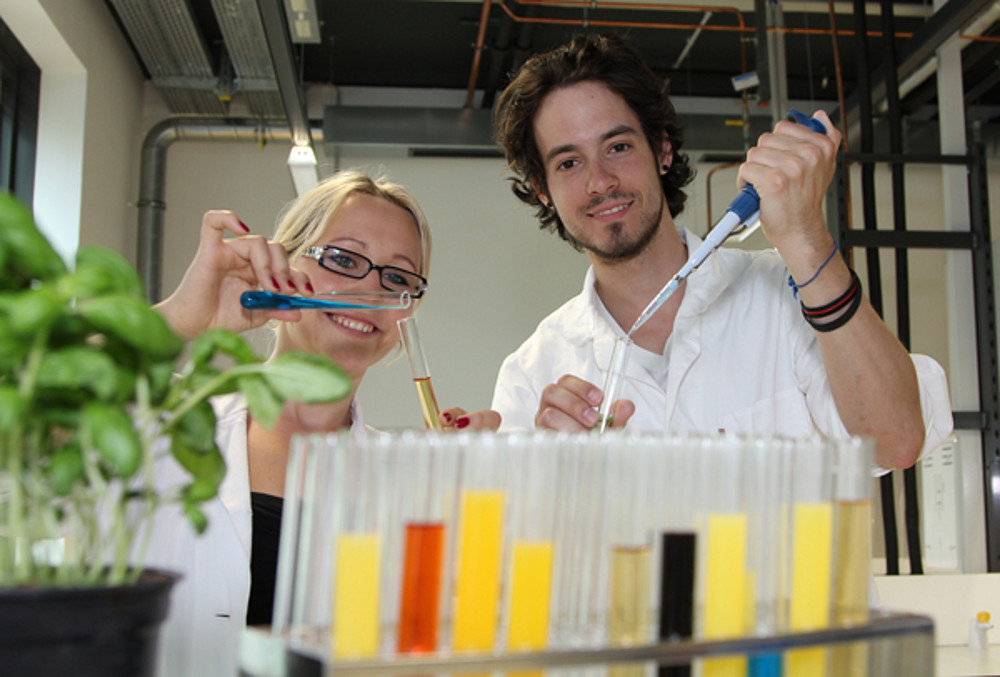
Auf dem Whatchado-Profil der Uni Graz gibt es viel zu entdecken: zum Beispiel die unterschiedlichen Jobmöglichkeiten an einer Hochschule. Foto: Uni Graz/Tzivanopoulos.

Auf dem Whatchado-Profil der Uni Graz gibt es viel zu entdecken: zum Beispiel die unterschiedlichen Jobmöglichkeiten an einer Hochschule. Foto: Uni Graz/Tzivanopoulos.

Uni Graz auf Job-Dating-Plattform „Whatchado“ vertreten

Von Bundespräsident Heinz Fischer bis Songcontest-Gewinnerin Conchita Wurst: Viele Persönlichkeiten aus Österreich und Deutschland geben das Geheimnis ihres erfolgreichen Werdegangs auf der Berufsorientierungsplattform „Whatchado“ preis. Der Name kommt aus dem amerikanischen Slang für die Frage: “What do you do?”. Als erste Universität ist nun auch die Karl-Franzens-Universität Graz mit einem eigenen Profil auf der international bekannten Webseite für Jobsuchende vertreten. Quer durch die Berufssparten hindurch – von Rektorin Christa Neuper über B2B-Managament-Professor Vishal Kashyap bis hin zu Gärtnerlehrling Mario Marx – erzählen in 31 Kurzvideos Universitätsbedienstete aus Wissenschaft und Management über ihren Karriereweg sowie auch Studierende über ihre Studienwahl an der zweitgrößten Hochschule Österreichs. Mit dabei sind Die verschiedenen Berufsbilder, die an einer Universität mit rund 4.300 MitarbeiterInnen und 32.500 StudentInnen beheimatet sind, wirken von außen meist unsichtbar und unbekannt.

„Wir versuchen mit dieser Initiative zu zeigen, wie breit gefächert die Jobmöglichkeiten an der Universität Graz sind. Außerdem möchten wir auf diesem Wege neue, internationale ForscherInnen und Studierende für die Uni Graz begeistern“, erklärt Mag. Ralph Duschek, Projektleiter „Whatchado“ an der Universität Graz. „Employer-Branding“ – auf Deutsch „Arbeitgebermarkenbildung“ – in Sozialen Netzwerken wird immer stärker von BewerberInnen genutzt. Unternehmen wie auch Universitäten müssen auch in diese Richtung für die richtige Werbung sorgen“, sagt Renate Dworczak, Vizerektorin für Personal, Personalentwicklung und Gleichstellung.

Sieben Fragen und ein Matching
Das Prinzip, mit dem Whatchado arbeitet, ist schnell erklärt: Jede Person bekommt dieselben sieben Fragen in einem Interview gestellt. Für die NutzerInnen gibt es die Möglichkeit über ein „Matching“ – Abgleichfunktion – auf der Webseite www.whatchado.com die eigenen Interessen und Wünsche mit jenen der InterviewpartnerInnen zu vergleichen. Das System schlägt dann passende Videos vor, die zum Suchprofil passen. Neben der Uni Graz sind bereits zahlreiche größere österreichische und deutsche Unternehmen auf der Plattform vertreten.

Weitere Informationen unter: https://www.whatchado.com/de/channels/uni-graz

created by Konstantinos Tzivanopoulos

Related news

"Mathematics explains the world"

How can life be quantified? And what can science reveal that remains hidden from the naked eye? The 14th European Conference on Mathematical and Theoretical Biology at the University of Graz is dedicated to these questions. From 13 to 17 July, around 1,300 researchers from all over the world will gather on campus to discuss models, biological processes and the future of data-driven medicine. Klemens Fellner, Dean of the Faculty of Natural Sciences and Mathematics and a mathematician, talks about the language that explains the world

Internationally up-to-date: University of Graz offers new degree programmes in art studies

From the Old Masters to AI art – three newly designed degree programmes offer students at the University of Graz fresh perspectives on artistic production. In addition to historical art, the programmes place a greater emphasis on contemporary and global developments. The registration period is open.

The Nazi elite school Napola: Historian seeks memories and personal documents

They were to be brought up to become the future elite of National Socialism: boys and girls aged ten and over who, following the ‘Anschluss’ of Austria to the German Reich, attended a so-called Napola (short for Nationalpolitische Lehranstalt; also known as NPEA, Nationalpolitische Erziehungsanstalt). There were nine such institutions in what is now Austria between 1939 and 1945.

Heat-resistant: Eva Preinfalk explains how cities can protect their residents

Certain demographic and some occupational groups are particularly vulnerable to high temperatures. A range of measures is needed to provide relief for everyone, explains climate economist Eva Preinfalk.

Begin of page section:
Additional information:

University of Graz
Universitaetsplatz 3
8010 Graz
Austria
  • Contact
  • Web Editors
  • Moodle
  • UNIGRAZonline
  • Imprint
  • Data Protection Declaration
  • Accessibility Declaration
Weatherstation
Uni Graz

End of this page section. Go to overview of page sections

End of this page section. Go to overview of page sections

Begin of page section:

End of this page section. Go to overview of page sections