Begin of page section:
Page sections:

  • Go to contents (Accesskey 1)
  • Go to position marker (Accesskey 2)
  • Go to main navigation (Accesskey 3)
  • Go to sub navigation (Accesskey 4)
  • Go to additional information (Accesskey 5)
  • Go to page settings (user/language) (Accesskey 8)
  • Go to search (Accesskey 9)

End of this page section. Go to overview of page sections

Begin of page section:
Page settings:

English en
Deutsch de
Search
Login

End of this page section. Go to overview of page sections

Begin of page section:
Search:

Search for details about Uni Graz
Close

End of this page section. Go to overview of page sections


Search

Begin of page section:
Main navigation:

Page navigation:

  • University

    University
    • About the University
    • Organisation
    • Faculties
    • Library
    • Working at University of Graz
    • Campus
    Developing solutions for the world of tomorrow - that is our mission. Our students and our researchers take on the great challenges of society and carry the knowledge out.
  • Research Profile

    Research Profile
    • Our Expertise
    • Research Questions
    • Research Portal
    • Promoting Research
    • Research Transfer
    • Ethics in Research
    Scientific excellence and the courage to break new ground. Research at the University of Graz creates the foundations for making the future worth living.
  • Studies

    Studies
    • Prospective Students
    • Students
  • Community

    Community
    • International
    • Location
    • Research and Business
    • Alumni
    The University of Graz is a hub for international research and brings together scientists and business experts. Moreover, it fosters the exchange and cooperation in study and teaching.
  • Spotlight
Topics
  • Sustainable University
  • Researchers answer
  • Work for us
Close menu

End of this page section. Go to overview of page sections

Begin of page section:
You are here:

University of Graz News Von Kurorten bis Kriegslandschaften

End of this page section. Go to overview of page sections

Friday, 03 November 2017

Von Kurorten bis Kriegslandschaften

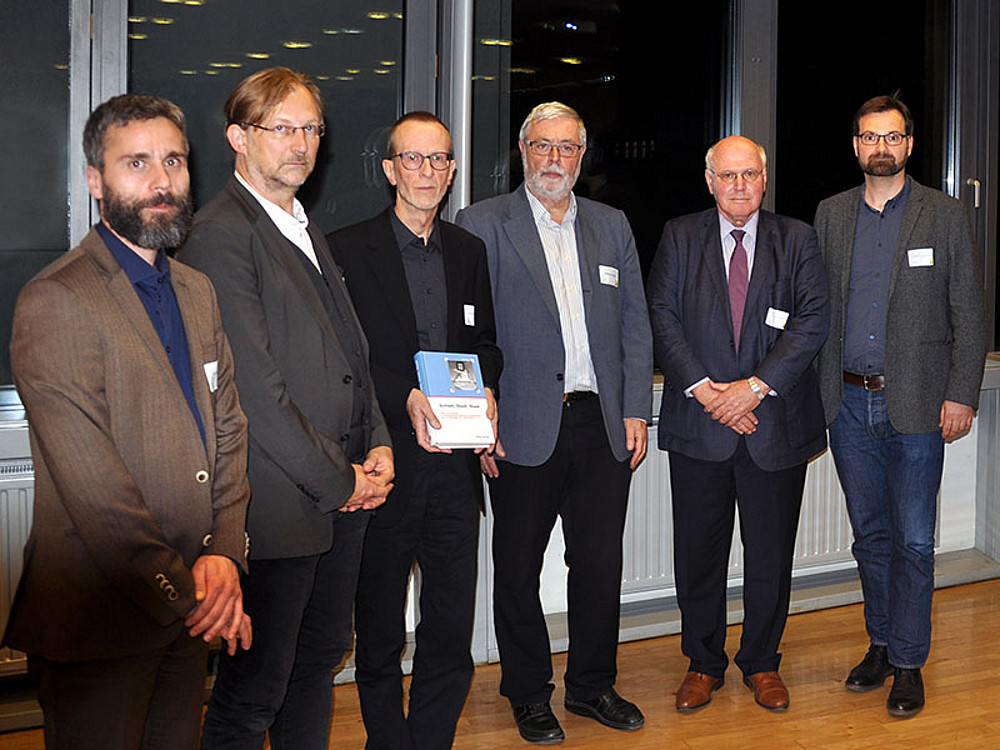
Olaf Terpitz, Hans-Joachim Hahn, Gerd Kühr, Helmut Konrad, Jay Winter und Gerald Lamprecht (v.l.) bei der Buchpräsentation. Foto: CJS

Olaf Terpitz (Uni Wien), Hans-Joachim Hahn (Uni Leipzig), Gerd Kühr, Helmut Konrad, Jay Winter und Gerald Lamprecht (v.l.) bei der Präsentation des Buchs „Schtetl, Stadt, Staat. Raum und Identität in deutschsprachig-jüdischer Erzählliteratur des 19. und frühen 20. Jahrhunderts“. Foto: CJS

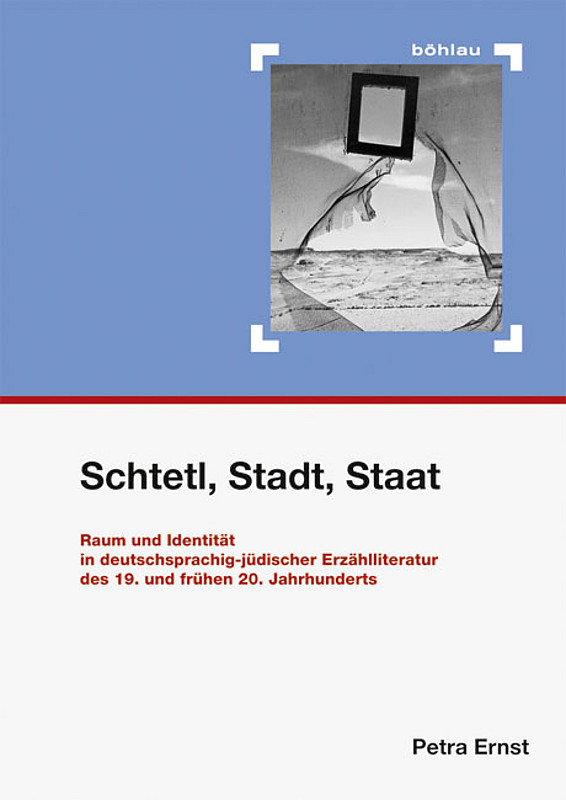
Die Habilitationsschrift von Petra Ernst ist im Böhlau-Verlag erschienen. Foto: Böhlau

Die Habilitationsschrift von Petra Ernst ist im Böhlau-Verlag erschienen. Foto: Böhlau

Internationales Kolloquium zu deutschsprachig-jüdischer Literatur im Gedenken an Petra Ernst-Kühr

Aktuelle Forschungen auf dem Gebiet der deutschsprachig-jüdischen Literaturstudien stehen im Mittelpunkt eines internationalen Kolloquiums, veranstaltet vom Centrum für Jüdische Studien (CJS) der Universität Graz, zum Gedenken an die 2016 verstorbene Literatur- und Kulturwissenschafterin Dr. Petra Ernst-Kühr. Am 2. und 3. November 2017 widmen sich Vortragende aus den USA, Israel und Deutschland verschiedensten Themen, die im 19. und 20. Jahrhundert Niederschlag im literarischen Schaffen deutschsprachiger Juden und Jüdinnen fanden.

Dekan Michael Walter begrüßte die TeilnehmerInnen des Kolloquiums an der Uni Graz, und Assoz. Prof. Dr. Gerald Lamprecht, Leiter des CJS, erinnerte an die wissenschaftliche Arbeit von Petra Ernst-Kühr, deren Forschungsschwerpunkte das Kolloquium aufgreift. „Petra Ernst war es ein großes Anliegen, die Literaturwissenschaft in den Jüdischen Studien stärker zu verankern“, unterstrich Lamprecht. „Gemeinsam mit Klaus Hödl hat sie das Centrum für Jüdische Studien ins Leben gerufen, das sich mit jüdischer Geschichte, Literatur und Kultur befasst und deutlich ihre Handschrift trägt.“
Petra Ernst-Kühr war außerdem Sprecherin des Forschungsschwerpunkts „Kultur- und Deutungsgeschichte Europas“, den sie an der Uni Graz aufgebaut und maßgeblich geprägt hat, wie ihre Nachfolgerin in dieser Funktion, Assoz. Prof. Dr. Ulla Kriebernegg, betonte.

Darüber hinaus legte Petra Ernst-Kühr stets Wert auf internationale Vernetzung. Als Mitbegründerin der Gesellschaft für Europäisch-Jüdische Literaturstudien gab sie der wissenschaftlichen Arbeit auf diesem Gebiet wesentliche Impulse. Die Beiträge des Kolloquiums spiegeln den aktuellen Stand der Forschung wider, ebenso wie die Bandbreite der Themen, die in deutschsprachig-jüdische Literatur Eingang gefunden haben. Dazu zählen etwa Kurorte als jüdische Lebenswelt oder jüdische Erwartungen und Erfahrungen im Ersten Weltkrieg, aber auch Übersetzungen von Bibelstellen der Schriftstellerin Anna Seghers im Kontext des faschistischen Zeitalters oder Berliner Musikgesellschaften in den Häusern Levy und Mendelssohn.

Einen besonderen Höhepunkt bildete am Donnerstagabend die Präsentation des Buchs „Schtetl, Stadt, Staat. Raum und Identität in deutschsprachig-jüdischer Erzählliteratur des 19. und frühen 20. Jahrhunderts“, der Habilitationsschrift von Petra Ernst, die nun im Böhlau-Verlag erschienen ist. Die Laudatio hielt der US-Zeithistoriker und Ehrendoktor der Karl-Franzens-Universität, Prof. Jay Winter. Sein Grazer Kollege Em.O.Univ.-Prof. Dr. Dr.h.c. Helmut Konrad moderierte die Veranstaltung.

>> mehr Informationen zum Kolloquium
Deutschsprachig-jüdische Literaturstudien. Standortbestimmung eines transdisziplinären Forschungsfeldes. Zum Gedenken an Petra Ernst-Kühr

created by Gudrun Pichler

Related news

AI in schools: Maria Bertel drafts legal guidelines for teachers

The legal expert and her team analysed the legal situation regarding the use of artificial intelligence in education as part of an EU project and answered open questions from practice.

Cosmetics in the environment: University of Graz proves danger to ants

Titanium dioxide, which is found in cosmetics, for example, is increasingly entering the environment in the form of nanoparticles. This could also put insects at risk. If ants ingest the substance in combination with the pesticide glyphosate, it disturbs the development of their offspring. Scientists at the University of Graz are drawing attention to the negative consequences of this toxic cocktail.

Varied and healthy: studies move

Exercise is the ideal way to balance out everyday stress, prevent illness and keep fit. Why this is the case, how to do it properly and what role human bodily functions and psychology play can be studied at the University of Graz.

Religious scholar Theresia Heimerl: Fasting as a spiritual boost

Fasting is not just a strategy for losing weight – it is a ritual dating back thousands of years with spiritual and evolutionary roots that has positive effects on the body. At the University of Graz, religious scholar Theresia Heimerl is investigating why fasting is a "spiritual boost".

Begin of page section:
Additional information:

University of Graz
Universitaetsplatz 3
8010 Graz
Austria
  • Contact
  • Web Editors
  • Moodle
  • UNIGRAZonline
  • Imprint
  • Data Protection Declaration
  • Accessibility Declaration
Weatherstation
Uni Graz

End of this page section. Go to overview of page sections

End of this page section. Go to overview of page sections

Begin of page section:

End of this page section. Go to overview of page sections