Begin of page section:
Page sections:

  • Go to contents (Accesskey 1)
  • Go to position marker (Accesskey 2)
  • Go to main navigation (Accesskey 3)
  • Go to sub navigation (Accesskey 4)
  • Go to additional information (Accesskey 5)
  • Go to page settings (user/language) (Accesskey 8)
  • Go to search (Accesskey 9)

End of this page section. Go to overview of page sections

Begin of page section:
Page settings:

English en
Deutsch de
Search
Login

End of this page section. Go to overview of page sections

Begin of page section:
Search:

Search for details about Uni Graz
Close

End of this page section. Go to overview of page sections


Search

Begin of page section:
Main navigation:

Page navigation:

  • University

    University
    • About the University
    • Organisation
    • Faculties
    • Library
    • Working at University of Graz
    • Campus
    Developing solutions for the world of tomorrow - that is our mission. Our students and our researchers take on the great challenges of society and carry the knowledge out.
  • Research Profile

    Research Profile
    • Our Expertise
    • Research Questions
    • Research Portal
    • Promoting Research
    • Research Transfer
    • Ethics in Research
    • Commission for Scientific Integrity
    Scientific excellence and the courage to break new ground. Research at the University of Graz creates the foundations for making the future worth living.
  • Studies

    Studies
    • Prospective Students
    • Students
  • Community

    Community
    • International
    • Location
    • Research and Business
    • Alumni
    The University of Graz is a hub for international research and brings together scientists and business experts. Moreover, it fosters the exchange and cooperation in study and teaching.
  • Spotlight
Topics
  • Sustainable University
  • Researchers answer
  • Work for us
Close menu

End of this page section. Go to overview of page sections

Begin of page section:
You are here:

University of Graz News Vom Nicht-Ort zum Treffpunkt

End of this page section. Go to overview of page sections

Tuesday, 07 February 2017

Vom Nicht-Ort zum Treffpunkt

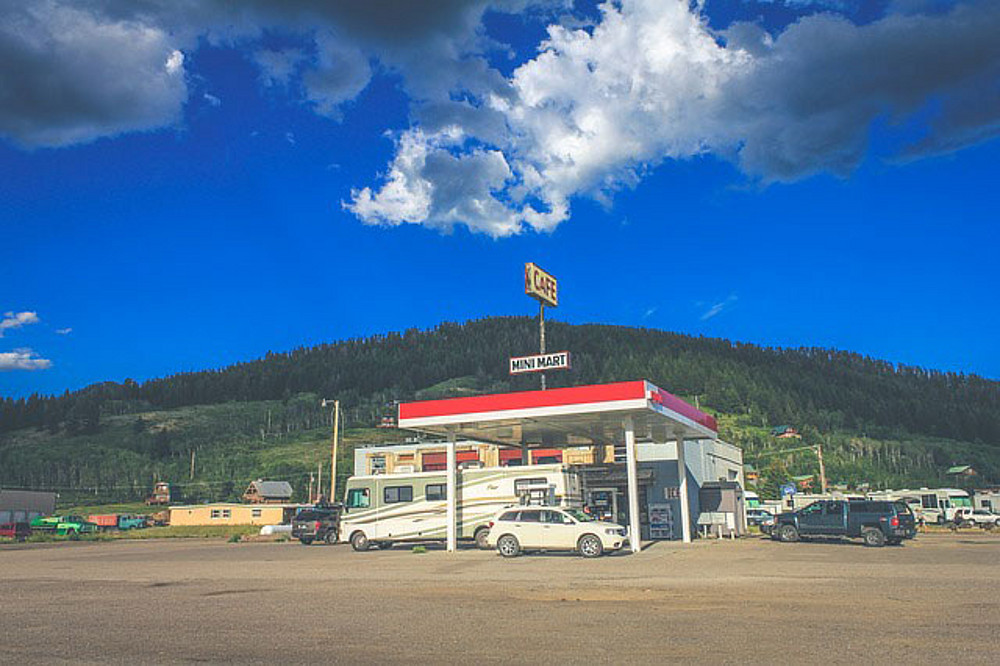
Tankstellen haben sich vom identitätslosen Nicht-Ort zum sozialen Treffpunkt entwickelt. Foto: Foundry/pixabay.com.

Tankstellen haben sich vom identitätslosen Nicht-Ort zum sozialen Treffpunkt entwickelt. Foto: Foundry/pixabay.com.

Wissenschafter erforscht die Tankstelle als Ort sozialer Begegnung

Nach der Diktion des französischen Anthropologen Marc Augé war die Tankstellen ein „Nicht-Ort“, ähnlich wie die Autobahnraststätte: Ein ungreifbarer, identitätsloser Platz für Durchreisende. Heute wird an der Tankstelle nicht nur bloß Treibstoff nachgefüllt und eine schnelle Jause gekauft – viel mehr ist sie für viele Personen eine wichtige Anlaufstelle, auch in ihrem Privat- und Sozialleben. Das Gasthaussterben begünstigte diese Entwicklung, erklärt Ao.Univ.-Prof.Dr. Helmut Eberhart vom Institut für Volkskunde und Kulturanthropologie der Karl-Franzens-Universität Graz: „Das klassische Beisl gibt es heute fast nicht mehr. Der Stammtisch wandert daher mehr und mehr auch in den Gastronomiebereich der Tankstellen und erfüllt dort dieselbe Funktion des geselligen Austauschs und Verweilens.“ Eberhart hat mit Studierenden dreier Lehrveranstaltungen über insgesamt drei Jahre 14 Tankstellen in Graz und zehn Tankstellen quer durch die Steiermark empirisch als Orte der Begegnung erforscht. Die Ergebnisse werden 2019 in einer Ausstellung im Volksskundemuseum Joanneum zu sehen sein.


Tankstellen stehen vor großen Herausforderungen: sinkende Einnahmen aus dem Spritverkauf sowie immer häufiger werdende Selbstbedienungs-Zapfsäulen und mit Elektrostrom betriebene Autos erschweren den PächterInnen das Leben. „Daher haben die meisten Tankstellen mittlerweile auch einen Markt sowie ein Café. Oft wirkt gerade letzteres sehr anziehend, weil soziale Unterschiede dort verschwimmen und in den Hintergrund treten“, erklärt Eberhart. Für das Personal bedeute die Erfüllung verschiedener Aufgaben nicht selten eine Mehrbelastung. „Gleichzeitig erleben sie ein enges Vertrauensverhältnis mit ihren StammkundInnen, fühlen sich für die Behebung kleinerer oder größerer Probleme zuständig und erhalten deshalb oft positives Feedback.“


Gemeinsam mit den Studierenden konzipierte Eberhart die Ausstellung, die sich unter anderem auch mit der Geschichte der Einrichtung befasst: Als erste Tankstelle der Welt gilt die Stadtapotheke Wiesloch im nördlichen Baden-Württemberg. Bertha Benz, die Ehefrau des Automobilpioniers Carl Benz, stoppte dort 1888 auf der ersten dokumentierten Überlandfahrt, weil ihr der Treibstoff ausging. In der Apotheke erstand sie den gesamten Vorrat des Leichtbezins Ligroin und konnte so ihre Fahrt fortsetzen. Auch in Kunst und Film, vor allem in Roadmovies, hat die Tankstelle einen fixen Platz.

created by Gerhild Kastrun

Related news

Studying at the University of Graz: How to enrol

Ready for a new chapter in your life with the start of your studies at the University of Graz in the winter semester 2026/27? Here you will find information on deadlines, admission procedures, registration, and everything else you need to successfully start your studies in the fall.

Interpreting data: Why studies sometimes get it wrong

Hilmar Brohmer and Ziva Korda from the Institute of Psychology, together with 500 international colleagues, have re-evaluated a hundred scientific publications and have often come to different conclusions.

Crystal-clear: AI method revolutionises solar observation

The Sun makes life on Earth possible. However, its magnetic fields can also cause massive disruption. This makes it all the more important to gain a better understanding of the processes taking place on our nearest star. A research team from the University of Graz and the High Altitude Observatory in Boulder (USA) has succeeded in doing just that. The astrophysicists have developed an AI-supported method that makes even the smallest structures on the Sun visible. The scientists are convinced that this will bring about a lasting change in solar observation and that the new method can be used for the planned European Solar Telescope.

Long Night of Research: How many languages are there in the world?

From a linguistic perspective, there are worlds of difference between Bern, Berlin and Vienna. A dialect impersonator will demonstrate live just how varied German can sound. How many languages are there in the world? What are their distinctive features? Which of these are spoken in Austria? These and other questions will be answered during the Long Night of Research at the University of Graz: on Friday, 24 April 2025, from 5 pm to 11 pm, in the University Library. Visitors can immerse themselves in the diversity of languages without travelling far by taking part in a quiz at the station.

Begin of page section:
Additional information:

University of Graz
Universitaetsplatz 3
8010 Graz
Austria
  • Contact
  • Web Editors
  • Moodle
  • UNIGRAZonline
  • Imprint
  • Data Protection Declaration
  • Accessibility Declaration
Weatherstation
Uni Graz

End of this page section. Go to overview of page sections

End of this page section. Go to overview of page sections

Begin of page section:

End of this page section. Go to overview of page sections