

Begin of page section:
Page sections:

  • Go to contents (Accesskey 1)
  • Go to position marker (Accesskey 2)
  • Go to main navigation (Accesskey 3)
  • Go to sub navigation (Accesskey 4)
  • Go to additional information (Accesskey 5)
  • Go to page settings (user/language) (Accesskey 8)
  • Go to search (Accesskey 9)

End of this page section. Go to overview of page sections

Begin of page section:
Page settings:

English en
Deutsch de
Search
Login

End of this page section. Go to overview of page sections

Begin of page section:
Search:

Search for details about Uni Graz
Close

End of this page section. Go to overview of page sections


Search

Begin of page section:
Main navigation:

Page navigation:

  • University

    University
    • About the University
    • Organisation
    • Faculties
    • Library
    • Working at University of Graz
    • Campus
    Developing solutions for the world of tomorrow - that is our mission. Our students and our researchers take on the great challenges of society and carry the knowledge out.
  • Research Profile

    Research Profile
    • Our Expertise
    • Research Questions
    • Research Portal
    • Promoting Research
    • Research Transfer
    • Ethics in Research
    Scientific excellence and the courage to break new ground. Research at the University of Graz creates the foundations for making the future worth living.
  • Studies

    Studies
    • Prospective Students
    • Students
  • Community

    Community
    • International
    • Location
    • Research and Business
    • Alumni
    The University of Graz is a hub for international research and brings together scientists and business experts. Moreover, it fosters the exchange and cooperation in study and teaching.
  • Spotlight
Topics
  • Sustainable University
  • Researchers answer
  • Work for us
Close menu

End of this page section. Go to overview of page sections

Begin of page section:
You are here:

University of Graz News Vom Nano-Auto bis zur Frühjahrsmüdigkeit

End of this page section. Go to overview of page sections

Wednesday, 26 April 2017

Vom Nano-Auto bis zur Frühjahrsmüdigkeit

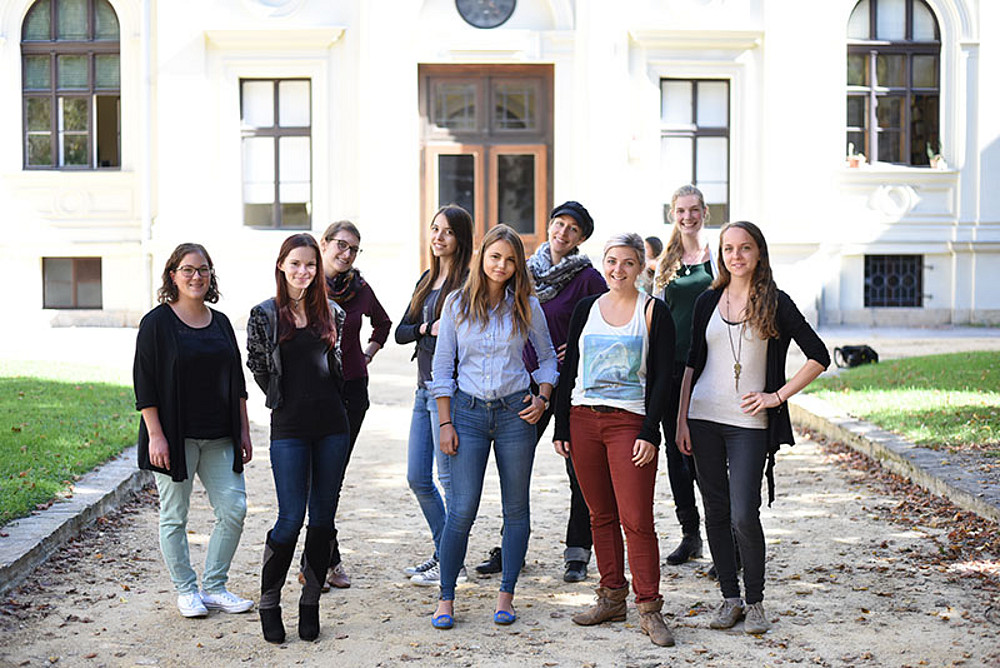
Das Team des Webradios meldet sich zurück aus der Osterpause. Foto: Uni Graz/Tzivanopoulos.

Das Team des Webradios meldet sich zurück aus der Osterpause. Foto: Uni Graz/Tzivanopoulos.

Auf Radio Soundportal sind die Webradio-Beiträge täglich einmal vormittags und einmal nachmittags zu hören: http://www.soundportal.at

Auf Radio Soundportal sind die Webradio-Beiträge täglich einmal vormittags und einmal nachmittags zu hören: http://www.soundportal.at

 Die Webradio-Beiträge werden mit dem Web-Service von Auphonic nachbearbeitet: htttp://auphonic.com

Die Webradio-Beiträge werden mit dem Web-Service von Auphonic nachbearbeitet: htttp://auphonic.com

Vier neue Webradio-Beiträge sind online

Das Webradio der Grazer Universitäten versorgt Studierende, MitarbeiterInnen, Lehrende, Forschende, Alumni sowie alle Interessierten wöchentlich mit vier Informationsbeiträgen. Spannende Forschungsgeschichten, interessante Veranstaltungstipps, aktuelle Neuigkeiten und vieles mehr in nur dreieinhalb Minuten pro Beitrag bietet das kostenlose Programm. Alle Beiträge bleiben online gespeichert, eignen sich dadurch auch zum Nachhören und stehen ebenfalls zum Download bereit. Zwei mal täglich sind sie außerdem auf Radio Soundportal.


Diese Woche im Programm: 


1) Forschung: "Vollgas im Nano-Auto". Diese Woche wird die Grazer Universität teil eines bis jetzt noch nie dagewesenen Spektakels: Beim ersten Nano-Autorennen der Welt wird aufgezeigt, was die Forschung im Bereich der Nano-Wissenschaften bereits möglich macht. Auf spielerische Art und Weise soll eine neue Sichtweise auf den Bereich gesetzt werden. Unter der Leitung von Leonhard Grill, Professor für Physikalische Chemie ist auch ein Grazer Team bei dem Rennen in Toulouse vertreten.


2) Bildung: "Wer war Erich Marckhl?" Das Leben von Erich Marckhl (1902–1980), Gründungspräsident der heutigen Kunstuniversität Graz, ist Thema eines Vortrags des deutschen Historikers Boris von Haken am 2. Mai um 17 Uhr im Palais Meran. Marckhls Verstrickungen in den Nationalsozialismus werden dabei ebenso beleuchtet wie die Frage, warum der Komponist und Musikwissenschafter trotzdem als Hochschulpolitiker bedeutsame Weichenstellungen für die KUG vornehmen konnte.


3) Campusleben: "Schon im Studium heiß begehrt". Das Center of Knowledge Interchange (CKI), das aus einer Kooperation zwischen TU Graz und Siemens entstanden ist, veranstaltet am 28. April 2017 in der Aula der TU Graz die zweite CKI-Konferenz. Im Zentrum der Veranstaltung liegt neben der Keynote zum Thema „e-Aircraft! Die Zukunft am Himmel“ die berufliche Zukunft bei Siemens. Die Konferenz ist an alle gerichtet, die Interesse an der Forschungs- und Arbeitswelt von Siemens haben.


4) Aktuell Gefragt: "Aufgewacht!" Jedes Jahr um dieselbe Zeit werden wir zum Frühlingsbeginn von einer bestimmten Erscheinung heimgesucht: Die allseits bekannte Frühjahrsmüdigkeit macht sich wieder bemerkbar. Maximilian Moser vom Institut für Physiologie der Med Uni Graz hat sich eingehend mit diesem Phänomen beschäftigt und erklärt, was es mit der jahreszeitbedingten Umstellung des Organismus auf sich hat und gibt Ratschläge, wie wir der Frühjahrsmüdigkeit die Stirn bieten können.

created by Gerhild Kastrun

Related news

AI in schools: Maria Bertel drafts legal guidelines for teachers

The legal expert and her team analysed the legal situation regarding the use of artificial intelligence in education as part of an EU project and answered open questions from practice.

Cosmetics in the environment: University of Graz proves danger to ants

Titanium dioxide, which is found in cosmetics, for example, is increasingly entering the environment in the form of nanoparticles. This could also put insects at risk. If ants ingest the substance in combination with the pesticide glyphosate, it disturbs the development of their offspring. Scientists at the University of Graz are drawing attention to the negative consequences of this toxic cocktail.

Varied and healthy: studies move

Exercise is the ideal way to balance out everyday stress, prevent illness and keep fit. Why this is the case, how to do it properly and what role human bodily functions and psychology play can be studied at the University of Graz.

Religious scholar Theresia Heimerl: Fasting as a spiritual boost

Fasting is not just a strategy for losing weight – it is a ritual dating back thousands of years with spiritual and evolutionary roots that has positive effects on the body. At the University of Graz, religious scholar Theresia Heimerl is investigating why fasting is a "spiritual boost".

Begin of page section:
Additional information:

University of Graz
Universitaetsplatz 3
8010 Graz
Austria
  • Contact
  • Web Editors
  • Moodle
  • UNIGRAZonline
  • Imprint
  • Data Protection Declaration
  • Accessibility Declaration
Weatherstation
Uni Graz

End of this page section. Go to overview of page sections

End of this page section. Go to overview of page sections

Begin of page section:

End of this page section. Go to overview of page sections