Begin of page section:
Page sections:

  • Go to contents (Accesskey 1)
  • Go to position marker (Accesskey 2)
  • Go to main navigation (Accesskey 3)
  • Go to sub navigation (Accesskey 4)
  • Go to additional information (Accesskey 5)
  • Go to page settings (user/language) (Accesskey 8)
  • Go to search (Accesskey 9)

End of this page section. Go to overview of page sections

Begin of page section:
Page settings:

English en
Deutsch de
Search
Login

End of this page section. Go to overview of page sections

Begin of page section:
Search:

Search for details about Uni Graz
Close

End of this page section. Go to overview of page sections


Search

Begin of page section:
Main navigation:

Page navigation:

  • University

    University
    • About the University
    • Organisation
    • Faculties
    • Library
    • Working at University of Graz
    • Campus
    Developing solutions for the world of tomorrow - that is our mission. Our students and our researchers take on the great challenges of society and carry the knowledge out.
  • Research Profile

    Research Profile
    • Our Expertise
    • Research Questions
    • Research Portal
    • Promoting Research
    • Research Transfer
    • Ethics in Research
    Scientific excellence and the courage to break new ground. Research at the University of Graz creates the foundations for making the future worth living.
  • Studies

    Studies
    • Prospective Students
    • Students
  • Community

    Community
    • International
    • Location
    • Research and Business
    • Alumni
    The University of Graz is a hub for international research and brings together scientists and business experts. Moreover, it fosters the exchange and cooperation in study and teaching.
  • Spotlight
Topics
  • Our digital Advent calendar
  • Sustainable University
  • Researchers answer
  • Work for us
Close menu

End of this page section. Go to overview of page sections

Begin of page section:
You are here:

University of Graz News Verbesserung oder Verbot?

End of this page section. Go to overview of page sections

Monday, 15 May 2017

Verbesserung oder Verbot?

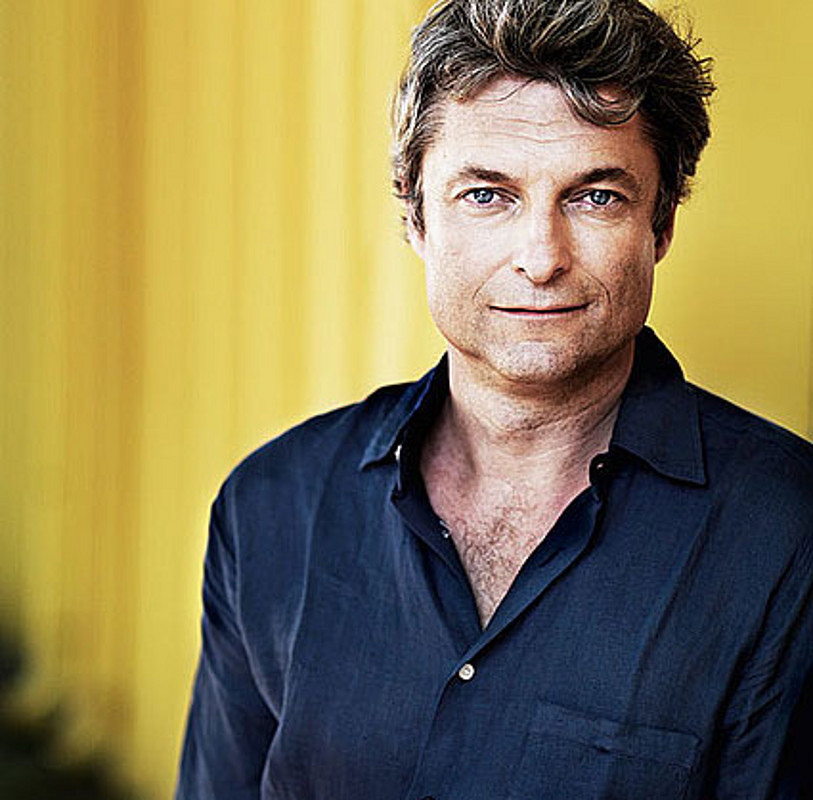
Alfred Dorfer liest am 26. Mai 2017 an der Uni Graz - zum bereits vierten Mal. Foto: Peter Rigaud.

Alfred Dorfer liest am 26. Mai 2017 an der Uni Graz - zum bereits vierten Mal. Foto: Peter Rigaud.

Alfred Dorfer liest am 26. Mai an der Uni Graz zur politischen Korrektheit

Ist William Shakespeares Tragödie „Othello“ rassistisch oder Wolfgang Amadeus Mozarts Singspiel „Die Entführung aus dem Serail“ sexistisch oder gar islamophob? Sollen lang gebräuchliche Kinderlieder wie „Drei Chinesen mit dem Kontrabass“ umgetextet werden? Ist die Politische Korrektheit ein sinnvolles Korrektiv alteingesessener Diskriminierungen oder schränkt sie Kunst, Kultur sowie das öffentliche Schreiben und Sprechen massiv ein? Diesen Fragen widmet sich der Kabarettist, Autor und promovierte Theaterwissenschafter Alfred Dorfer in einer öffentlichen Seminarstunde und Lesung am Freitag, 26. Mai 2017, um 11:30 Uhr an der Karl-Franzens-Universität. Bereits zum vierten Mal wirkt Dorfer auf Einladung der Germanistin Ao.Univ.-Prof. Dr. Beatrix Müller-Kampel an einer Veranstaltung des fächerübergreifenden Forschungs-, Lehr- und Dokumentationsschwerpunkts „LiTheS. Literatur- und Theatersoziologie“ mit.


Die Lesung von Alfred Dorfer ist der Höhepunkt der dreitägigen Konferenz, die Univ.-Prof. Dr. Manfred Prisching, renommierter Soziologe an der Universität Graz, am 25. Mai 2017 um 14:30 Uhr mit einem Vortrag zur heutigen „Verbotsgesellschaft“ eröffnet. Weitere Vorträge von namhaften internationalen ForscherInnen behandeln das alttestamentliche Bilderverbot oder die von der Zensur betroffenen MarionettenspielerInnen in Deutschland von der Aufklärung bis zur DDR. Auch dem so genannten „Gendern“ wird nachgespürt: Sind Binnen-I und Co. moralisch korrekt und sprachpolitisch geboten, in der Ausführung jedoch fanatisch übertrieben? „Müssen wir uns heute mehr vor der politischen Korrektheit und ihren AnhängerInnen fürchten als die KünstlerInnen vergangener Zeit vor der Zensur, die Staat und Klerus ihnen aufzwangen?“, stellt Müller-Kampel die Gretchenfrage des Symposiums.
Die Tagung ist öffentlich, kostenlos und Teil des Bachelorseminars „Das Politische, das Korrekte und die Zensur. Beispiele aus der Neueren deutschen Literatur- und Theatergeschichte“ des Sommersemesters 2017.


Mit kommentierter Lesung:„Politisch (un-)korrekter (Un-)Sinn“ von Alfred Dorfer am Freitag, 26. Mai, um 11:30 Uhr
ZEIT: von Donnerstag, 25. Mai 2017, bis Samstag, 27. Mai 2017
ORT: Universität Graz, Hauptgebäude, 1. Stock, Hörsaal 01.18


Es ist keine Anmeldung erforderlich.

created by Gerhild Kastrun

Related news

Rector Peter Riedler: Starting the year with confidence

In 2026, we will continue to work consistently on positioning the University of Graz as a relevant player in Europe, while at the same time focusing on a modern, sustainable and climate-friendly university campus. When new digital applications are rolled out in January, we will not only create a stable and secure IT environment, but also modern working and studying conditions for future generations. Peter Rielder, Rector of the University of Graz

Uni Vibes 2026: the campus festival that transcends borders again

On 29 May 2026, it's that time again: the University of Graz celebrates, dances and vibrates. The campus will become a stage for art, science and music.

Setback: Austria's greenhouse gas emissions rise in 2025

Climate protection is currently facing an uphill battle. The United Nations have recently been unable to agree on a roadmap for phasing out fossil fuels, even though global warming continues to accelerate. Also Austria still does not have a national climate law with a clear target path for reducing emissions. This is evidently taking its toll: Austria’s greenhouse gas emissions rose again in 2025 for the first time in years, by around two and a half percent, according to calculations by researchers at the University of Graz. In addition to overly cautious climate action measures, this is due to somewhat colder winter months compared to 2024, which are driving up natural gas consumption.

Profound: Geoscientist Marko Bermanec deciphers processes of the Earth's plates

What happens deep down is very important to us above ground. Especially when hidden chemical processes between tectonic plates have serious consequences. Earth scientist Marko Bermanec investigates these processes in depth.

Begin of page section:
Additional information:

University of Graz
Universitaetsplatz 3
8010 Graz
Austria
  • Contact
  • Web Editors
  • Moodle
  • UNIGRAZonline
  • Imprint
  • Data Protection Declaration
  • Accessibility Declaration
Weatherstation
Uni Graz

End of this page section. Go to overview of page sections

End of this page section. Go to overview of page sections

Begin of page section:

End of this page section. Go to overview of page sections