Begin of page section:
Page sections:

  • Go to contents (Accesskey 1)
  • Go to position marker (Accesskey 2)
  • Go to main navigation (Accesskey 3)
  • Go to sub navigation (Accesskey 4)
  • Go to additional information (Accesskey 5)
  • Go to page settings (user/language) (Accesskey 8)
  • Go to search (Accesskey 9)

End of this page section. Go to overview of page sections

Begin of page section:
Page settings:

English en
Deutsch de
Search
Login

End of this page section. Go to overview of page sections

Begin of page section:
Search:

Search for details about Uni Graz
Close

End of this page section. Go to overview of page sections


Search

Begin of page section:
Main navigation:

Page navigation:

  • University

    University
    • About the University
    • Organisation
    • Faculties
    • Library
    • Working at University of Graz
    • Campus
    Developing solutions for the world of tomorrow - that is our mission. Our students and our researchers take on the great challenges of society and carry the knowledge out.
  • Research Profile

    Research Profile
    • Our Expertise
    • Research Questions
    • Research Portal
    • Promoting Research
    • Research Transfer
    • Ethics in Research
    • Commission for Scientific Integrity
    Scientific excellence and the courage to break new ground. Research at the University of Graz creates the foundations for making the future worth living.
  • Studies

    Studies
    • Prospective Students
    • Students
    • Registration for Study Programme (Winter semester 2026/27)
    • Study Days 22-26 June 2026
  • Community

    Community
    • International
    • Location
    • Research and Business
    • Alumni
    The University of Graz is a hub for international research and brings together scientists and business experts. Moreover, it fosters the exchange and cooperation in study and teaching.
Topics
  • Sustainable University
  • Researchers answer
  • Work for us
Close menu

End of this page section. Go to overview of page sections

Begin of page section:
You are here:

University of Graz News Variantenreich

End of this page section. Go to overview of page sections

Tuesday, 10 May 2022

Variantenreich

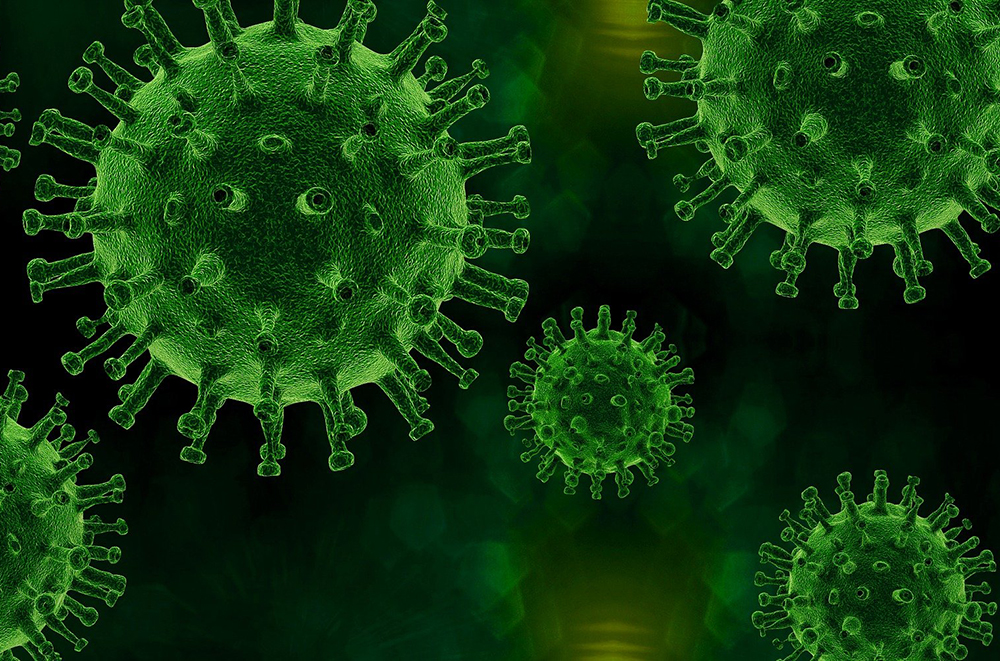
Die extreme Anhäufung von Mutationen des Corona-Virus lieferte einem ForscherInnen-Team Aufschlüsse für die Entwicklung weiterer Impfstoffe. Foto: pixabay

Die extreme Anhäufung von Mutationen des Corona-Virus lieferte einem ForscherInnen-Team Aufschlüsse für die Entwicklung weiterer Impfstoffe. Foto: pixabay

Corona-Virus mit Turbo: Mehrfach-Mutationen an denselben Stellen

An Delta, Omikron und anderen Coronavirus-Varianten waren ja schon viele in den vergangenen zwei Jahren erkrankt. Meistens in zeitlichen Abständen. Mit gleich 18 Mutationen war eine Patientin mit einem geschwächten Immunsystem über sieben Monate hindurch infiziert. Diese extreme Anhäufung lieferte einem internationalen ForscherInnen-Team mit Beteiligung der Universität Graz mögliche Aufschlüsse für die Entwicklung weiterer Impfstoffe. Die WissenschafterInnen stellten fest, dass sich das Virus stets an denselben Stellen verändert, daher leichter mit unseren Zellen interagiert und die Körperabwehr umgeht.

Gleich vorweg: Die Impfung hat auch bei der einst stark infizierten Frau erfolgreich gewirkt. Sie ist mittlerweile gesund. Zuvor war SARS-CoV-2 seit dem Frühjahr 2020 – also kurz nach Beginn der Pandemie – in ein und demselben Körper, der den Erreger aufgrund eines Immundefekts nicht bekämpfen konnte, immer wieder mutiert.
Diese Entwicklung hat ein Team aus VirologInnen, InfektiologInnen und EvolutionsbiologInnen aus Osttirol, Innsbruck, Würzburg, Frankfurt und Graz genau verfolgt. 18 neue Varianten konnten im Zuge der Studie nachgewiesen werden, darunter 15 Mutationen, die wie etwa Omikron erst später weltweit bekannt und als risikoreich eingestuft wurden.
Die ForscherInnen – darunter die Evolutionsbiologen Christian Sturmbauer und Stephan Koblmüller von der Uni Graz – kommen in der soeben erschienenen Publikation in Nature Communications zum Schluss, dass das Virus unter dem Druck des menschlichen Immunsystems mehrfach und unabhängig an denselben Positionen des Oberflächenproteins zu mutieren scheint. Diese Erkenntnis ist besonders wertvoll, wenn es darum geht, Angriffspunkte für zukünftige Impfstoffe und Therapeutika zu finden.

Publikation
Cumulative SARS-CoV-2 mutations and corresponding changes in immunity in an immunocompromised patient indicate viral evolution within the host
Sonnleitner, S. Th., Prelog, M., Hinterbichler, E., Halbfurter, H., Kopecky, D. B. C., Almanzar, G., Koblmüller, S., Sturmbauer, C., Posch, W. & Gernot Walder G. (2022). Nature Communications


created by Andreas Schweiger

Related news

Full effort in the heat: the Sports Centre was in full swing at the Kleeblattlauf

On 19 June 2026, 2,000 runners and hundreds of supporters made their way to the Rosenhain for a sporting end-of-term event.

Save, invest or guarantee: What Austrians expect from the state

Austria needs to make savings. But where? And what should the Republic actually be spending its money on? The answers are provided by the initial findings of a major study involving the University of Graz. 99 per cent of those surveyed are in favour of the state ensuring healthcare provision. Almost three-quarters would like to see more public funding for education, whilst only around three per cent are in favour of cuts in this sector.

Complying with the norm: Why Do Standards Shape Our Lives, Elisabeth Staudegger?

Standards determine whether a sheet of paper fits in a printer or whether a charging plug can power multiple devices. These standards shape our everyday lives. But who actually sets these standards? Where are the weaknesses, and how could science help to improve them? Elisabeth Staudegger, Head of the ‘Law and IT’ Department at the Institute for Legal Foundations at the University of Graz, host the Academic Standards Day on 16 June. Here she relays how sciences can contribute to the topic of standardisation and reveals her personal favourite standard.

Wegweisend

Uni-Graz-ForscherInnen wollen Covid-Mutationen vorhersagen

Begin of page section:
Additional information:

University of Graz
Universitaetsplatz 3
8010 Graz
Austria
  • Contact
  • Web Editors
  • Moodle
  • UNIGRAZonline
  • Imprint
  • Data Protection Declaration
  • Accessibility Declaration
Weatherstation
Uni Graz

End of this page section. Go to overview of page sections

End of this page section. Go to overview of page sections

Begin of page section:

End of this page section. Go to overview of page sections