Begin of page section:
Page sections:

  • Go to contents (Accesskey 1)
  • Go to position marker (Accesskey 2)
  • Go to main navigation (Accesskey 3)
  • Go to sub navigation (Accesskey 4)
  • Go to additional information (Accesskey 5)
  • Go to page settings (user/language) (Accesskey 8)
  • Go to search (Accesskey 9)

End of this page section. Go to overview of page sections

Begin of page section:
Page settings:

English en
Deutsch de
Search
Login

End of this page section. Go to overview of page sections

Begin of page section:
Search:

Search for details about Uni Graz
Close

End of this page section. Go to overview of page sections


Search

Begin of page section:
Main navigation:

Page navigation:

  • University

    University
    • About the University
    • Organisation
    • Faculties
    • Library
    • Working at University of Graz
    • Campus
    Developing solutions for the world of tomorrow - that is our mission. Our students and our researchers take on the great challenges of society and carry the knowledge out.
  • Research Profile

    Research Profile
    • Our Expertise
    • Research Questions
    • Research Portal
    • Promoting Research
    • Research Transfer
    • Ethics in Research
    Scientific excellence and the courage to break new ground. Research at the University of Graz creates the foundations for making the future worth living.
  • Studies

    Studies
    • Prospective Students
    • Students
  • Community

    Community
    • International
    • Location
    • Research and Business
    • Alumni
    The University of Graz is a hub for international research and brings together scientists and business experts. Moreover, it fosters the exchange and cooperation in study and teaching.
  • Spotlight
Topics
  • Our digital Advent calendar
  • Sustainable University
  • Researchers answer
  • Work for us
Close menu

End of this page section. Go to overview of page sections

Begin of page section:
You are here:

University of Graz News True crime: psychologist identifies reasons for the fascination of the genre

End of this page section. Go to overview of page sections

Thursday, 06 February 2025

True crime: psychologist identifies reasons for the fascination of the genre

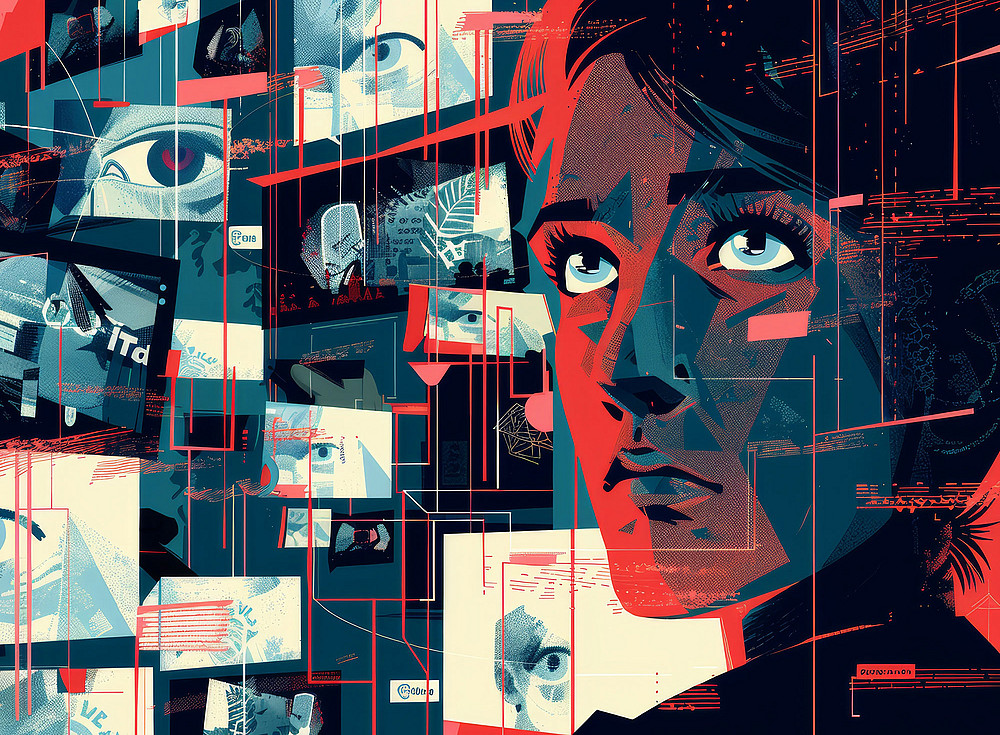
Abstracted image of a woman's face, behind it surfaces with various cut-outs, including eyes, connected by lines ©Dina - stock.adobe.com

Why does someone become a perpetrator? Understanding this was most frequently cited as a motive for true crime consumption in the survey conducted by the University of Graz. Photo: Dina - stock.adobe.com

True crime documentaries, series and podcasts about real crimes have many fans. What is it that makes this genre so fascinating? Is it the insights into the dark side of the human psyche or into meticulous investigations? Or is it that dealing with crime trains our ability to cope with fear? These and other questions are being asked by psychologist Corinna Perchtold-Stefan in a research project. The first results are already available.


Yes, it is mainly women who are captivated by true crime. This result of earlier studies in the Anglo-American area could now be confirmed for Austria by a study at the University of Graz. But that is not all that psychologists at the University of Graz want to know. In an online survey of around 600 people, they asked, among other things, about their motives for dealing with real crime cases. The average true crime consumption was around seven hours per week for women and around four hours per week for men. "75 per cent of the respondents said they wanted to understand the psychology behind the terrible acts. 30 per cent cited general curiosity as a motive, and almost 28 per cent a fundamental interest in the justice system, in police work and in criminal investigations," summarises project manager Corinna Perchtold-Stefan.

Making the incomprehensible comprehensible
The motive cited by most study participants shows: "True crime consumption is related to the need to resolve uncertainty. Investigating the crime, trying to understand it, makes the danger more tangible and thus more bearable. It gives you the feeling of knowing the threat and thus being better prepared for it in everyday life," explains Perchtold-Stefan.

The psychologists also looked inside the brains of 130 true crime fans in the MR scanner. "We saw that they had a particularly large number of connections in the regions associated with the need to experience, learn and understand new things. The same applies to brain regions associated with a sense of justice and moral considerations, empathy and creative emotion regulation," reports the project manager. The latter refers to the ability to control emotional states.

"True crime fans show a higher ability to deal with anxiety and stress in their daily lives. This could indicate a training mechanism through the playful engagement with crime," says Perchtold-Stefan. However, further studies are needed to test this hypothesis. The aim is to conduct a longitudinal study: "We want to observe how experience and behaviour, sense of security, aggressiveness and the way emotions are dealt with develop over the years," the psychologist plans. Does the intensive study of true crime make people more paranoid, stressed or aggressive? Or can it help some people to better manage anxiety and stress? Perchtold-Stefan hopes to answer these questions with longer-term research.

The project "Horror as a creative emotion regulation" is the first large-scale empirical study on true crime consumption. It was funded by the "Unconventional Research" programme of the Province of Styria.

created by Gudrun Pichler

Related news

Chemical Christmas show at the University of Graz: An explosive evening at the Schauspielh

At the beginning of December, the University of Graz transformed the theater into a laboratory: as part of “Chemical Life,” teacher training students staged a chemical Christmas show for Styrian school classes—complete with ethanol rockets, nitrogen snow, and glowing effects. An evening designed to inspire interest in studying chemistry.

Train by train: Koralm railway accelerates exchange between the Universities

Lectures at the University of Klagenfurt in the morning, seminars at the University of Graz in the afternoon: Austria's longest tunnel and a journey time of around 45 minutes make it easy. The Koralm railway increases the speed of networking between the two university locations. The collaboration builds on existing cooperation - for example in the areas of teacher training, Slavic studies and as employers, the universities are well coordinated.

On the trail of the Big Bang: University of Graz receives 1.5 million euros for doctoral programmes

The Austrian Science Fund FWF has selected the Doctoral Programme in Theoretical Particle Physics at the University of Graz for funding from the Doc.funds. Six young scientists will be funded for 3.5 years. They will gain fundamentally new insights into the origins of the world.

From trans women and knee prostheses: sports science prizes awarded

Walking better with a prosthesis, successfully getting rid of excess weight, training more effectively, more fairness for trans people in sport: these were the topics addressed by the students at the University of Graz who were awarded the sports science prizes for their Master's theses on 3 December 2025.

Begin of page section:
Additional information:

University of Graz
Universitaetsplatz 3
8010 Graz
Austria
  • Contact
  • Web Editors
  • Moodle
  • UNIGRAZonline
  • Imprint
  • Data Protection Declaration
  • Accessibility Declaration
Weatherstation
Uni Graz

End of this page section. Go to overview of page sections

End of this page section. Go to overview of page sections

Begin of page section:

End of this page section. Go to overview of page sections