Begin of page section:
Page sections:

  • Go to contents (Accesskey 1)
  • Go to position marker (Accesskey 2)
  • Go to main navigation (Accesskey 3)
  • Go to sub navigation (Accesskey 4)
  • Go to additional information (Accesskey 5)
  • Go to page settings (user/language) (Accesskey 8)
  • Go to search (Accesskey 9)

End of this page section. Go to overview of page sections

Begin of page section:
Page settings:

English en
Deutsch de
Search
Login

End of this page section. Go to overview of page sections

Begin of page section:
Search:

Search for details about Uni Graz
Close

End of this page section. Go to overview of page sections


Search

Begin of page section:
Main navigation:

Page navigation:

  • University

    University
    • About the University
    • Organisation
    • Faculties
    • Library
    • Working at University of Graz
    • Campus
    Developing solutions for the world of tomorrow - that is our mission. Our students and our researchers take on the great challenges of society and carry the knowledge out.
  • Research Profile

    Research Profile
    • Our Expertise
    • Research Questions
    • Research Portal
    • Promoting Research
    • Research Transfer
    • Ethics in Research
    Scientific excellence and the courage to break new ground. Research at the University of Graz creates the foundations for making the future worth living.
  • Studies

    Studies
    • Prospective Students
    • Students
  • Community

    Community
    • International
    • Location
    • Research and Business
    • Alumni
    The University of Graz is a hub for international research and brings together scientists and business experts. Moreover, it fosters the exchange and cooperation in study and teaching.
  • Spotlight
Topics
  • Our digital Advent calendar
  • Sustainable University
  • Researchers answer
  • Work for us
Close menu

End of this page section. Go to overview of page sections

Begin of page section:
You are here:

University of Graz News Building blocks for new medications

End of this page section. Go to overview of page sections

Tuesday, 19 March 2019

Building blocks for new medications

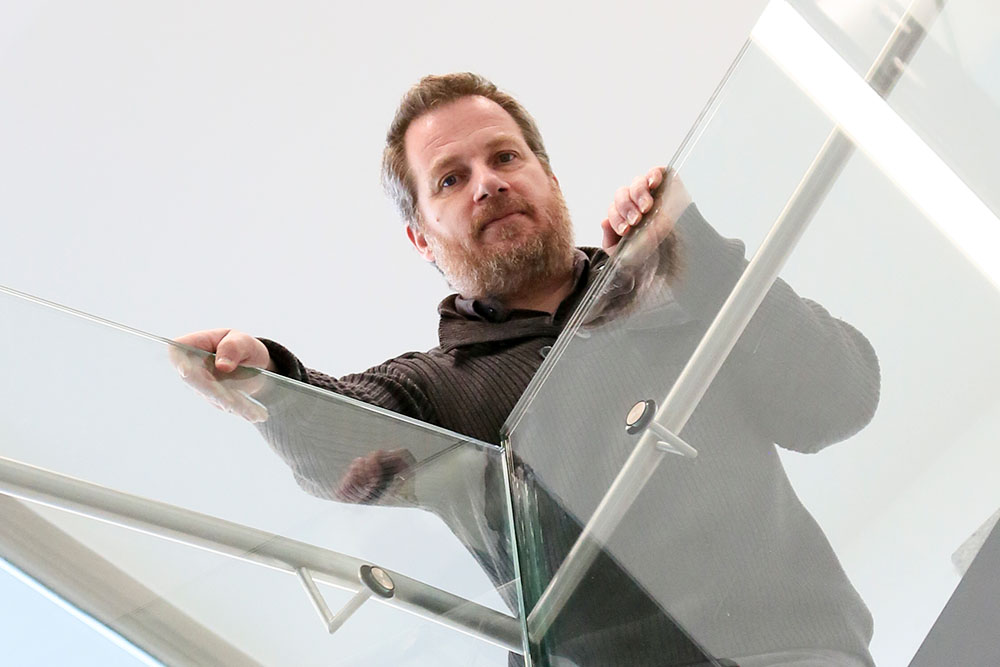
Werner Seebacher has discovered an alternative reaction pathway to synthesise new kinds of piperidin-4-ones that have the potential to significantly increase the range of therapeutic options they offer. Photo: University of Graz/Tzivanopoulos

Werner Seebacher has discovered an alternative reaction pathway to synthesise new kinds of piperidin-4-ones that have the potential to significantly increase the range of therapeutic options they offer. Photo: University of Graz/Tzivanopoulos

The University of Graz is seeking a technology partner to manufacture promising pharmaceutical components

Painkillers and cancer medications, psychotherapeutic drugs, allergy medications – many substances used in the medical sciences are manufactured with the help of piperidin-4-ones. These are intermediates created by reactions with derivatives of ammonia. Werner Seebacher from the Institute of Pharmaceutical Sciences at the University of Graz has discovered an alternative reaction pathway to synthesise new kinds of piperidin-4-ones that have the potential to significantly increase the range of therapeutic options they offer. The University of Graz is currently looking for a partner from the pharmaceutical industry to realise the potential of this technology.

The opiod fentanyl, which is used in anaesthesia and in the treatment of acute and chronic pain, is one of the most important drugs made with piperidin-4-ones. However, these intermediates are also essential for the manufacture of numerous other drugs with a wide range of medical applications.
“The synthesis technology we have developed gives us access to variants of piperidin-4-ones that cannot be obtained using traditional reaction pathways”, explains Werner Seebacher. “What is special about our piperidin-4-ones is that they can be further modified as required. This opens up a range of new therapeutic possibilities”, says Seebacher, emphasising the significance of this technology, for which a European patent is now pending.

Further research is needed to discover exactly what those possibilities are. The University of Graz is currently looking for an industrial partner to produce these promising molecular components on a large scale and to press ahead with their development into new substances.

>> technology offer

[Translate to English:]

[Translate to English:]

[Translate to English:]

[Translate to English:]

[Translate to English:]

[Translate to English:]

created by Gudrun Pichler

Related news

Semester abroad without barriers: University of Graz wins award for promoting inclusion

The University of Graz has been awarded the Internationalization Award for its new inclusion initiative. Students with fewer opportunities now also receive financial support for their semester abroad outside Europe.

Fair distribution: Researchers determine just greenhouse gas budgets for all EU regions

Ten years ago, on 12 December 2015, the Paris Climate Agreement was signed at the UN Climate Conference. In order to limit global warming to well below two degrees, only a certain amount of CO2 may be emitted worldwide. While the focus was originally on national emission targets, more than 200 subnational regions and almost 300 cities have now adopted their own targets. But how many emissions are they fairly entitled to? Researchers at the University of Graz have now developed transparent criteria for fair distribution at the subnational level for the first time and determined corresponding greenhouse gas budgets for all European regions. The paper was published today in the scientific journal Nature Communications.

Chemical Christmas show at the University of Graz: An explosive evening at the Schauspielh

At the beginning of December, the University of Graz transformed the theater into a laboratory: as part of “Chemical Life,” teacher training students staged a chemical Christmas show for Styrian school classes—complete with ethanol rockets, nitrogen snow, and glowing effects. An evening designed to inspire interest in studying chemistry.

Train by train: Koralm railway accelerates exchange between the Universities

Lectures at the University of Klagenfurt in the morning, seminars at the University of Graz in the afternoon: Austria's longest tunnel and a journey time of around 45 minutes make it easy. The Koralm railway increases the speed of networking between the two university locations. The collaboration builds on existing cooperation - for example in the areas of teacher training, Slavic studies and as employers, the universities are well coordinated.

Begin of page section:
Additional information:

University of Graz
Universitaetsplatz 3
8010 Graz
Austria
  • Contact
  • Web Editors
  • Moodle
  • UNIGRAZonline
  • Imprint
  • Data Protection Declaration
  • Accessibility Declaration
Weatherstation
Uni Graz

End of this page section. Go to overview of page sections

End of this page section. Go to overview of page sections

Begin of page section:

End of this page section. Go to overview of page sections