Begin of page section:
Page sections:

  • Go to contents (Accesskey 1)
  • Go to position marker (Accesskey 2)
  • Go to main navigation (Accesskey 3)
  • Go to sub navigation (Accesskey 4)
  • Go to additional information (Accesskey 5)
  • Go to page settings (user/language) (Accesskey 8)
  • Go to search (Accesskey 9)

End of this page section. Go to overview of page sections

Begin of page section:
Page settings:

English en
Deutsch de
Search
Login

End of this page section. Go to overview of page sections

Begin of page section:
Search:

Search for details about Uni Graz
Close

End of this page section. Go to overview of page sections


Search

Begin of page section:
Main navigation:

Page navigation:

  • University

    University
    • About the University
    • Organisation
    • Faculties
    • Library
    • Working at University of Graz
    • Campus
    Developing solutions for the world of tomorrow - that is our mission. Our students and our researchers take on the great challenges of society and carry the knowledge out.
  • Research Profile

    Research Profile
    • Our Expertise
    • Research Questions
    • Research Portal
    • Promoting Research
    • Research Transfer
    • Ethics in Research
    Scientific excellence and the courage to break new ground. Research at the University of Graz creates the foundations for making the future worth living.
  • Studies

    Studies
    • Prospective Students
    • Students
  • Community

    Community
    • International
    • Location
    • Research and Business
    • Alumni
    The University of Graz is a hub for international research and brings together scientists and business experts. Moreover, it fosters the exchange and cooperation in study and teaching.
  • Spotlight
Topics
  • Our digital Advent calendar
  • Sustainable University
  • Researchers answer
  • Work for us
Close menu

End of this page section. Go to overview of page sections

Begin of page section:
You are here:

University of Graz News Out of control

End of this page section. Go to overview of page sections

Tuesday, 21 May 2019

Out of control

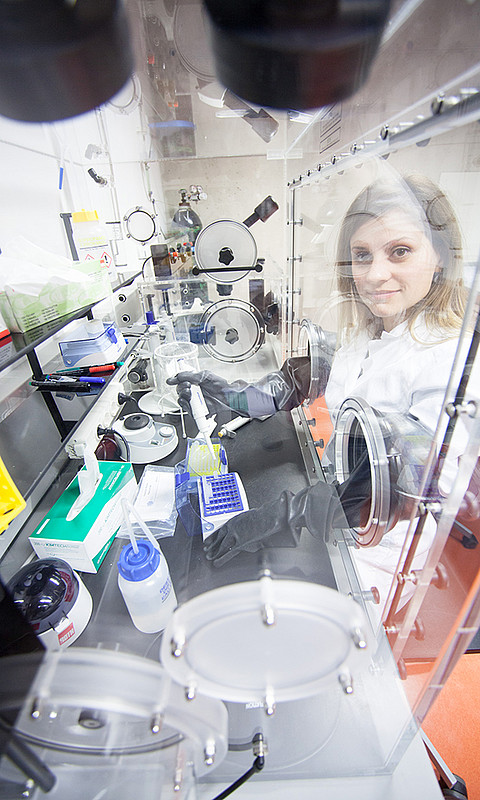
Foto: Lukas Grumet.

Foto: Lukas Grumet.

Researchers find out how viral infections cause cachexia

Many patients with chronic illnesses such as AIDS, tuberculosis or autoimmune diseases suffer from a mysterious additional disease: cachexia.  It affects approximately 80 percent of cancer patients. This highly complex and poorly understood syndrome results in uncontrolled weight loss and muscular dystrophy; it has a significant impact on the likelihood of premature death. Despite the enormous need for clinical care, the standards for diagnosing and treating patients with cachexia continue to be insufficient, and the options for effective treatment are limited. 

In cooperation with researchers from the University of Graz, the Medical University of Vienna as well as partners from Germany, Switzerland and the US, a research group headed by Andreas Bergthaler from the Austrian Academy of Sciences’ Centre for Molecular Medicine (CeMM) has now analysed a mechanism which explains how chronic viral infections can lead to cachexia. The results of the study have been published in the most recent edition of Nature Immunology. 


Restructured adipose tissue
Researchers were able to identify key molecular players that lead to cachexia in people suffering from chronic infections. Their research shows that the viral infections caused a drastic reorganisation of the architecture of adipose tissue. This was associated with the activation of lipolysis, a wave of molecular processes which cause the body to use up its fat reserves. According to Hatoon Baazim, a doctoral student at CeMM and the first author of the study, ‘What was surprising was that none of the inflammatory mediators known to cause cachexia in cancer patients played a role in our study’.

T-killer cells influence the development of virally induced cachexia
During the course of their analyses of other potential mechanisms, the researchers concluded that one particular type of cell in the body’s immune system was responsible for causing cachexia: CD8-T-cells. Also known as T-killer cells, these immune cells normally recognise when cells have been infected with a virus or have become cancerous; they then destroy these cells. The study was able to show for the first time that CD8-T-cells played a fundamental role in triggering cachexia in infections. Additional signals from the antiviral cytokine known as Interferon type I, a neurotransmitter produced by the body’s immune system, as well as recognition of the virus by CD8-T-cells play an important role in this mechanism. ‘Virally induced cachexia differs from carcinogenically induced cachexia in two ways: its reversibility on the one hand and, on the other hand, the fact that it is not triggered by the cytokines typically associated with infections. Rather, it is the body’s immune response to the virus, the T cells, which induce a change in adipose tissue leading to a complete depletion of fat reserves. If the immune response is inhibited during the viral infection, this could protect patients from cachexia’, explains Martina Schweiger from the Institute of Molecular Biosciences at the University of Graz. She and Rudolf Zechner were actively involved in the publication. 

Innovative therapeutic strategies
This study provides the international research community with a valuable tool for additional research on the molecular mechanisms of cachexia. It can contribute to a better understanding of infections such as AIDS, tuberculosis, malaria and other parasitic diseases which cause cachexia. This new knowledge from basic research could lead to the development of innovative therapeutic strategies to combat cachexia and the life-threatening chronic illnesses associated with it.  The study was sponsored by the European Research Council (ERC), the Austrian Academy of Sciences, the Austrian Science Fund (FWF), the German Research Foundation (DFG) and the US National Institutes of Health.

Publication: Baazim, Schweiger et.al.: CD8+ T cells induce cachexia during chronic viral infection, Nature Immunology (20.5.2019). DOI: DOI: 10.1038 / s41590-019-0397-y

created by Gerhild Leljak

Related news

Fair distribution: Researchers determine just greenhouse gas budgets for all EU regions

Ten years ago, on 12 December 2015, the Paris Climate Agreement was signed at the UN Climate Conference. In order to limit global warming to well below two degrees, only a certain amount of CO2 may be emitted worldwide. While the focus was originally on national emission targets, more than 200 subnational regions and almost 300 cities have now adopted their own targets. But how many emissions are they fairly entitled to? Researchers at the University of Graz have now developed transparent criteria for fair distribution at the subnational level for the first time and determined corresponding greenhouse gas budgets for all European regions. The paper was published today in the scientific journal Nature Communications.

Chemical Christmas show at the University of Graz: An explosive evening at the Schauspielh

At the beginning of December, the University of Graz transformed the theater into a laboratory: as part of “Chemical Life,” teacher training students staged a chemical Christmas show for Styrian school classes—complete with ethanol rockets, nitrogen snow, and glowing effects. An evening designed to inspire interest in studying chemistry.

Train by train: Koralm railway accelerates exchange between the Universities

Lectures at the University of Klagenfurt in the morning, seminars at the University of Graz in the afternoon: Austria's longest tunnel and a journey time of around 45 minutes make it easy. The Koralm railway increases the speed of networking between the two university locations. The collaboration builds on existing cooperation - for example in the areas of teacher training, Slavic studies and as employers, the universities are well coordinated.

On the trail of the Big Bang: University of Graz receives 1.5 million euros for doctoral programmes

The Austrian Science Fund FWF has selected the Doctoral Programme in Theoretical Particle Physics at the University of Graz for funding from the Doc.funds. Six young scientists will be funded for 3.5 years. They will gain fundamentally new insights into the origins of the world.

Begin of page section:
Additional information:

University of Graz
Universitaetsplatz 3
8010 Graz
Austria
  • Contact
  • Web Editors
  • Moodle
  • UNIGRAZonline
  • Imprint
  • Data Protection Declaration
  • Accessibility Declaration
Weatherstation
Uni Graz

End of this page section. Go to overview of page sections

End of this page section. Go to overview of page sections

Begin of page section:

End of this page section. Go to overview of page sections