Begin of page section:
Page sections:

  • Go to contents (Accesskey 1)
  • Go to position marker (Accesskey 2)
  • Go to main navigation (Accesskey 3)
  • Go to sub navigation (Accesskey 4)
  • Go to additional information (Accesskey 5)
  • Go to page settings (user/language) (Accesskey 8)
  • Go to search (Accesskey 9)

End of this page section. Go to overview of page sections

Begin of page section:
Page settings:

English en
Deutsch de
Search
Login

End of this page section. Go to overview of page sections

Begin of page section:
Search:

Search for details about Uni Graz
Close

End of this page section. Go to overview of page sections


Search

Begin of page section:
Main navigation:

Page navigation:

  • University

    University
    • About the University
    • Organisation
    • Faculties
    • Library
    • Working at University of Graz
    • Campus
    Developing solutions for the world of tomorrow - that is our mission. Our students and our researchers take on the great challenges of society and carry the knowledge out.
  • Research Profile

    Research Profile
    • Our Expertise
    • Research Questions
    • Research Portal
    • Promoting Research
    • Research Transfer
    • Ethics in Research
    Scientific excellence and the courage to break new ground. Research at the University of Graz creates the foundations for making the future worth living.
  • Studies

    Studies
    • Prospective Students
    • Students
  • Community

    Community
    • International
    • Location
    • Research and Business
    • Alumni
    The University of Graz is a hub for international research and brings together scientists and business experts. Moreover, it fosters the exchange and cooperation in study and teaching.
  • Spotlight
Topics
  • Our digital Advent calendar
  • Sustainable University
  • Researchers answer
  • Work for us
Close menu

End of this page section. Go to overview of page sections

Begin of page section:
You are here:

University of Graz News Stress im Cockpit

End of this page section. Go to overview of page sections

Wednesday, 28 June 2017

Stress im Cockpit

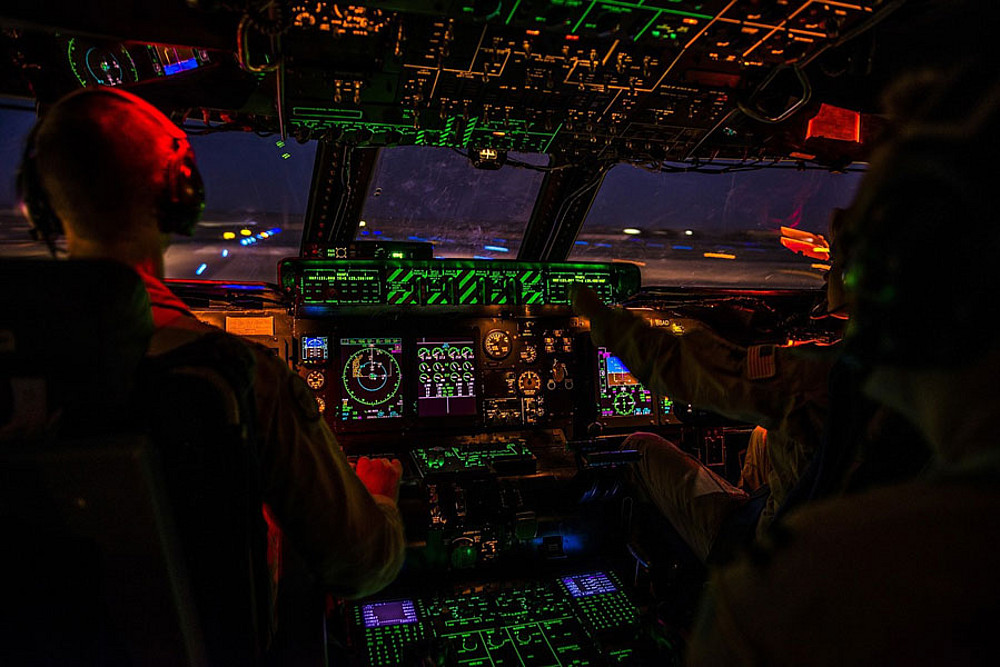
Eine internationale Sommerschule beschäftigt sich mit Stresssituationen in Flugzeug-Cockpits. Foto: Pixabay.org

Eine internationale Sommerschule beschäftigt sich mit Stresssituationen in Flugzeug-Cockpits. Foto: Pixabay.org

Internationale Sommerschule für Luftfahrt an der Universität Graz

Der „Faktor Mensch“ wird noch immer als das größte Risiko in der Luftfahrt gesehen, weiß der Grazer Arbeitspsychologe Univ.-Prof. Dr. Wolfgang Kallus. Um menschliche Stärken für besondere Herausforderungen, wie extreme Wetterverhältnisse und schwierige Landemanöver, für noch mehr Sicherheit in der Luft nutzbar zu machen, veranstaltet die Karl-Franzens-Universität Graz auch heuer wieder die Internationale Sommerschule für Luftfahrtpsychologie (ISAP’17). Vom 2. bis 7. Juli 2017 werden bei der achten Ausgabe dieser Veranstaltung rund 100 TeilnehmerInnen aus Wissenschaft und Praxis erörtern, wie sich Automatisierungskonzepte, die systematische Reflexion über schwierige Situationen und mentales Training als Unterstützung in kritischen Situationen in der Luftfahrt nutzen lassen. Auch Flugangst wird Thema der Sommerschule sein.

„Es ist uns bekannt, dass PilotInnen bei einer Schlechtwetter-Landung auf einen ihnen unbekannten Flughafen das Flugzeug lieber selber steuern anstatt die Landeautomatik zu verwenden“, führt der Luftfahrtpsychologe und Tagungs-Organisator Kallus aus. Obwohl es ausgereifte Automatisierungsprozesse im Cockpit gibt, hat der Mensch in schwierigen Situationen gerne aktiv die Kontrolle. „Und damit sind Risiken verbunden, die es zu minimieren gilt“, betont Kallus. Deshalb ist eines der Generalthemen der Sommerschule, bei der Psychologie-Studierende mit WissenschafterInnen und PilotInnen Erfahrungsaustausch betreiben können, das so genannte „stress debriefing“. Diese Möglichkeit der Stressbewältigung nach belastenden Ereignissen wird in der Krisenintervention gebraucht und auch in der Luftfahrt seit langem eingesetzt. Dazu kommt noch die Technik, das Gehirn mithilfe von mentalem Training auf mögliche kritische Situationen vorzubereiten, es aktiv zu trainieren. „PilotInnen müssen immer wieder schwierige Manöver im Simulator fliegen und auch ihre Fähigkeit, in Extremsituationen klar denken zu können, unter Beweis stellen. Mentales Training kann dabei helfen die Effektivität von Simulatortrainings zu steigern.“ Debriefing ist ein wissenschaftlich stark diskutiertes Thema und Gegenstand einer hochkarätig besetzten Paneldiskussion am Mittwochnachmittag.

Die Internationale Sommerschule für Luftfahrt-Psychologie der Uni Graz, kurz ISAP, ist weit über die Grenzen Österreichs bekannt. Auch die diesjährige Veranstaltung wird von der European Association for Aviation Psychology als Aus- und Fortbildung anerkannt und empfohlen.

Weitere Informtionen unter: http://www.aviation-psychology.at/isap.html

created by Konstantinos Tzivanopoulos

Related news

Chemical Christmas show at the University of Graz: An explosive evening at the Schauspielh

At the beginning of December, the University of Graz transformed the theater into a laboratory: as part of “Chemical Life,” teacher training students staged a chemical Christmas show for Styrian school classes—complete with ethanol rockets, nitrogen snow, and glowing effects. An evening designed to inspire interest in studying chemistry.

Train by train: Koralm railway accelerates exchange between the Universities

Lectures at the University of Klagenfurt in the morning, seminars at the University of Graz in the afternoon: Austria's longest tunnel and a journey time of around 45 minutes make it easy. The Koralm railway increases the speed of networking between the two university locations. The collaboration builds on existing cooperation - for example in the areas of teacher training, Slavic studies and as employers, the universities are well coordinated.

On the trail of the Big Bang: University of Graz receives 1.5 million euros for doctoral programmes

The Austrian Science Fund FWF has selected the Doctoral Programme in Theoretical Particle Physics at the University of Graz for funding from the Doc.funds. Six young scientists will be funded for 3.5 years. They will gain fundamentally new insights into the origins of the world.

From trans women and knee prostheses: sports science prizes awarded

Walking better with a prosthesis, successfully getting rid of excess weight, training more effectively, more fairness for trans people in sport: these were the topics addressed by the students at the University of Graz who were awarded the sports science prizes for their Master's theses on 3 December 2025.

Begin of page section:
Additional information:

University of Graz
Universitaetsplatz 3
8010 Graz
Austria
  • Contact
  • Web Editors
  • Moodle
  • UNIGRAZonline
  • Imprint
  • Data Protection Declaration
  • Accessibility Declaration
Weatherstation
Uni Graz

End of this page section. Go to overview of page sections

End of this page section. Go to overview of page sections

Begin of page section:

End of this page section. Go to overview of page sections