Begin of page section:
Page sections:

  • Go to contents (Accesskey 1)
  • Go to position marker (Accesskey 2)
  • Go to main navigation (Accesskey 3)
  • Go to sub navigation (Accesskey 4)
  • Go to additional information (Accesskey 5)
  • Go to page settings (user/language) (Accesskey 8)
  • Go to search (Accesskey 9)

End of this page section. Go to overview of page sections

Begin of page section:
Page settings:

English en
Deutsch de
Search
Login

End of this page section. Go to overview of page sections

Begin of page section:
Search:

Search for details about Uni Graz
Close

End of this page section. Go to overview of page sections


Search

Begin of page section:
Main navigation:

Page navigation:

  • University

    University
    • About the University
    • Organisation
    • Faculties
    • Library
    • Working at University of Graz
    • Campus
    Developing solutions for the world of tomorrow - that is our mission. Our students and our researchers take on the great challenges of society and carry the knowledge out.
  • Research Profile

    Research Profile
    • Our Expertise
    • Research Questions
    • Research Portal
    • Promoting Research
    • Research Transfer
    • Ethics in Research
    • Commission for Scientific Integrity
    Scientific excellence and the courage to break new ground. Research at the University of Graz creates the foundations for making the future worth living.
  • Studies

    Studies
    • Prospective Students
    • Students
  • Community

    Community
    • International
    • Location
    • Research and Business
    • Alumni
    The University of Graz is a hub for international research and brings together scientists and business experts. Moreover, it fosters the exchange and cooperation in study and teaching.
  • Spotlight
Topics
  • Sustainable University
  • Researchers answer
  • Work for us
Close menu

End of this page section. Go to overview of page sections

Begin of page section:
You are here:

University of Graz News Spitzenleistung

End of this page section. Go to overview of page sections

Tuesday, 27 October 2020

Spitzenleistung

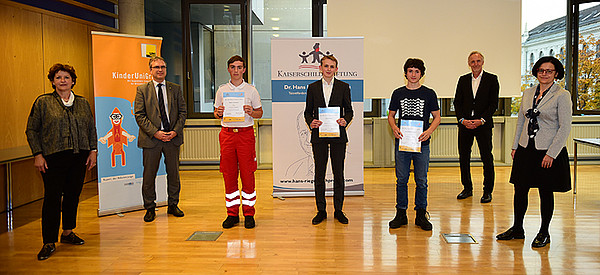
Die Ehrengäste Landesrätin Ursula Lackner, Vizerektor Peter Riedler, Stadtrat Günter Riegler und Landtags-Abgeordnete Sandra Holasek (v.l.) mit den PreisträgerInnen der Fachrichtung Biologie...

Die Ehrengäste Landesrätin Ursula Lackner, Vizerektor Peter Riedler, Stadtrat Günter Riegler und Landtags-Abgeordnete Sandra Holasek (v.l.) mit den PreisträgerInnen der Fachrichtung Biologie...

Dr. Hans Riegel-Fachpreise für die besten naturwissenschaftlichen MaturantInnen in der Steiermark

Die Dr. Hans Riegel-Fachpreise würdigen Jahr für Jahr die besten vorwissenschaftlichen Arbeiten in den Naturwissenschaften, die in den steirischen 8. AHS-Klassen entstehen. Die betreffenden Fachbereiche sind Biologie, Chemie, Informatik, Mathematik und Physik.

Vergeben wird der Preis von der Kaiserschild-Stiftung, deren Gründer, Hans Riegel, das Unternehmen HARIBO zum Erfolg führte. Für die jungen ForscherInnen von morgen gibt es aber bei der Verleihung keine Gummibärchen, sondern Preisgelder im Wert von insgesamt 7.250 Euro für ihre herausragenden Leistungen. Auch ihre Schulen erhalten Gutscheine im Wert von je 250 Euro zur Förderung des naturwissenschaftlichen Unterrichts. Die Organisation des Wettbewerbs in der Steiermark übernimmt die KinderUniGraz.

Am 23. Oktober 2020 wurden die Preise zum elften Mal vergeben – in Anwesenheit von Vizerektor Peter Riedler sowie einer Reihe von politischen Ehrengästen: Landesrätin Ursula Lackner, Landtags-Abgeordnete Sandra Holasek und Stadtrat Günter Riegler gaben sich die Ehre. Marco Alfter, Vorstandsvorsitzender der Gemeinnützigen Privatstiftung Kaiserschild, und Projektleiterin Sandra Sonnleitners unterstrichen in einem übermittelten Statement das Ziel der Würdigung: „Mit den Dr. Hans Riegel-Fachpreisen zeichnet die Kaiserschild-Stiftung junge Talente in naturwissenschaftlichen Disziplinen aus und fördert sie auch nach der Auszeichnung durch Weiterbildungsangebote, die Einblick in zukünftige Tätigkeitsfelder in Wissenschaft und Wirtschaft bieten.“


Die GewinnerInnen 2020 sind:

Fachgebiet Biologie:

  • Lavinia Zauner: „Kunststoffe als Umweltproblem am Beispiel der Stadt Eisenerz“
  • Laura Pfundner: „Anästhesie bei Heimtieren“
  • Paul Regitnig: „Untersuchung der Reaktionsfähigkeit und sekundärer Phänomene unter dem Einfluss von Energy-Drinks“

Fachgebiet Chemie:

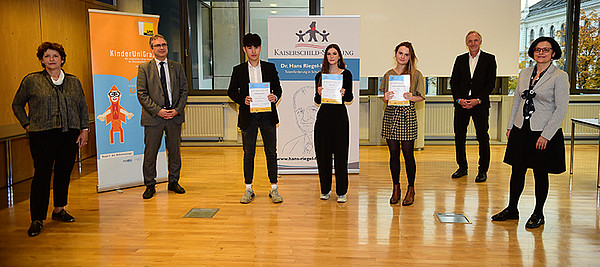
  • Loretta Eggenreich: „Photostability of selected luminescent dyes”
  • Valerie Flachberger: „Gläser in unserem Alltag“
  • Anna Schrei: „Antiadiposita als Medikamente oder Lifestyleprodukte“

Fachgebiet Informatik:

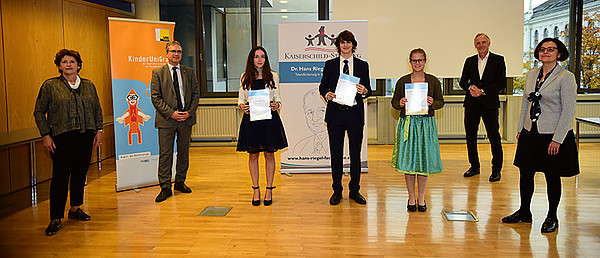
  • Elias Krainer: „Funktionsweise künstlicher neuronaler Netzwerke: Grundlagen und Programmierung eines Beispiels“
  • Tobias Teichmann: „Die Auswirkungen von Künstlicher Intelligenz auf gesellschaftliche Strukturen und Mechanismen“
  • Benjamin Cartellieri: „Erstellung eines Frameworks zum Trainieren neuronaler Netzwerke in C++ für selbstgebaute Roboter“

Fachgebiet Mathematik:

  • Elodie Ahn: „Dodekaphonie - die Mathematik hinter Anton Weberns Werk“
  • Pamela Diamantopoulou: “Fraktale Geometrie”
  • Minh Hieu Nguyen: „Mathematische Magie - Möglichkeiten Gewinnchancen im Glücksspiel ,,Blackjack" zu verbessern“

Fachgebiet Physik:

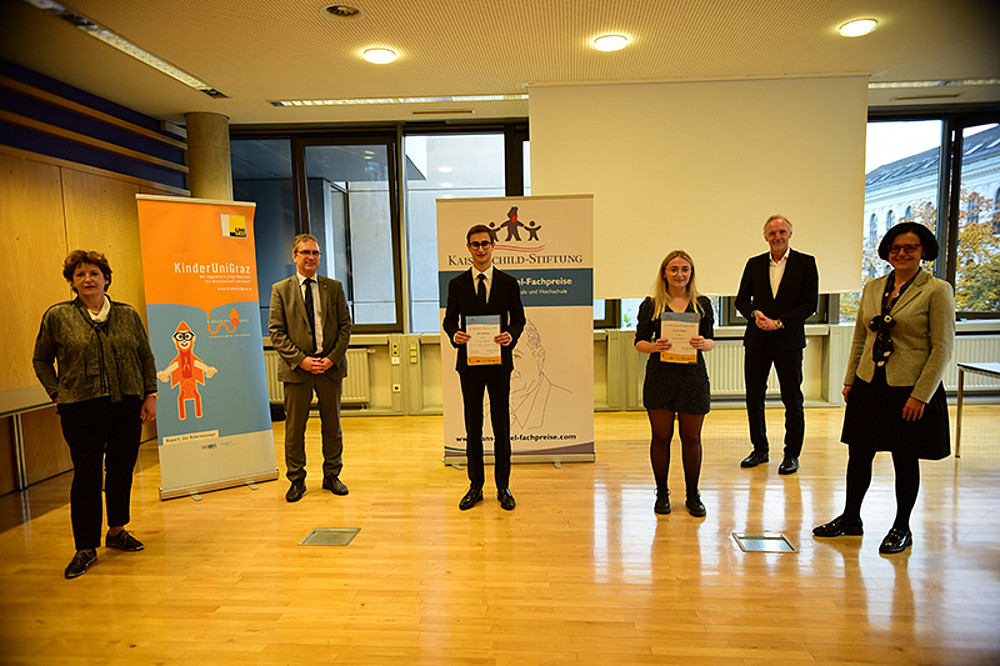
  • Nikolaus Juch: „Entwurf und Konstruktion einer musikspielenden Teslaspule“
  • Laura Zotter: „Crashsicherheit von Lithium-Ionen-Batterien in Elektroautos“
  • Alexandra Simone Kahr: „Rosetta - Die Reise zu den Ursprüngen unseres Sonnensystems“
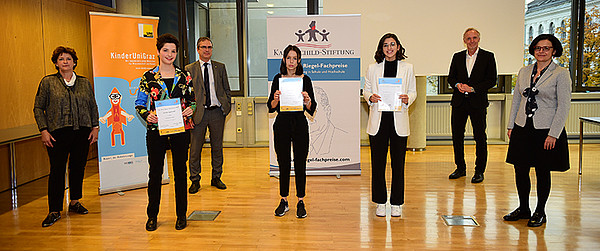
... Chemie....
... Chemie....
... Informatik...
... Informatik...
... Mathematik...
... Mathematik...
... und Physik. Alle Fotos: Uni Graz/Leljak.
created by Gerhild Leljak

Related news

Studying at the University of Graz: How to enrol

Ready for a new chapter in your life with the start of your studies at the University of Graz in the winter semester 2026/27? Here you will find information on deadlines, admission procedures, registration, and everything else you need to successfully start your studies in the fall.

Interpreting data: Why studies sometimes get it wrong

Hilmar Brohmer and Ziva Korda from the Institute of Psychology, together with 500 international colleagues, have re-evaluated a hundred scientific publications and have often come to different conclusions.

Crystal-clear: AI method revolutionises solar observation

The Sun makes life on Earth possible. However, its magnetic fields can also cause massive disruption. This makes it all the more important to gain a better understanding of the processes taking place on our nearest star. A research team from the University of Graz and the High Altitude Observatory in Boulder (USA) has succeeded in doing just that. The astrophysicists have developed an AI-supported method that makes even the smallest structures on the Sun visible. The scientists are convinced that this will bring about a lasting change in solar observation and that the new method can be used for the planned European Solar Telescope.

Long Night of Research: How many languages are there in the world?

From a linguistic perspective, there are worlds of difference between Bern, Berlin and Vienna. A dialect impersonator will demonstrate live just how varied German can sound. How many languages are there in the world? What are their distinctive features? Which of these are spoken in Austria? These and other questions will be answered during the Long Night of Research at the University of Graz: on Friday, 24 April 2025, from 5 pm to 11 pm, in the University Library. Visitors can immerse themselves in the diversity of languages without travelling far by taking part in a quiz at the station.

Begin of page section:
Additional information:

University of Graz
Universitaetsplatz 3
8010 Graz
Austria
  • Contact
  • Web Editors
  • Moodle
  • UNIGRAZonline
  • Imprint
  • Data Protection Declaration
  • Accessibility Declaration
Weatherstation
Uni Graz

End of this page section. Go to overview of page sections

End of this page section. Go to overview of page sections

Begin of page section:

End of this page section. Go to overview of page sections